From treating patients to predicting disease: A doctor’s journey into genetic research
What happens when your goggles slip during an RNA extraction? For Dr Kazi Lutfar Rahman, the answer came a few days later, right at his own bench: a positive COVID-19 result.
From treating patients to predicting disease: A doctor’s journey into genetic research
What happens when your goggles slip during an RNA extraction? For Dr Kazi Lutfar Rahman, the answer came a few days later, right at his own bench: a positive COVID-19 result.
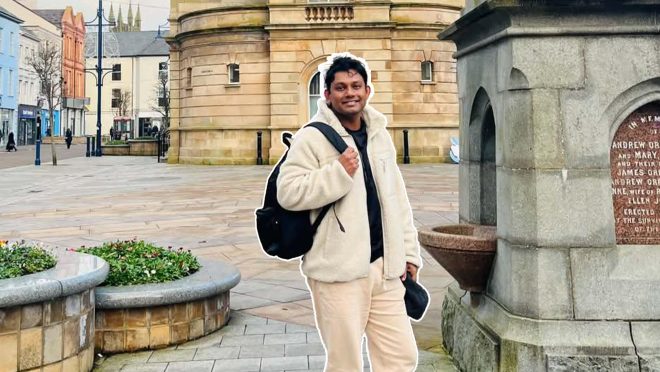
“The frontline doctors who treated patients directly went through their own ordeal during COVID, but people like me, working in the lab, had a different kind of struggle that rarely gets talked about,” Dr Rahman recalls.
“We would spend up to sixteen hours at a stretch in full PPE and an N95 mask, and once we put that suit on, we were not allowed to take it off until the lab work for that shift was finished, no matter how long it took.”
Testing his own positive sample felt strange. Yet those long, gruelling shifts at Kurmitola General Hospital in Dhaka were serving as intense practical training sessions. Days spent fixing issues with test procedures under pressure built the practical habits that eventually led him away from patient care and straight into molecular genetics.
“It was a strange, almost surreal experience, testing the virus that had just found me,” he says.
“As part of the team at Kurmitola General Hospital, I contributed to optimising our RT-PCR SOPs, refining them through my own trial and hands-on experimentation in the lab. That constant troubleshooting, extracting RNA, running reactions, and adjusting protocols under pressure is exactly the technical grounding that later carried into genetic research.”
Moving into genetic research
The pandemic made him realise one thing clearly: catching risks early is far better than treating advanced illness later on.
Dr Rahman, an MBBS graduate, stepped into full-time research by starting an MPhil in Physiology. A Fellow of the Higher Education Academy (FHEA), he is also a former university lecturer and a PhD candidate at Ulster University.
He conducts his research at Belfast City Hospital through a 2023 Department for the Economy scholarship.
With his thesis submitted in August 2026, it focuses on a key question: predicting how psoriasis patients respond to biological treatments.
Alongside his thesis, he reached the finals of Ulster’s Three Minute Thesis competition and was runner-up at FameLab Northern Ireland. Outside the lab, he stays grounded through competitive Latin dancing and his love for travelling.
Work ethic and daily discipline
“I want to say this clearly: I am not some exceptionally talented student,” Dr Rahman says.
“I am a regular student, and I think that matters, because it means what worked for me is genuinely repeatable for others. One habit I’ve held onto from very early on is that I never wait for a deadline. Whenever I see the first line of any application or submission, I treat that moment as my deadline, not the date written at the bottom of the page.”
Dr Rahman focuses on simple daily planning. “For me, that has meant keeping a handwritten diary,” he shares.
“I hold a bigger goal in mind, and I break it down into smaller goals that I complete.”
His advice for the next generation is just as grounded: stay focused on real-world skills and build confidence in your own path.
“Learn AI skills and stay comfortable with the software relevant to your field. Science moves fast, and the tools move with it. Every short course, every bit of experience, however minor it feels at the time, belongs on your CV,” he says. “Believe in yourself more than you believe in what others think or say about you. That belief, more than any single scholarship application or grade, is what carries you through.”
Building affordable diagnostic tools
Biologics have changed dermatology, but they are expensive and do not work for every patient. Working with Belfast City Hospital’s dermatology unit, Dr Rahman studies how vitamin D status, obesity and systemic inflammation affect treatment results.
He has also contributed to studies on pregnancy markers and potential links between obesity and liver cancer. His main goal is beyond just publishing papers; he wants to build low-cost screening tools for places like Bangladesh, where local genetic data is still limited.
“The long-term goal that connects all of this is diagnostic and preventive, not just descriptive,” Dr Rahman explains. “That kind of insight could meaningfully shape how healthcare is delivered, moving from one-size-fits-all treatment towards something more personalised and preventive.”
Sunlight is abundant in Bangladesh, yet vitamin D deficiency is common. Dr Rahman says, “One of the first things I try to correct when I talk about my work is a common misconception: vitamin D is no longer considered just a nutrient; it is now understood as a hormone.”
For his MPhil, he studied the CYP2R1 gene, which codes for an enzyme that activates vitamin D. He recruited people with high sun exposure: slum health workers, traffic police, and cricket and football players. The first gene analysis conducted on the CYP2R1 variant in Bangladeshi adults, it linked specific gene patterns to low vitamin D levels. He shared that this genetic sequence data was deposited in GenBank, the world’s leading genetic sequence database, and published the pilot study in PLoS ONE in November 2021.
Handling setbacks
Behind any published paper are months of repeated testing. For someone working with PCR and gene analysis, primer optimisation is often one of the hardest steps in the process.
“It can take months to get right, and during those stretches it becomes day and night in the lab, sometimes with barely any time left for food or sleep,” Dr Rahman shares. “Like anyone else, I feel disheartened when something doesn’t work. But I’ve learned to take that feeling, find a fresh source of motivation, and go again. Some of my favourite hours in the lab are actually late at night, when the building is empty, I take a coffee break, and just get back to the bench.”
That mindset reflects his view of scientific progress as a whole. “If there’s one belief that has carried me through all of this, it’s that there is no such thing as failure or rejection in science,” he says. “Every failed experiment and every rejected paper is still a finding, still experience, and it still moves the work forward.”
When asked what early mistakes he would warn young scientists to avoid when looking back at his path from Dhaka to Northern Ireland, Dr Rahman rejects the premise altogether. “Honestly, I don’t believe I’ve made any mistakes, and I have no regrets about my life. When results don’t go your way, own them. Be truthful and honest with yourself, and accept your limitations without letting them define you,” Dr Rahman reflects.
Where the purpose began
His decision to leave bedside care for research grew out of family loss. In eighth grade, he lost his mother to liver cirrhosis. Years later, he lost his father to chronic kidney disease. Treating patients in a clinic was meaningful to him, but laboratory research offered a chance to help far more people.
“As a researcher, I saw the possibility of influencing outcomes for many more people than I could ever see in a clinic.”
That choice reflects his simple view of life. “I think the question nobody has ever really asked me is how I see life itself, not my research, not my career, just life,” Dr Rahman says.
“And if I’m honest, my answer is simple, almost deceptively so: respect, accept, and move on. Do your hard work, put in the hours nobody sees, and then let go and move forward, trusting that the effort was never wasted.”