The return of a super El Niño: Could the world face another global famine?
The return of a super El Niño: Could the world face another global famine?
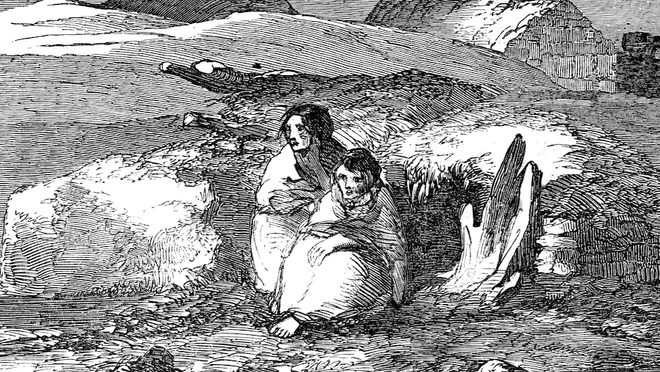
The great famine of the 1870s was one of the most devastating humanitarian disasters in modern history. Across China, India, Brazil and other regions, prolonged droughts and repeated crop failures left millions facing starvation. Desperate people resorted to eating tree roots, mud, diseased animals, pets and strips of leather to survive.
Contemporary accounts described widespread cannibalism, while some families reportedly sold or sacrificed their children in exchange for food. Others sealed the bodies of deceased relatives inside their homes to prevent starving neighbours from taking them. Corpses lay along roadsides as entire communities struggled to survive.
Hunger was only the beginning of the catastrophe. People fleeing famine crowded into unsanitary camps and makeshift settlements, where cholera, smallpox and other deadly diseases spread rapidly. In parts of China, people burned their own homes for fuel during the winter before retreating into underground pits to keep warm. As the crisis deepened, social structures began to collapse. Even wealthy households eventually succumbed as food supplies dwindled and the number of survivors continued to fall.
When the rains finally returned, many areas had lost so much of their population that there were too few people left to cultivate the land. Between 1876 and 1879, an estimated 20 million to 30 million people died across India, China and Brazil, while the global death toll may have reached 50 million.
In Late Victorian Holocausts, historian Mike Davis describes the disaster as one of “truly planetary magnitude”. According to an article published in New Scientist, a powerful El Niño event was a major climatic trigger behind the catastrophe, releasing enormous amounts of heat from the Pacific Ocean into the atmosphere and disrupting weather patterns across the globe.
Discovering El Niño
When the devastating El Niño of 1877–78 unfolded, scientists had little understanding of the phenomenon or its influence on global weather. Although early meteorological observations were being collected, including sea-surface temperatures, rainfall and atmospheric pressure, researchers could not adequately explain the unusual weather patterns emerging across continents.
In the aftermath of the disaster, some scientists blamed sunspots for the extreme conditions. According to Michael McPhaden of the US National Oceanic and Atmospheric Administration (NOAA), scientific understanding of El Niño was still in its infancy. At the time, Peruvian fishermen were among the few people who may have recognised the phenomenon through their observations of changing ocean conditions.
Scientific understanding developed gradually over the following decades. In the 1920s, physicist Gilbert Walker identified a pattern of atmospheric pressure fluctuations across the tropics, which became known as the Southern Oscillation.
In 1969, meteorologist Jacob Bjerknes established a connection between variations in Pacific Ocean temperatures and the Southern Oscillation. His work helped explain how these atmospheric and oceanic changes interacted to produce El Niño and influence weather patterns around the world.
This breakthrough marked a turning point in El Niño research. Scientists began to recognise that, with sufficient observations and suitable forecasting tools, they could identify these events as they developed and potentially predict them before their effects became widespread.
How imperial failures turned drought into famine
El Niño events had occurred long before the 1870s, and authorities in China and India had established grain reserves to help communities cope with failed monsoon rains. However, the 1877–78 event was exceptionally intense, and its effects were compounded by political failures, inadequate infrastructure and unequal access to food.
Researchers at NOAA, including Boyin Huang, have used modern analytical techniques to reconstruct historical sea-surface temperatures and estimate the strength of past El Niño events. Their work draws on observations collected by ships, buoys and modern ocean-monitoring equipment to create a temperature record extending back to 1850.
The reconstruction identified an exceptionally strong El Niño in 1877–78. After accounting for the long-term warming of the oceans, temperatures in the Niño 3 region of the tropical Pacific were estimated to have reached 2.88°C above the average, according to Huang’s research. This places the event among the strongest El Niño episodes documented in the modern historical record.
Its effects were felt across several continents. Severe drought struck northern China, which experienced its worst such episode in 300 years, alongside north-eastern Brazil, India, South Africa and northern Africa. In some regions, dry conditions had already developed before El Niño emerged, partly because of unusually cool temperatures in the tropical Pacific. The subsequent disruption brought years of inadequate rainfall and repeated agricultural failures.
However, the climatic crisis alone does not explain the extraordinary death toll. Government policies and institutional failures transformed food shortages into mass starvation.
In colonial India, British authorities continued collecting taxes and exporting food to England even as local populations faced widespread hunger. Grain hoarding and the failure to provide adequate relief further intensified the suffering.
China faced a different set of challenges. Corruption among officials contributed to the diversion of grain supplies, while poor transport infrastructure prevented food from reaching some of the worst-affected communities.
The situation was particularly severe in Shanxi province. Water levels in the Grand Canal, an important transport route, fell so low that vessels could no longer navigate it. Railways were absent, while mountain roads were plagued by bandits who attacked livestock carrying grain before supplies could reach starving populations.
Richard Seager of Columbia University has argued that the imperial economic systems of the period turned severe droughts into catastrophic famines, killing millions in India and China.
The disaster therefore illustrates how extreme weather can become a humanitarian catastrophe when vulnerable populations lack effective institutions, reliable transport networks and adequate protection from food insecurity.
The return of a climatic monster
For more than a century, the 1877–78 El Niño was regarded as one of the strongest events in recorded history. Now, according to forecasts discussed in New Scientist, another exceptionally powerful El Niño is developing in the tropical Pacific, raising concerns that it could rival or surpass its nineteenth-century predecessor.
Forecasts cited in the article suggest that sea-surface temperatures in the El Niño region could reach around 4°C above normal in November. Such an event could significantly disrupt weather patterns, increasing the risk of drought in some areas and bringing excessive rainfall to others.
There is, however, one major difference between the two periods: scientists now have the ability to monitor El Niño as it develops and forecast its likely effects months in advance.
These warnings give governments, emergency services, farmers and humanitarian organisations valuable time to prepare. Measures could include increasing water storage, planting drought-resistant crops, strengthening early-warning systems, improving flood defences and preparing emergency food supplies.
McPhaden emphasises that advance knowledge gives decision-makers more options to reduce the damage caused by extreme weather. Better forecasts are useful not simply because they explain what is happening, but because they allow communities to act before a crisis reaches its worst stage.
Signs of a developing El Niño began appearing in climate models in February 2026, with clearer indications of a potentially strong event emerging by April. These early signals provided governments with additional time to assess risks and prepare for possible consequences.
Advances in forecasting, including the use of artificial intelligence, could extend this warning period further. McPhaden suggests that predicting El Niño events as much as two years in advance may eventually become possible. Longer lead times would allow governments and other organisations to make more comprehensive preparations, particularly in regions where drought and food shortages are recurring threats.
Warning systems under pressure
Despite these technological advances, the world faces significant challenges in translating climate forecasts into effective humanitarian action. Funding cuts to climate research, food-security monitoring and international aid threaten to undermine the systems designed to protect vulnerable populations.
In January 2025, US President Donald Trump issued an executive order that shut down a US-funded famine early-warning system. The system was reinstated six months later, but subsequent reporting has raised concerns about gaps in the availability of its data.
The United States has also substantially reduced funding for the World Food Programme, which provides emergency food assistance to populations affected by conflict, disasters and severe food shortages. Other wealthy countries, including the United Kingdom, have reduced their overseas aid budgets in recent years.
At the same time, geopolitical conflicts are placing additional pressure on global food systems. The US war with Iran and the blockade in the Strait of Hormuz have pushed up fuel and fertiliser prices, while Russia’s war in Ukraine has disrupted international wheat trade.
Higher energy and agricultural input costs can make food production and transportation more expensive, placing additional pressure on households already struggling with rising living costs. For countries dependent on imported fuel, fertiliser and grain, the combination of climate shocks and geopolitical instability could be particularly damaging.
Seager warns that the timing of the emerging El Niño is especially unfavourable given these wider economic and political pressures.
Is the world better prepared this time?
Despite these concerns, the world is considerably better equipped to manage an extreme El Niño than it was 150 years ago.
Modern agricultural practices, improved transport infrastructure, international trade networks and more advanced weather-monitoring systems provide tools that were largely unavailable in the nineteenth century. Governments can move food across regions more efficiently, while international organisations can coordinate emergency assistance when local supplies fail.
Public health has also advanced significantly. Better sanitation, improved understanding of infectious diseases, more effective disease-control measures and stronger healthcare systems reduce the likelihood that famine will trigger the same scale of secondary disease outbreaks witnessed in the 1870s.
Social safety nets and humanitarian organisations can also help protect people who lose their livelihoods or face sudden increases in food prices. However, their effectiveness depends on adequate funding, timely information and the willingness of governments to respond.
The central lesson of the 1877–78 famine is that extreme climatic events do not automatically produce mass starvation. Their human cost depends heavily on political decisions, economic conditions, infrastructure and the capacity of societies to protect their most vulnerable members.
Today’s scientists can identify the warning signs of a potentially devastating El Niño well before its full effects emerge. But forecasts alone cannot prevent famine. Governments must act on those warnings, maintain reliable food-security systems and ensure that emergency assistance reaches the people who need it.
The world may never be able to eliminate the dangers posed by an exceptionally strong El Niño. Yet, with adequate preparation and effective international cooperation, it can reduce the likelihood that a climatic disaster will once again become a humanitarian catastrophe on the scale of the 1870s.