I know Nietzsche from quotes. That may be a problem
On Friedrich Nietzsche’s 182nd birthday, I wonder whether we use his words to understand ourselves or simply to explain ourselves to others.
I know Nietzsche from quotes. That may be a problem
On Friedrich Nietzsche’s 182nd birthday, I wonder whether we use his words to understand ourselves or simply to explain ourselves to others.
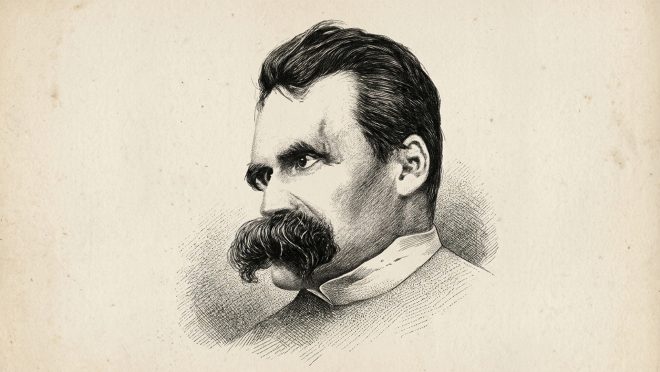
I have encountered Friedrich Nietzsche in a rather modern way: one quotation at a time, on my screen. Some describe loneliness. Others promise strength, independence, or the freedom to become whoever we want to be. They are easy to save because, at least for a moment, they seem to explain something we have struggled to put into words ourselves.
There is nothing wrong with finding comfort in a sentence. Sometimes, a stranger’s words help us understand a feeling we thought belonged only to us. I think the problem begins when we become more interested in owning a meaningful quotation than in understanding what it means.
“What does not kill me makes me stronger”, “God is dead”, “Become who you are”
Each quotation carries a much larger argument, but social media rarely gives an argument the same attention it gives a memorable sentence.
I know what makes it so tempting. There is something reassuring about finding words that make our experiences feel meaningful. We do not always share these famous lines because we have carefully considered their meaning. Sometimes, we share them because they mirror the version of ourselves we want others to see.
There is something revealing about that difference because it changes the question. Instead of asking whether Nietzsche’s words sound perceptive, we might ask why we need a particular quotation to describe ourselves in the first place.
Take his famous statement, “What does not kill me makes me stronger.” It is tempting to interpret this as a promise that every unsettling experience will eventually improve us. But surviving something and growing from it are different experiences. Pain can leave us wounded without leaving us wiser and hardship does not become rewarding simply because we find a sentence that romanticises suffering.
Perhaps the more difficult question is what we do after an experience changes us. Can we acknowledge that something hurt us without making the hurt our sense of self ? Can we learn from a difficult period without pretending that we are grateful it happened?
Nietzsche’s words become more interesting when they encourage us to examine our responses instead of offering us an easy explanation for our suffering.
His idea of becoming who we are, leaves us with a more troubling question.
Nietzsche’s philosophy invites a more demanding kind of self-examination. Instead of simply declaring that we are different, we can ask whether our values are genuinely ours. Instead of celebrating our independence, we can examine how much of our identity depends on being recognised as independent.
This is where the internet’s relationship with Nietzsche becomes ironic. We use his words to express individuality, but we often use them collectively in exactly the same formats, with the same aesthetics and the same familiar interpretations.