A perfect CGPA and two fully funded scholarships: The story of Tasfiah Tasnim Maha
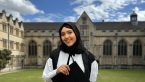
Graduating with a perfect 4 out of 4 CGPA sounds impossible to most of us. But for Tasfiah Tasnim Maha, it was a reality she manifested through rigorous discipline and hard work.
A perfect CGPA and two fully funded scholarships: The story of Tasfiah Tasnim Maha
Graduating with a perfect 4 out of 4 CGPA sounds impossible to most of us. But for Tasfiah Tasnim Maha, it was a reality she manifested through rigorous discipline and hard work.

Tasfiah graduated from the School of Pharmacy at BRAC University. Not only that, she even secured two well-recognised, fully funded Erasmus Mundus and Commonwealth scholarships.
The most common question is, “How?” I also thought the same, which is why I reached out to her to learn about her exceptional academic journey.
Maha grew up with her family in Kuwait. She went to international schools with classmates from different countries. In that mix of cultures, something in her held on tightly to home. “I always felt a strong drive to represent Bangladesh positively among my peers,” she says.
After school, she had one clear plan, which was to pursue medicine abroad, but fate had other plans.
She came back to Bangladesh. Despite belonging to the English-medium education system, she tried for the medical admission test in Bangladesh.
Things didn’t go according to her Plan A, but she did not give up; instead, she chose Plan B.
BRACU path
Maha got into BRAC University’s School of Pharmacy. She calls it one of the best decisions of her life. After four years of pharmacology, toxicology, biochemistry and long hours in the lab, she walked away with a perfect 4.00 CGPA, along with receiving the Vice Chancellor’s Gold Medal.
“Standing on stage and receiving the Vice Chancellor’s Gold Medal in front of thousands of people made every obstacle and shift in plans completely worth it,” she says.
Her perfect CGPA was a result of her consistent effort in both academics and ECA.
Choosing Pharmacy
Maha’s passion for pharmaceutical science did not come from ambition alone. It came from watching the world during COVID-19. She saw how badly the world needed vaccines. And at that time, pharmaceutical sciences stopped being just a subject for her. It became a field she wanted to actually work in.
She was determined and highly ambitious, which is why she directly applied for two PhD programmes right after completing her undergrad.
She did not get accepted into those PhD programmes. And again, she had to go for Plan B.
Maha took a full year to rebuild her entire application from scratch.
She applied to the Commonwealth Master’s Scholarship, the British Council Women in STEM Scholarship, three separate tracks under Erasmus Mundus, and a molecular and integrative biology programme in the United States. Four different paths, four different sets of requirements.
The application
For Maha, the CV was the easiest. It just needed proper attention, which would put her research and achievements in the right order.
Next came the IELTS test, where she scored an 8.5. She is honest about how she got there.
Her first practice tests were rough. The scores were discouraging. Reading was her weakest section by far, so that is where she put most of her effort. She practised timed reading passages. She picked up strategies from YouTube. She built a few tricks of her own for managing time and spotting question patterns.
The Statement of Purpose (SOP) was different. Every programme wanted something slightly different from her. Often, writing for the university was only step one. Step two was writing again, this time for the scholarship body itself.
For the Commonwealth Scholarship, she first had to get admitted to universities. Only then could she start writing the additional essays required by the scholarship commission’s own portal. Erasmus Mundus added its own extra layers too, including interviews and online tests.
Her recommendation letters, at least, came together without much stress. She had built genuine relationships with her professors at BRAC University over the years, which helped her to get the perfect recommendation letter.
Money-wise, her path was manageable. “For context, while my scholarship applications were free, standard university application fees in countries like the US typically range from $60 to $100 per application if you’re applying directly to institutions.”
Her main cost was the IELTS exam itself, around 28,000 BDT.
The scholarships
Each path pushed her differently. The Commonwealth Scholarship required nomination through Bangladesh’s University Grants Commission (UGC). Her documents were screened in September 2025. Then she was called for an interview. Looking at the list of candidates and seeing experienced medical practitioners on the same panel shook her confidence for a moment. She stayed calm anyway. She went through with it. The Commonwealth Scholarship Commission selected her.
Around January 2026, she applied to Women in STEM and Erasmus Mundus at the same time. Women in STEM brought her an offer from Brunel University London, plus an additional offer from the University of Edinburgh. Erasmus Mundus brought her into two of her three chosen tracks, including the European Master in Translational Cosmetic and Dermatological Sciences (EMOTION), the one she had wanted most all along.
She did all of this on her own. No education agency. Her reasoning is simple. “No external agency can genuinely capture your personal journey and your core motivation,” she says. Instead, she reached out directly to scholars and seniors who had already been through it. Not everyone replied. The ones who did gave her something an agency never could: real, lived insight into what actually worked.
Advice for students
Maha is now heading to pursue the EMOTION programme, funded by the European Union, carrying the title of “Erasmus Scholar”. She shares a few pieces of advice for those who aim to build excellent academic profiles.
She points at one myth immediately. A lot of students tell themselves that CGPA does not matter for scholarships. She disagrees. If a student still has even one semester left, she says, it is worth fighting for the best grades possible. Strong academic standing genuinely opens doors in competitive selection processes.
But she is just as clear that a weaker CGPA is not a dead end. A scholarship application, in her view, is a puzzle made of many pieces, and grades are only one of them.
Research projects, Olympiads, internships, leadership roles, all of these can build a compelling profile, as long as they point in one clear direction.
She also warns against generic, templated writing in personal statements. She advises writing those with a genuine personal connection.
And her last piece of advice is about timing. Start early on document preparation, language tests and reaching out to professors. Choose recommenders who actually know you personally, not just the most senior name available.
Throughout Maha’s entire journey, one thing I personally noticed was that there was some level of setback at every step, but she nothing was deemed to be enough to stop her. “Rejections are an inevitable part of life, just as failure is a stepping stone to success,” she says.
That setback changed how she approached everything after it. “Setbacks are just course corrections, not dead ends,” she says.