‘Musk’: A verdict disguised as a documentary
‘Musk’: A verdict disguised as a documentary
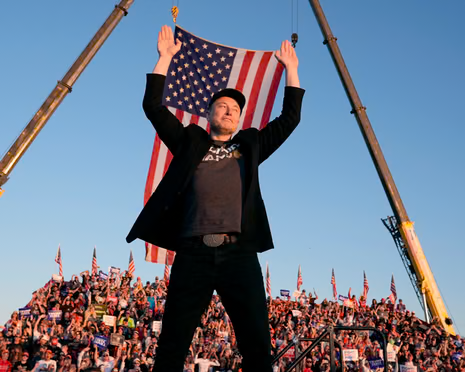
Debates on documentaries or any visuals usually end up either confirming what we already think or compelling us to rethink things again. Alex Gibney’s documentary, ‘Musk’, is an uncomfortable look at one of the most influential icons of our time.
Musk is a documentary that has everything needed to be great, yet it still leaves you questioning some of the choices. As it goes on, I find myself wondering not just what it reveals about Elon but how much of its argument I am supposed to accept.
My problem is not that the documentary criticises Musk. He is a global figure and his decisions deserve serious attention. I also don’t think a documentary has to be neutral. Sometimes staying neutral is a way to avoid making a judgement when the evidence clearly calls for one.
What matters most is whether the filmmaker earns the conclusions they want us to accept. That is where Musk becomes both interesting and frustrating.
The film’s main angle is clearly critical. It looks at Musk’s rise, his image, his relationships, his businesses and the consequences of his growing influence. By explaining the casual story of a visionary entrepreneur, it pushes back on the idea that technological success should automatically mean admiration. I respect that impulse.
At times, Musk feels so focused on tearing down Musk’s image that the line between exposing contradictions and building a case against him blurs.
I don’t want a documentary to tell me who to admire or hate before I have had a chance to form my own opinion.
The film has a lot of material. Its heavy-handed direction can make it feel less like an open investigation and more like a verdict being prepared.
I would have found some conclusions more convincing if the film had allowed space for interpretations, for doubt and for a clearer line between facts and judgements.
Musk is shown through a story of ambition, success and a troubling relationship with power. It’s a narrative, but real people don’t always grow the way a screenplay expects them to. Their motivations can be mixed, their decisions inconsistent and their behaviour hard to explain with one theory.
The film wants us to believe that immense wealth, influence and public praise changed Musk. Did they reveal traits that were already there? Did they just make existing tendencies worse? These are ideas, and I would have liked to see the documentary explore them deeply.
Instead, parts of the story feel like it’s already decided where it’s going before it’s fully explained.
The documentary is four hours long.
A limited series might have given each topic room to breathe. Instead, the film sometimes feels like it’s trying to cover too much while still leaving big questions unanswered.
One of the film’s noticeable choices is the use of a computer-generated version of Musk made from his public statements since he didn’t agree to an interview. And in a documentary about technology, artificial images and carefully built personas, it’s an obvious irony.
Importantly, I wanted a little more space between what the filmmaker believes and what the audience is meant to conclude. Maybe that’s too much to ask from a documentary made by someone with a clear opinion. I don’t think it’s too much to expect that a strong view should come with strong self-awareness. Musk is still worth watching because the questions it raises matter.