Kaler dhulay Shamsur Rahman
Kaler dhulay Shamsur Rahman
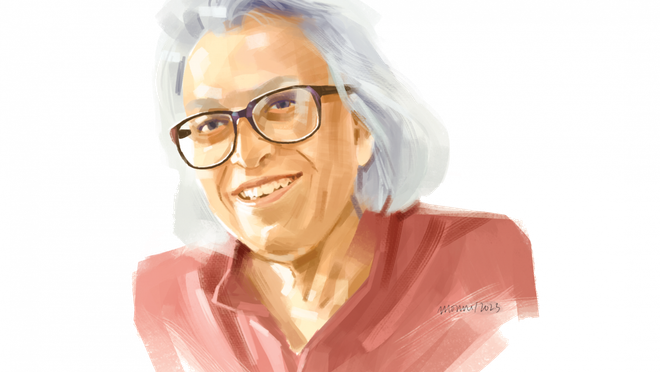
Most Bangladeshi students know about Shamsur Rahman from the cheap paperback guidebooks with the important questions printed in bold.
Open the Bangla one to the poetry section and you will find an ever-present Shamsur Rahman there, boiled down to a poet’s introduction, a summary, a few likely questions and a model answer you are supposed to copy out in your own handwriting.
He was born on 23 October 1929 in Old Dhaka. I keep thinking about how many of us learned his name that way, as something to get through before Tuesday’s test.
And the odd thing about memorising a protest poem is that it works. You really do keep the words. What you lose is the nerve it took to write them. A poem made while people were being shot in the street becomes four marks and a line about “theme and tone”.
The rebellion survives, but only as vocabulary, and vocabulary is safe.
The facts of his life don’t really allow for safety. In 1969 he wrote about Asad, a young man killed during the mass uprising, and the bloodied shirt that became a banner. In 1971 he stayed in Dhaka while the city was occupied, which was not the obvious choice and not a comfortable one. And in 1999, after decades of writing about the freedom to speak, extremists attacked him at home. He survived. I find it hard to read that as anything but a grim sort of review of his work, delivered in person.
We usually tell all this as a story of volume. The Poet of Resistance, the Conscience of the Nation. Fine, but a title like that is a kind of burial. Monuments are easy to love because they never ask for anything back.
Then you read the other poems, the ones nobody sets in exams, and he sounds like someone else. He writes about afternoons in the city, about friends who have died, about his own body slowing down, about what it is to be in a room and feel slightly outside it. There is a lot of watching in his work, and not much posing. His memoir, Kaler Dhulay Lekha, has the same dry, looking-back tone of a man brushing the dust off his own century.
It took me a while to see that these two writers are one person. The man who wouldn’t go along with the slogans of his time was probably the same man who sat alone with his thoughts for long hours, because refusing the crowd’s voice tends to leave you standing a little apart from the crowd. The courage and the loneliness weren’t in conflict. They came from the same stubbornness.
And that is exactly what the guidebook cannot carry. A student who learns the freedom poem for her exam gets the shape of the sentences. She doesn’t get that freedom, for him, was never finished, that it had to be reclaimed again and again, and that defending it could be a lonely business.
I don’t want to be unfair to teachers. They work with enormous classes and a syllabus someone else wrote, and a poem has to be graded somehow. But there are small changes that cost nothing. Ask what the poet was afraid of when he wrote it. Ask who would have preferred him silent. Ask what a similar line would cost a person today, in your town, in your office, in your family group chat. Nobody can answer those by rote, and that’s the point.