Crash Course: The YouTube channel I never outgrew
Last night, somewhere between my third video and a vague feeling that I should be doing something productive, a random question crossed my mind: what was the first YouTube channel I ever subscribed to?
Crash Course: The YouTube channel I never outgrew
Last night, somewhere between my third video and a vague feeling that I should be doing something productive, a random question crossed my mind: what was the first YouTube channel I ever subscribed to?
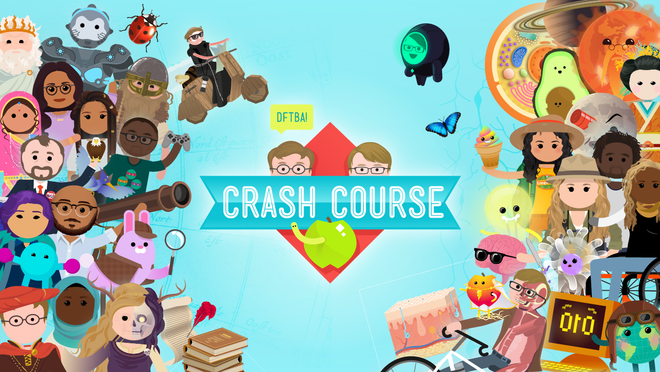
If you haven’t tried this, you can. Google will show you how to dig through your subscription list in a minute. I expected something embarrassing, like a cartoon channel or a gaming account. The answer was Crash Course and Beluga, and I felt oddly proud of my younger self.
If you’ve read my earlier pieces, you know I never had my own YouTube account in school. That wasn’t a choice; it was just how things were. Then college arrived, and so did Covid. Suddenly, my classes were a grid of muted microphones and frozen faces.
Some lectures were genuinely good. Others made me stare at the ceiling fan and wonder whether it was rotating slower than usual. So, like any spoiled child should, I escaped to YouTube. I watched science simulations, and videos on how a theory was discovered, and who argued with whom, and who turned out to be wrong for decades. That’s where Crash Course found me.
On paper, it’s simple: short, fast courses on one subject at a time. It was started by the brothers John and Hank Green, who were already known online for their Vlogbrothers channel. Crash Course was one of the hundred initial channels funded by YouTube’s $100 million original channel initiative, and it began in January 2012. John hosted World History, while Hank hosted Biology. That split stuck for a while, with John on the humanities and Hank on the sciences.
What began as two courses grew enormously. By its own count, the team has produced more than fifty courses, and the channel says it has passed two billion views. Along the way, it welcomed new hosts like Craig Benzine, Phil Plait and Emily Graslie, and expanded into astronomy, physics and philosophy. There’s even a version for younger kids.
I won’t pretend Crash Course made me an expert. Watching ten minutes on psychology doesn’t make you a psychologist, any more than watching a cooking show makes you a chef. But it did something more valuable: it showed me the shape of a subject. World mythology stopped being a pile of unpronounceable names and became a map of how humans have always tried to explain the things they couldn’t understand. Psychology went from something people say at dawaat to a field with experiments, arguments and surprising mistakes.
It gave me the first rung of the ladder, and once you’re on the ladder, you tend to keep climbing. I think my habit of falling down research rabbit holes at 2 a.m. traces back to those evenings of procrastinating through online classes.
I didn’t want to write a love letter without checking whether the world agrees with me, so I went looking for what teachers, parents and viewers actually say. The praise and the complaints turn out to be surprisingly consistent.
On the praise side, one reviewer of the World History series called it likely the funniest, sharpest and silliest world history overview on the internet, and noted that its animation, visual sources and editing are excellent. An older review in a university newspaper argued that the real draw is the writing and performance, especially John Green’s habit of dropping clever observations about society and growing up. In other words, people watch for the charisma as much as the content. I felt that too. I was never watching to cram. I was watching because it was fun.
The complaint almost everyone shares is speed. A homeschooling blogger who liked the channel admitted the pace was a bit too fast for her. In a teacher forum, educators said students struggle to pick out the key points when the host speaks at such a rapid clip. One review called it a great supplement but too fast and jumpy to be the main source of learning for a class, and its practical advice was to slow playback to 0.75x. Honestly, I’d say the same. Pause, rewind, change the speed. Nobody is chasing you.
There are smaller grumbles too. One teacher blog pointed out that some videos include snarky or satirical comments that may not suit every classroom, and a forum commenter noted that older videos carry cultural references that make less sense a decade later. Both are fair. A channel with this much personality is bound to have a few jokes that age badly. I’ll also admit that I couldn’t pull up actual Reddit threads while researching this, so these opinions come from teacher communities, parenting blogs and review sites instead. The pattern is the same everywhere: love for the style, with a warning about the pace.
So why do I recommend it? First, it’s free. In a country where private tutoring and coaching can cost a fortune, a channel that offers university-level introductions at no charge matters. All you need is an internet connection and a little patience.
Second, it’s a map, not a destination. Crash Course won’t replace your textbook, and it shouldn’t. It’s the friend who gives you the lay of the land before you walk into the lecture hall. After one video, the textbook stops feeling like a foreign language.
Third, it makes curiosity feel cool. The channel’s own mission is basically that learning is a big part of what makes life meaningful. That sounds corny until you’ve spent an hour on a subject you didn’t know you cared about. And finally, it respects your time. Ten or twelve minutes per episode is short enough to watch between classes, after dinner, or while pretending to listen to a boring lecture.
My one warning is not to treat it as the final word. Treat it as the beginning. If a topic grabs you, go deeper: read a book, find a primary source, argue with a friend.
After finding that first subscription, I scrolled through the rest of my list. Many of them are channels I’ve outgrown or forgotten. Crash Course is still there, a little dusty but still earning its place. There’s something quietly moving about discovering that the first thing you chose for yourself online was a channel that wanted you to learn. It makes me wonder what you subscribed to first. Go check. You might be surprised too.