The Humming Season II: The frequency of silence
Prologue: “The Humming Season” is a mystery series that begins with Reza Karim’s ordinary life as a Bangladeshi merchandiser and gradually reveals that the humming was never merely a warning from the infected in apocalyptic Bangladesh.
The Humming Season II: The frequency of silence
Prologue: “The Humming Season” is a mystery series that begins with Reza Karim’s ordinary life as a Bangladeshi merchandiser and gradually reveals that the humming was never merely a warning from the infected in apocalyptic Bangladesh.
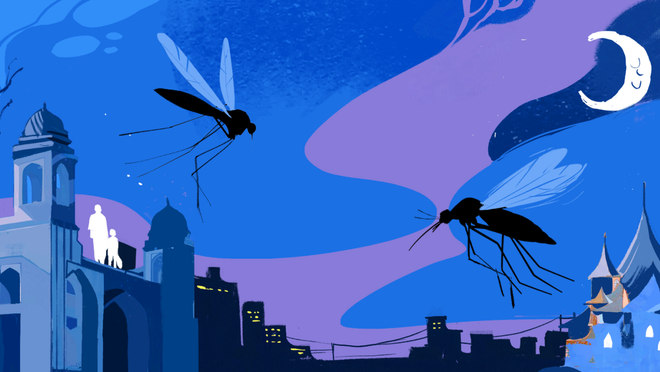
At 9:17 a.m. on a Tuesday in October, Reza Karim discovered that a missing button could cost a man his job.
The Korean buyer’s comments had arrived from London. “What the hell is he doing in London…”, muttered Reza. The shipment was due in eleven days. Three thousand jackets waited for final inspection, their drawstrings measured, their seams checked, their labels aligned to a specification sheet that seemed to grow longer every time he opened it. And voilà!… now the buttons are not there in any garments.
Reza had been a merchandiser long enough to understand that the garment was never just a garment. It was a deadline, a calculation and a headache! Once a trim is missing, it is a doomsday. And here, he is sitting with 3,000 jackets missing a decorative button!
He called the sample department. Then quality control. Then the buyer’s representative. And the AGM had already called his team to the conference room after 15 mins.
Outside the factory, the October heat pressed against the windows. Dhaka’s traffic moved in exhausted bursts. A mosquito circled the fluorescent light above his desk. He slapped it dead against the wall.
His phone rang. His lovely daughter, Lamia, was calling.
“Baba, why are the mosquitoes making that sound?”
He glanced at the insect crushed beneath his palm and said, “What sound, ma?”
She hummed a little tune into the receiver. Three low notes, followed by a pause. Reza stopped looking at the production sheet. He knew that tune. He had heard it before the world began to lose its mind.
“Lamia,” he said slowly, “where are you?” The call disconnected. That was the first time Reza Karim spoke to his daughter before the bridge incident.
However, the first official explanation blamed climate change. The second blamed a foreign laboratory. The third blamed the people who had believed the first two.
Three years earlier, an unusually hot summer had accelerated the thawing of frozen ground in Russia’s Yamal Peninsula. In 2016, an anthrax outbreak there killed thousands of reindeer and caused human illness. Scientists had long warned that thawing permafrost could expose ancient biological material, although the actual risks posed by ancient viruses to humans remain uncertain.
The D-65 incident was different.
At least, that was what the classified documents claimed.
Unlike the documented outbreaks associated with thawing permafrost, the D-65 incident would eventually raise questions that extended far beyond the Arctic. The first reports described a biological discovery, but the evidence that followed suggested that the discovery itself might have been only the beginning.
A research team surveying a collapsing ice formation in the Arctic had discovered a network of insects preserved inside a layer of ice far older than any known human settlement. Their wings remained intact. Their bodies had been frozen in a black mineral deposit, as though something had deliberately sealed them away.
The insects were mosquitoes, which was not very unusual to the scientists. At least, momentarily.
Inside them, researchers discovered an unfamiliar virus. Its neurological effects resembled those of rabies, but its transmission patterns did not. The virus appeared capable of altering the behaviour of its host and responding to chemical signals emitted by other infected organisms.
The team called it D-65. Within months, the specimens were gone. So were two researchers. Then, one day, the first recorded human cases appeared thousands of kilometres away.
By the time governments acknowledged the leak and an outbreak, the mosquitoes had already spread beyond the original containment zone. It spread fast in the Asian-European region, and soon to the whole flora and fauna.
The infected were initially classified as neurological casualties. Then came the collective movement and the peculiar tendency of victims to gather beneath bridges, inside abandoned stations and along the banks of rivers. They did not communicate in any language that anyone could understand. They just “hummed”.
The survivors eventually gave them a name: the Stacks.
No one knew whether the word referred to their habit of piling themselves into motionless heaps or to the way their brains appeared to operate as interconnected layers of a single system.
Perhaps both explanations were correct.
Whatever the origin of the name, the Stacks became a familiar sight in the abandoned cities. Survivors learned to avoid the places where they gathered, although nobody could explain why some groups remained motionless for hours while others moved together across entire neighbourhoods. The humming was the only consistent sign that something was happening beneath their apparent stillness.
Reza woke beneath a collapsed flyover with black residue dried along his collar. He could not remember how he had reached the city.
The last thing he remembered was Lamia’s voice. Then a swarm had descended upon the street, blotting out the afternoon sun. People ran. Vehicles collided. Somewhere, a child screamed until the screaming stopped.
Now Dhaka stood beneath a colourless sky. There was no electricity. No traffic. No familiar chorus of horns and engines. And no moon. He checked his watch. Its second hand had stopped at 4:42.
A man stood at the opposite end of the flyover. His shirt was torn. His jaw moved rhythmically. A dark stain spread from his ear down his neck.
Reza backed away. The man did not follow. Instead, he tilted his head, as though listening to something beyond the range of human hearing. Then he began to hum.
A dozen figures emerged from beneath the bridge. Another dozen followed. They gathered around the man, motionless, their faces turned towards the ground.
Reza recognised one of them. A quality inspector from his factory. The inspector who had died three days before. Reza started to run vigorously.
He had barely taken a few steps when the sound of an engine cut through the silence. A dark SUV stood at the edge of the road, its rear door open. Reza could not see the driver’s face, but a woman’s voice came from inside.
“Get in!”
He had no reason to trust the stranger. But behind him, the humming was growing louder and the figures beneath the bridge were beginning to move. Reza hurled himself into the SUV, and the vehicle accelerated before he could even close the door. On the woman’s apron, illuminated briefly by the dashboard lights, he read the name Dr Naira Sen.
After reaching a safe zone, Reza took a bottle of water and gulped it to the core. The woman who had rescued him worked in a subterranean research facility beneath an abandoned industrial complex outside Dhaka. Reza asked, “Do you know where my baby child Lamia is?”
Read part 1: https://www.tbsnews.net/splash/humming-season-1273491