Imaginary friends: Why we create them and how they help us navigate real life
Imaginary friends: Why we create them and how they help us navigate real life
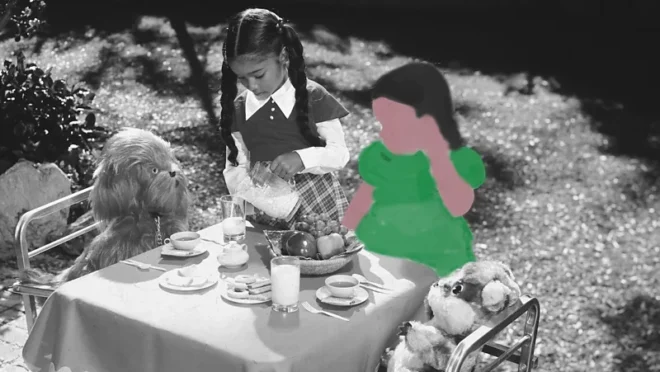
From invisible playmates and talking toys to imaginary people who offer advice, childhood friendships are not always limited to people who actually exist. And psychologists say these made-up companions may do more than keep children entertained.
Imaginary friends are more common than many parents might think. Research suggests that around two-thirds of children have had an imaginary companion by the age of seven. These friends can take almost any form, from invisible human characters to animals, fantastical creatures and even everyday objects.
Contrary to popular belief, having an imaginary friend is not necessarily a sign of loneliness or social isolation. Children who create imaginary companions generally have as many real-life friendships as those who do not.
Psychologist Naomi Aguiar explains that children often create imaginary friends simply because they enjoy social interaction. When nobody is around to play with, an imaginary companion can provide company and an opportunity to interact.
But the benefits may extend well beyond entertainment.
A playground for understanding others
Imaginary friendships can help children develop their understanding of other people’s thoughts, feelings and intentions.
Research from the University of Valencia found that children aged four to six who had imaginary friends scored higher in assessments of theory of mind and emotional understanding than those without such companions. This ability allows children to recognise that other people can have beliefs and desires different from their own.
Imaginary companions can also encourage creativity, storytelling, vivid mental imagery and confidence.
More importantly, they give children a safe environment to practise the complicated business of having relationships.
Practising for the real world
Children do not always know how to handle disagreements, establish boundaries or navigate uncomfortable social situations. Imaginary friends can offer a space to experiment with these experiences without the pressure of real-world consequences.
For instance, a child struggling with a friend who repeatedly takes their favourite toy might imagine having a similar disagreement with an imaginary companion. They can argue, apologise and work out a compromise through play.
According to psychologist Naomi Aguiar, this kind of self-directed problem-solving can help children make sense of real-life events and relationships.
The benefits may also extend to autistic children. Research involving parents of 124 autistic children found that 49% reported their child had created an imaginary friend between the ages of one and 11.
Researchers suggest these relationships can provide a risk-free environment to practise social interactions and explore how relationships work.
Do imaginary friends disappear when we grow up?
Not necessarily.
Although many imaginary companions fade as children grow older, research suggests that imaginary friendships can continue into adolescence and adulthood.
In a study still under peer review, psychologist Tracy Gleason found that among 56 adults who reported having imaginary friends, 68% had created their companions before turning 20. Around 30% said they had created an imaginary friend during adulthood.
For adults, these companions can serve different purposes, including providing emotional support, motivation, companionship and a way to work through difficult decisions.
They can even become practical tools. Imagining a conversation with a difficult colleague, rehearsing a presentation or practising how to approach an uncomfortable situation can help people prepare for real-life challenges.
In that sense, imaginary friends are not necessarily something we outgrow. Their purpose may simply change with us.
The invisible friend who once helped a child navigate the playground might eventually become the imagined conversation partner helping an adult prepare for a difficult meeting.
After all, learning how to understand other people, manage relationships and make sense of the world is not something that ends with childhood.