Humayun Ahmed and the stories that brought us together
Humayun Ahmed and the stories that brought us together
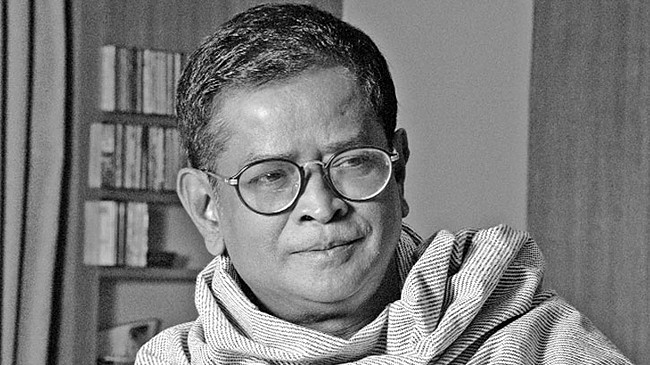
In my memory, there is a room, a television, and a whole family pulled up in close. Somewhere in that picture, Humayun Ahmed is almost always the reason why we were all there together.
He was born on 13 November 1948, and today he would have turned 78. Most of us met him through his books, the slim paperbacks that passed from hand to hand until the spines gave out. Before I understood anything about him as a filmmaker, I knew him as the writer of Himu and Misir Ali, a man who made reading feel like a gift rather than a duty. The way he wrote that story, the characters, it feels like it is me who he thought while writing. But the screen was where he reached the whole house all at once.
The small screen first
Long before his films, there were the TV dramas that made us love.Bohubrihi (1988) and Kothao Keu Nei (1990) were among them. The streets, the neighbourhood society were so familiar to our life, we thought our own story was being told there. As stories go, it seemed quieter when they aired. Kothao Keu Nei gave us Baker Bhai, a character audiences cared about so deeply that his fate reportedly stirred public protest. I can’t think of a better measure of a storyteller than that: people grieving a character as though he was their neighbour. Aaj Robibar and Nokkhotrer Raat kept the same promise of warmth, humour, and ordinary people made unforgettable.
Then, the big screen
When he turned to cinema, he arrived with a story about 1971. Aguner Poroshmoni (1994), his debut as director, followed a family whose lives change when a freedom fighter, played by Asaduzzaman Noor, steps into their home. It won eight categories at the 19th National Film Awards, including Best Film and Best Director. There were no sweeping battle scenes. The war arrived through a household, through fear, silence, and small acts of courage. That choice says a lot about him: he believed history was best understood at the dinner table.
Srabon Megher Din and Dui Duari followed around the turn of the millennium, tender stories of family and longing, drawn from his own fiction. Chandrokotha (2003) tried a more dreamlike romance. Then came Shyamol Chhaya (2004), another 1971 story, which Bangladesh submitted for the Academy Awards. His final film, Ghetuputra Komola, was submitted again in 2012. Neither was nominated, but the submissions framed his career as a director: a writer who kept returning to the story of his country.
He died on 19 July 2012, aged 63. Ghetuputra Komola reached audiences afterwards. He rests at Nuhash Palli in Gazipur, the garden estate whose name he also gave to his production house.
An honest word about the films
I’d be flattering him if I called him a visual innovator. His films are rooted in character and dialogue, in the rhythm of how people actually talk, and some critics feel the camera never matches the imagination of his prose. I think that’s fair. But I also think it misses the point. He wasn’t trying to dazzle us. He was trying to be understood.
What he left us
A Bangladeshi teenager today can stream a thousand things from anywhere in the world, so it’s worth asking what a writer from Mohongonj still has to offer us. For me, it is the idea that ordinary lives are enough to build a story around. He showed us that a family, a rainy afternoon, a small act of kindness, or the memory of 1971 could carry as much feeling as any epic. He made the quiet things feel important.
He also gave an entire generation the habit of reading, and then the habit of gathering to watch. Many of us who now write,make films, teach, or build empowerment did so after first being moved by a story he told. I count myself among them.
So today, I would like to say thank you. We still sit together, though not always in front of the same screen, and we still remember who taught us how.