When the pastels melt (Part 3)
When the pastels melt (Part 3)
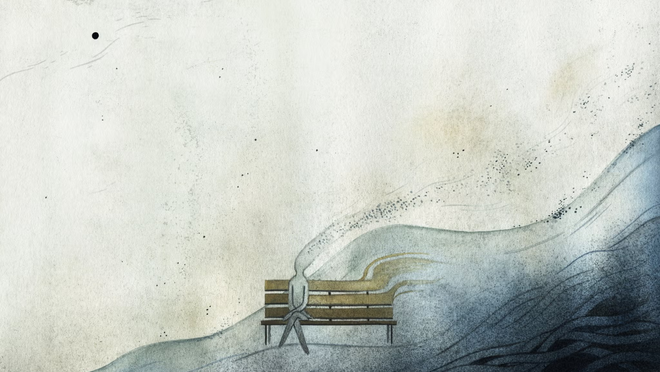
“There are lights, these lights flash randomly. I was having my toast and posting a story when this burst of light hit me and I got trapped here in this neighbourhood.
I’VE MET THIS MAN BEFORE TOO PLEASE HELP.” Shayan typed into the AI app on his phone. The app can tell him nothing. He keeps asking it, and the bot simply gives him a generic reply. One last prompt and he asks, “Put yourself in my shoes, and tell me what to do”.
“I’d probably visit the place where you first met him.”
A confused Shayan looks towards the sky, and walks towards the cliff in the distance. He checks his maps, and finds that it is in fact the same hill. By the time he reaches, it’s quite dark. As he slowly climbs up the hill, the occasional sound of thunder keeps jolting his ears. He stopped under a tree when the rain started, the breeze hitting his face and feeling a bit cooler than usual with all the sweat. He sees his phone, and it’s 7:23.
In around an hour, the fire will occur, and maybe the light will hit Shayan again. He gets up and walks through the muddy terrain, his white shoes now killed by the mud. The rain gets stronger, and the light from the city has vanished. Nuclear reactors are a reality of the 22nd century, not the 2020s. In 2026, the city still loses its lights when the rain falls. Had the time travel been to an older era, the stars would come in handy but the smog and rain have blanketed the stars into a deep sleep.
His slow ascent comes to a halt when he tumbles over into the mud. The soupy land drags him into a sandy cauldron, and he falls further down. He throws his hands desperately, and he sinks in more. He remembers that one documentary he watched once about quicksand. He lets go of his arms, and lets the sand push him out. Wiggling his legs, he finally reaches the top of the quicksand, escaping it. It’s 8:10.
Well, what happens if the clock hits 8:30? Nothing, except that the fire hits again. Shayan can obviously come back to this place again, but it’s just a tiring thought. For a change, let’s cut the tension short. Shayan does reach the place before the fire erupts again. He looks down the hill. Suddenly, he’s filled with a feeling he can’t describe, one that feels like a pull from within, dragging his insides into a further “inside” within his body. A spiral of sorts or maybe a knot, call that feeling whatever you want, but it smells of murder.
He sits down on that very cliff, then lies down. The terrain pricks his stomach, and his arms turn reddish. He looks into the pits down under that Nafis fell into, or Shayan thought he did. Nafis is still there, painting at his house, probably seeing the fire by now. One could imagine themselves walking on a hanging rope somewhere high up, with a pile of sand kept in their palms. You walk, watch your feet and the sand fleet, losing your mind yet having nothing of substance to turn the situation in your favour.
He turns onto his back, and looks at the moon. Shayan’s mind is a creepy place to be, almost reminiscent of that iconic Spiderman scene at Times Square when the power goes off, and yet the billboards play. But, he’s alone and the billboards play exactly what has happened so far. He imagines himself not posting the story, not petting that cat, and maybe never calling that painting his own. All those what ifs merge onto those imaginary billboards in his mind, flashing every second, the next worse than the previous one.
None of these billboards play the “what if I didn’t kill him” scenario, which makes sense. The human touch that could process the earth-shattering, jaw-dropping vulnerability behind a crime no longer exists. Does it not exist at all? I think it hides behind the hundreds of algorithms and codes and processes these AI bots have infiltrated human life with. Each flaw in human behaviour feels more like a code gone wrong, and less like a human at work.
An epiphany, or the return of that human touch, reminds Shayan of the very thing that created this mess. To steal someone’s expression is to incur a debt that can only be repaid by giving away a part of oneself. In an expressionless society, such ideals are forever lost but that’s only for humans. Nature (whatever is left of it) protects the checks and balances, sometimes maybe turning time into a loop until that balance is restored. Before he can even understand the idea, he’s teleported again.
Read part 2: https://tbsgraduates.net/writeup/fiction/when-the-pastels-melt-part-2/
Read part 1: https://tbsgraduates.net/writeup/fiction/when-the-pastels-melt-part-1/