AI cheating fears rise ahead of South Korea's college entrance exam
AI cheating fears rise ahead of South Korea's college entrance exam
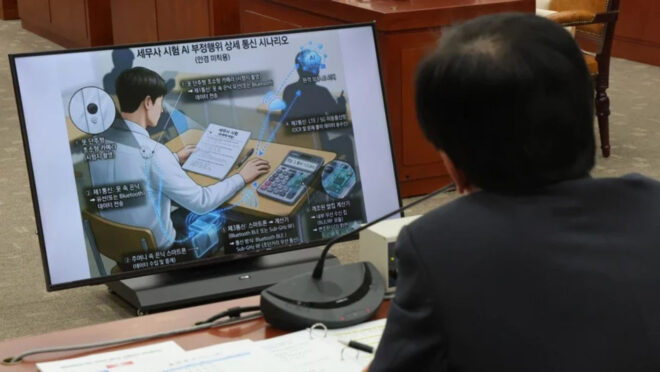
South Korea is stepping up measures to prevent cheating in its highly competitive college entrance examination after the country’s top scorer in a tax accountant test admitted using a hidden camera and artificial intelligence (AI) to obtain answers.
The scandal has raised concerns over the growing use of AI-powered devices to cheat, just days before more than 500,000 students are scheduled to sit the national college entrance exam on Thursday.
Education Minister Choi Kyo-jin on Monday rejected calls from some lawmakers to postpone the examination until stronger anti-cheating measures are introduced, warning that a delay would cause even greater disruption for students.
Choi expressed confidence that examination supervisors could identify AI-enabled smart glasses, while education officials said they were providing additional guidance on detecting concealed cameras and other devices.
The concerns intensified after 34-year-old Han Won-seok, who secured the highest score in the national tax accountant examination, admitted using a hidden microcamera and smartphone to obtain answers from AI.
Han allegedly photographed examination questions using the concealed camera, uploaded them to a generative AI tool and received answers on his smartphone. Police are investigating the incident.
His unusually high scores had attracted media attention, with one newspaper comparing his performance to completing a 100-metre sprint in less than five seconds.
The incident follows other cases of AI-assisted cheating, including the use of AI-powered glasses during an English standardised test in June and university essay examinations in October.
South Korea’s annual College Scholastic Ability Test, known as Suneung, is a major event in the country, where university admission can significantly influence career prospects and social standing.
Authorities traditionally take extensive measures to ensure smooth examinations, including delaying office hours and suspending flights during the English listening test.
This year, officials are considering requiring candidates to surrender smart devices, restricting public Wi-Fi and deploying specially trained supervisors at all 1,300 examination centres.
The Education Ministry is also working with the science ministry on additional safeguards, expected to be announced on Tuesday.
Officials are examining ways to detect concealed devices through suspicious movements involving sleeves, collars and buttons. However, the use of metal detectors, radio detectors and thermal cameras faces practical and privacy-related limitations.
Authorities are also considering whether manufacturers should be required to design AI-enabled devices to produce flashing lights or sounds while operating.