When remission is not the end of the story
When remission is not the end of the story
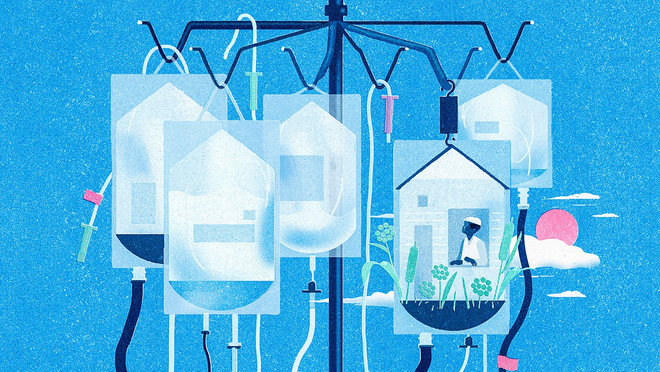
Eight-year-old Runa stays at her desk during recess while the other kids race out into the schoolyard in Bogura. If you look closely at her neck, you can still see the faint scar left by her central line. In her canvas bag sits a thick folder of hospital charts that no teacher has ever opened.
Runa finished her leukaemia treatment six months ago. Her doctor signed the release papers, and her mother brought her home. On paper, she passed with flying colours, while inside the classroom, she sits alone because two years in hospital wards left her far behind her friends. Her fingers cramp after ten minutes of holding a pencil.
When a child enters remission in Bangladesh, our medical system treats the moment like a finished story. Society celebrates the cure because looking at what comes next forces us to face comfortable illusions about our healthcare setup.
Completing chemotherapy drops a child into an unmonitored space that reshapes their health for decades. Most oncology drugs used in our public wards were formulated long ago for adult bodies. Giving those heavy chemical doses to a five-year-old leaves deep marks on developing organs. Years down the line, those early treatments return as heart damage or failing kidneys.
In countries with organised follow-up care, survivors join long-term tracking programmes. Doctors check their internal organs into adulthood, catching late complications before they turn fatal. Our hospitals have no safety net like that. The day a child’s blood work clears, they walk out the gate and vanish from medical records.
Public healthcare here runs on daily firefighting. Hospital beds are scarce, forcing families onto corridor floors while doctors focus every hour on keeping the next critical patient alive. Once the immediate threat passes, the clinical link breaks.
A child cured of leukaemia at six grows into a twenty-four-year-old with sudden breathing trouble, standing in an adult cardiology unit with zero paperwork connecting their heart condition to childhood chemotherapy.
Beside the physical damage sits a financial ruin that lives inside the home forever. Without health coverage, keeping a child alive drains every taka a family holds. In rural districts like Sunamganj, the sequence rarely changes. First the family gold goes, then ancestral farmland gets auctioned off far below market rate to pay for outpatient drugs. High-interest loans from local moneylenders cover whatever remains.
By the time remission gets declared, the daily hospital runs stop, but the house is empty. That debt sits in the living room every single day. A surviving child grows up carrying the weight of it, knowing their survival required their parents to surrender their economic future. The crash hits the healthy brothers and sisters back home just as hard.
When a mother spends six months living on a hospital floor in Dhaka, the siblings left back home end up raising themselves. They learn to take on adult chores early while absorbing the constant anxiety of a broken household. They swallow their own fears. They learn not to complain about a bad test score when their brother is fighting for breath on a hospital bed. Years later, those siblings carry that early neglect straight into their adult lives, sitting right beside a survivor who carries a heavy guilt.
When a recovering child tries to go back to school, the classroom offers no bridge back in. A child who spent two years isolated in hospital rooms cannot easily step back into a fast-paced school day.
Without guidance from teachers, these kids just stop coming to school.
Behind this sits a global drug industry that views sick children as a low-margin market. Because paediatric cases make up such a small fraction of cancer numbers worldwide, research budgets go almost entirely towards adult treatments. Doctors in developing nations are left using harsh legacy drugs simply because gentler alternatives were never engineered for smaller bodies.
Ribbons and awareness drives won’t fix a system that treats remission as an exit door.
If we want real progress in Bangladesh, our duty must extend past the acute crisis. We need dedicated tracking clinics in specialised centres to watch survivors as they grow up. We also need clear school re-entry rules that protect a recovering child’s right to learn.
Saving a child’s life is only the beginning. It shouldn’t cost them their adult health or their family’s financial security. True medical progress means ensuring that when a child survives, they actually have a full life left to live.