In the fear of being cringe, we are forgetting how to be ourselves
I think we have reached a point in our life where people are almost afraid of being themselves. We don’t bother to recall that, even a few years back, ghosting the afternoon study, we used to rush towards the field for ourselves. We didn’t think about what others would say about not choosing to study. Even a few years back we used to do stuff that now seems like we won’t even do at gunpoint.
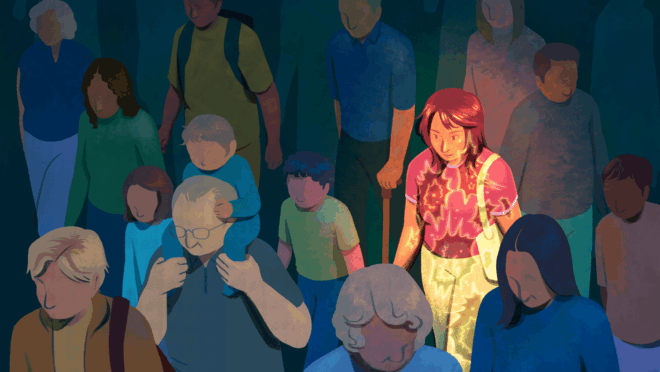
Not because we do not know who we are now but because we are constantly worried about how we might look to someone else. This is where the concept of “লোকে কি বলে” comes from that sells in books and magazines now where we are already affiliated with this when we didn’t even know this would be a possible famous concept. Why?
Let say, a person wants to dance, but wonders whether people will laugh off the steps he places. Someone wants to write a heartfelt point of view, but deletes it in the middle of writing because it sounds too emotional. He wrote for people but also deleted them.
Someone wants to express affection, celebrate a small achievement, dress efficiently, sing in public, or simply share something they genuinely enjoy, only to stop and ask themselves a question- will people think I am cringe?
And somehow, this one word has become powerful enough to make people reconsider perfectly harmless things they want to do.
I genuinely believe every person needs to delete the word “cringe” from their dictionary. Not because everything people do is brilliant, meaningful, or worth celebrating, but because we have become far too comfortable making other people feel embarrassed about being human.
The irony is that none of us has ever lived a single stage of life without being cringe till the day I am composing or a random farmer in the rural area now plowing.
Think about the person you were five years ago. Remember the clothes you wore, the attires you put on, the stuff you used to do, the songs you listened to, the people you admired, the opinions you defended with absolute confidence, and the things you posted on social media. Perhaps some of those memories make you want to disappear for a few minutes. You won’t even recall that out of shame. Shame is a disrespectful word to oneself whose upgraded version is what we call ‘cringe’ today. Perhaps you go through the old photos, videos and wonder what on earth you were thinking then to do that.
Maturity is to realise that, in that period of life you were thinking something. You were feeling something. You were trying to do something you won’t do today at any cost. You were quite simply living a version of your life that made sense to you at that particular moment and eventually transformed you who you are today.
And that is the part we tend to forget when we laugh at our past selves. If anything, the ability to look back at an older version of yourself and feel embarrassed should be evidence that you have changed now. It should not become a reason to despise the person you used to be.
Yet we have somehow turned personal growth into an endless exercise in self consciousness.
We are embarrassed by who we were, anxious about who we are, and terrified of who we might become in the eyes of other people. This is where life changed, from doing these to crying at midnight now for being a better version that proves we are still living in the bubble of so-called ‘cringe’. And the more we grow up, the more complicated this becomes.
We stop doing things not because we dislike them, but because we have imagined someone else disliking them first. And perhaps that is the most unfortunate thing about cringe. It does not merely describe something awkward.
But since when did the possibility of being laughed at become a good enough reason not to live?
I find it particularly interesting how people use the word to dismiss sincerity. A person writes an emotional birthday message for a friend, and somebody calls it cringe. A couple posts an affectionate photograph, and strangers make jokes about them. Someone shares their ambitions, celebrates an achievement, makes a content, or expresses excitement about an opportunity, and suddenly their enthusiasm becomes a source of entertainment.
Of course, not everything needs to be shared publicly. Not every emotional expression is appropriate in every setting, and genuine criticism has its place. But there is a difference between recognising poor judgment and ridiculing someone simply because they are expressing themselves in a way you would not.
We seem to have confused personal preference with universal standards.
Just because something does not appeal to me does not mean it is embarrassing. Just because I would wear the shoe in universally declared rule does not mean the person not doing it deserves to be laughed at.
Sometimes, people are not doing anything wrong. They are simply doing something differently from what we consider normal. And normal, as we should know by now, is a rather unreliable standard.
Look at how quickly the meaning of being cool changes. The music that one generation considers irritating becomes nostalgic to another. The clothes people once mocked return to fashion. The interests that seemed childish suddenly became popular. Even the language people use to express themselves changes with every passing generation.
Something that looks ridiculous today might become perfectly ordinary tomorrow. So why are we so confident that our present judgment is the final authority on what deserves respect?
I also think we need to acknowledge our own hypocrisy. We call other people cringe while quietly hoping they do not apply the same judgment to us.
We laugh at someone’s awkward attempt at confidence, even though we know how difficult it can be to put ourselves out there. We mock people for trying too hard while simultaneously admiring those who succeed at something that required years of trying.
Nobody becomes a good writer without first writing things that could have been better. Nobody becomes a confident public speaker without experiencing moments of awkwardness. Nobody discovers their personal style without trying things that eventually stop working for them. Nobody builds meaningful relationships without risking the possibility of sounding foolish, being misunderstood, or expressing more affection than the other person knows how to return.
The beginning of almost everything worthwhile is a little uncomfortable. And sometimes, yes, it cringes. You might look awkward while learning to dance. Your first attempt at writing might sound unnecessarily dramatic. Your early photographs might make you question your fashion choices. Your first speech might contain sentences you would never use today. You might be so enthusiastic about an opportunity that other people find your excitement excessive.
Let them.
The alternative is to spend your life waiting until you are sufficiently polished to be seen. If you try to satisfy every possible interpretation of yourself, you will eventually become a stranger to your own personality which you call now ‘loneliness.’
An awkward sentence can become a screenshot. An unusual outfit can become a joke. A sincere expression can become content for somebody else’s entertainment. Under these circumstances, it is understandable that people become cautious. Nobody wants to become the subject of public ridicule. But we should be careful not to allow the fear of embarrassment to become more powerful than the desire to experience life.
I am not arguing that we should stop reflecting on our behaviour. But calling something cringe is not always criticism. Sometimes it is merely a convenient way of making someone feel inferior without being urged to explain why.
Maybe whom you call cringe today, their enthusiasm reminds you of the things you abandoned because you were afraid of looking foolish. Maybe their confidence exposes your own hesitation. Maybe watching someone express affection without embarrassment makes you confront how carefully you hide our feelings. Whatever the reason, someone else’s willingness to be themselves should not automatically become an invitation to ridicule them.
More importantly, we need to make peace with the fact that we will continue to cringe throughout our lives.
At 18, we will look back at 15 and laugh. At 25, we might laugh at 18. At 40, we may find our 25 year old selves equally amusing. We will keep discovering new reasons to be embarrassed by our past.
That is not a problem to solve. It is part of being a person who is still learning. And that is perfectly fine.
Delete the word from your dictionary, if not literally, then at least from the part of your mind that decides whether someone deserves to express themselves. Stop using it as a weapon against other people’s sincerity. Stop allowing it to become a prison for your own personality. Life is already too short to spend it worrying about whether our happiness looks acceptable from the outside.
Because perhaps the most beautiful thing about being human is that we never quite finish becoming ourselves.
And if becoming ourselves requires us to be a little cringe along the way, then let us be cringe. At least we will have the chance to live.