Kuet celebrates Pahela Boishakh with colour, creativity and community
For an engineering student, life often moves in a relentless rhythm.
Kuet celebrates Pahela Boishakh with colour, creativity and community
For an engineering student, life often moves in a relentless rhythm.
From 8 to 5 classes, pages of lab reports, endless quizzes, and the quiet anticipation of weekends that slip away into tuition, club responsibilities, and extracurricular commitments.
At Khulna University of Engineering & Technology, that rhythm feels even more intense. Add to it the unforgiving summer, high humidity, and scorching sunlight, and the exhaustion becomes almost inseparable from daily life.
Nevertheless, this year, something shifted.
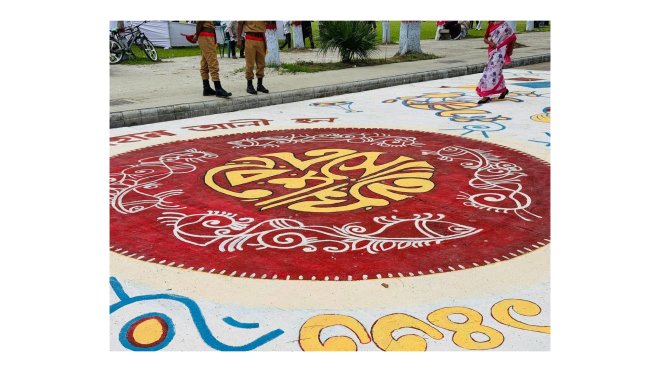
Breaking away from routine, the university administration introduced not just an event, but a celebration. The campus had already begun transforming a day before Choitro Shonkranti, as students completed vibrant alpona (street paintings), turning ordinary pavements into living canvases. By the time classes and labs ended on the day itself, the colorful artwork had already set the tone for celebration. Soon after, the air filled with music and movement as a flashmob erupted. What stood out was not just the performance but the spirit behind it. The same students, worn down by academic pressure and the harsh Khulna weather, chose to celebrate while refusing to let fatigue define them. The exhaustion seemed to fade, replaced by laughter, rhythm, and shared energy.
The following day, Pohela Boishakh unfolded in its full glory. The campus came alive with the Noboborsho Anondo Rally, where halls, faculty members, and administrators walked side by side. Every corner of Kuet bore the imprint of student creativity through colorful alponas, while the central field turned into a vibrant fairground. Stalls set up by different halls, traditional village fair attractions, and even boat rides brought a nostalgic charm to the celebration. By the afternoon, cultural performances filled the air with music, expressions of identity, and belonging.
For many students living away from home, the day carried a deeper meaning. It was not just a celebration; it was a feeling of home recreated, the traditions preserved, and the childhood memories gently revisited. For a moment, Kuet was no longer just an academic institution; it became a shared cultural space where everyone belonged. In the end, the celebration did something simple yet profound: it reminded everyone that beyond equations, deadlines, and pressures, there is joy, color, and community.
And for these two days, Kuet truly became a land of colors.