Global ocean temperatures hit record high as El Niño strengthens
Global ocean temperatures hit record high as El Niño strengthens
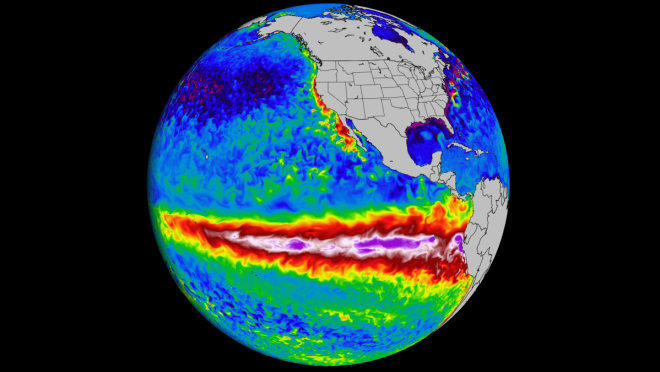
Global ocean temperatures have reached their highest level on record, with the warming driven by human-caused climate change and a strengthening El Niño, new data from the European Copernicus Climate Change Service shows.
The average surface temperature of the world’s oceans outside the polar regions reached 21.1°C on Saturday, surpassing the previous record of 21.09°C recorded on three days in March 2024.
The latest reading is particularly significant because global sea surface temperatures typically peak in March or April, rather than August.
“El Niño is adding heat to the system, but it is doing so on top of decades of human-driven warming,” said Dr Samantha Burgess, deputy director of Copernicus.
Scientists said the record could be an early indication of how strong the current El Niño will become. The weather phenomenon, which brings unusually warm water to the surface of the eastern and central tropical Pacific, is expected to strengthen until around Christmas.
Dr Jeremy Grist, senior research fellow at the National Oceanography Centre in Southampton, said the ocean temperature record could be broken again in March or April 2027 if current conditions persist.
The warming is not limited to the Pacific. Parts of the UK and Europe are also experiencing exceptionally high sea temperatures. The western English Channel, for example, has experienced almost continuous marine heatwave conditions for more than three years, with temperatures reaching 7°C above normal in July.
“This is unprecedented,” said Prof Tim Smyth, director of science at Plymouth Marine Laboratory.
The oceans absorb more than 90% of the excess heat trapped by greenhouse gas emissions, largely from the burning of fossil fuels.
Rising ocean temperatures can intensify extreme weather by providing storms with additional moisture and energy. They also contribute to rising sea levels as warmer water expands, increasing the risk of coastal flooding.
Marine ecosystems are also under growing pressure, with prolonged heat threatening habitats such as coral reefs and increasing the frequency of marine heatwaves.
“This record is another clear signal of an ocean under growing stress,” Burgess said.