UNICEF warned government 10 times over Measles vaccine shortage
UNICEF warned government 10 times over Measles vaccine shortage
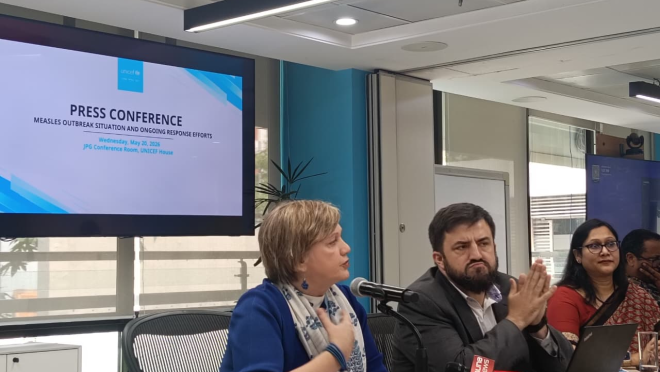
UNICEF has reported that Bangladesh faced a prolonged shortage of routine measles vaccines last year despite repeated early warnings to the government, which it says were issued at least 10 times since 2024.
The disclosure was made at a press briefing titled “Press Conference on Measles Outbreak Situation and Ongoing Response Efforts” held on Wednesday afternoon at the UNICEF Bangladesh JPG Conference Room in Dhaka. The briefing was addressed by UNICEF Bangladesh Representative Rana Flowers.
According to UNICEF, between August and November 2025, Bangladesh received 17.8 million doses of measles vaccine, which is only around one-third of the required supply. The country needs approximately 70 million doses annually, but immunisation efforts were significantly disrupted due to the shortfall.
The agency said it had repeatedly flagged concerns in at least 10 meetings with government officials since 2024, alongside five to six formal written communications to both the Ministry of Health and the Ministry of Foreign Affairs. Despite these alerts, procurement delays led to sustained gaps in vaccine availability.
UNICEF warned that the disruption in routine immunisation left a large number of children unvaccinated, increasing the risk of transmission and contributing to a wider measles outbreak.
The situation has since begun to stabilise, with vaccine supplies resuming in May this year. Authorities and development partners are now working to scale up vaccination coverage, prioritise high-risk groups, and strengthen disease surveillance systems.
UNICEF clarified that the shortage was not linked to funding constraints, but rather delays in procurement processes that affected timely vaccine delivery.