Beyond braille: The human library bringing literature to visually impaired students
For most readers, picking up a novel is an ordinary act. For visually impaired students in Bangladesh, access to academic material has slowly improved through Braille and assistive technology. Novels, poetry and other literary works have not kept pace.
Beyond braille: The human library bringing literature to visually impaired students
For most readers, picking up a novel is an ordinary act. For visually impaired students in Bangladesh, access to academic material has slowly improved through Braille and assistive technology. Novels, poetry and other literary works have not kept pace.
Many remain unavailable in any format a visually impaired student can use independently.
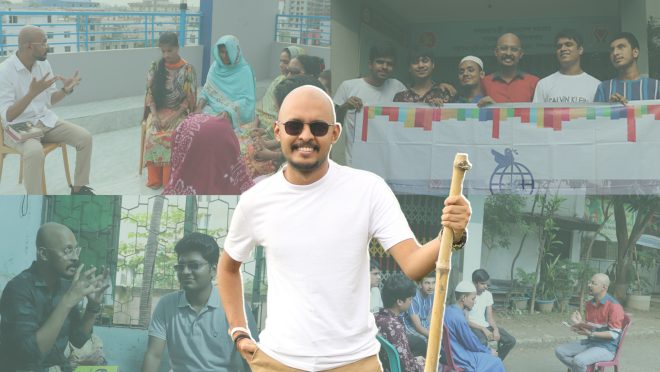
This gap is what Zahidul Islam Jobair is trying to address through Light of the Sound: The Human Library, a volunteer-led initiative that brings visually impaired students and volunteers together to experience literature through conversation, storytelling and discussion.
Jobair is an educator, researcher and youth mentor. He currently works as Coordinator for Education, Mental Health Advocacy and Mass Communication at the Centre for Development of Legal Services & Policy Standards, South Asia, and serves as a Country Ambassador and Mentor for Awareness 360, Malaysia. He previously taught Journalism, Media and Communication at Daffodil International University.
The idea grew from a concern that conversations about inclusion often revolve around infrastructure, assistive technology and examination accommodations, while literature is largely overlooked. Jobair believes literature is where empathy, imagination, creativity and critical thinking are cultivated. Without equal access to it, visually impaired students remain excluded from an essential part of education.
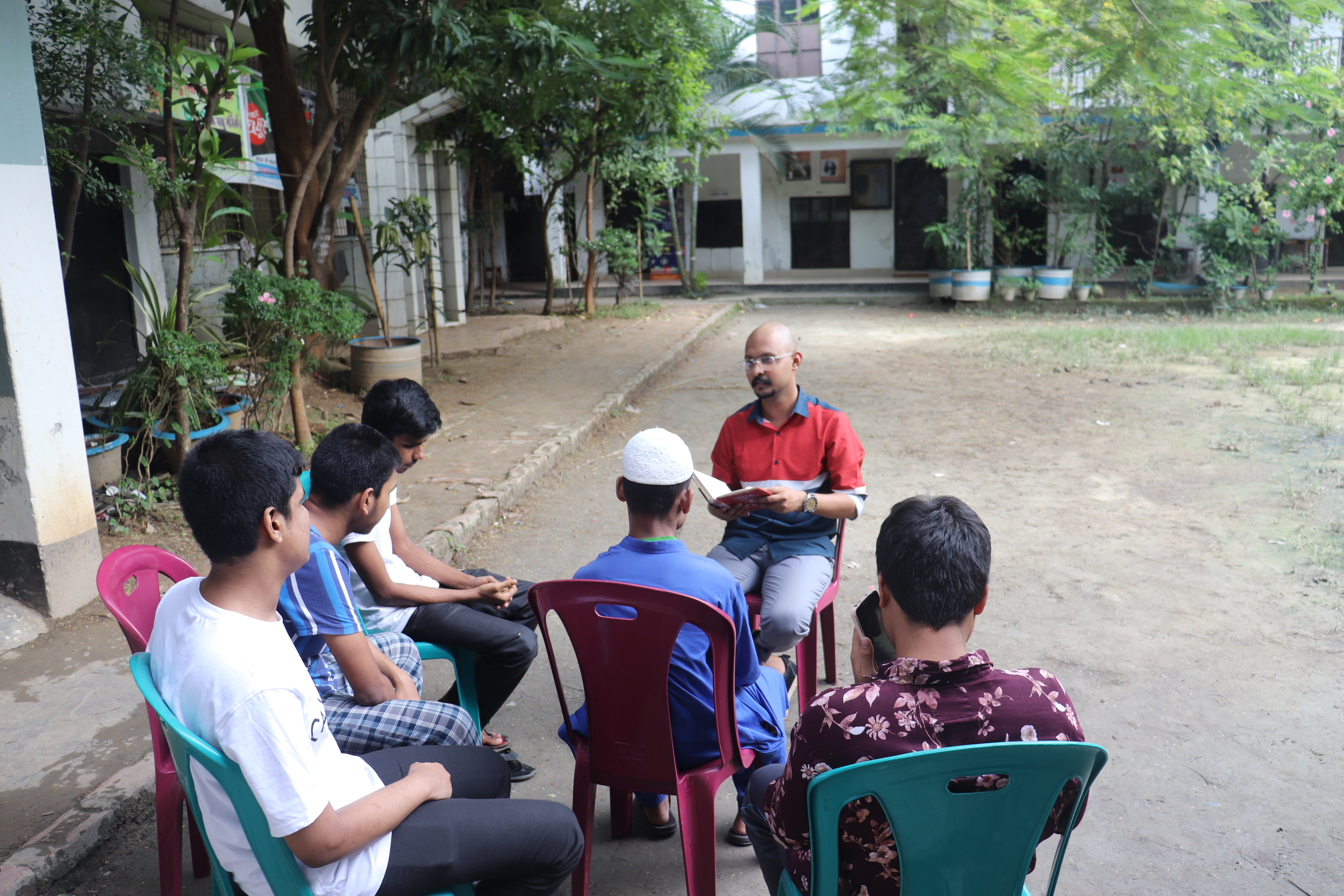
Photo: Courtesy
Rather than focusing on books themselves, Light of the Sound focuses on the conversations books create. As Jobair puts it, people usually imagine a library as a room filled with books, but their Human Library is a room filled with conversations.
A different way to experience literature
A Human Library session looks very different from a conventional reading class. Volunteers and visually impaired students discuss literature, philosophy, history, poetry, biographies and personal experiences. Instead of simply reading texts aloud, volunteers encourage participants to interpret stories, question characters, debate ideas and connect narratives with their own lives.
According to Jobair, a session may begin with a simple question about why a fictional character made a certain decision. From there, discussions can move between Bengali and international literature before branching into conversations about family, identity, morality, resilience and social expectations.
The emphasis is on shared learning rather than one-way teaching. Everyone contributes to the discussion, creating knowledge together instead of passively receiving it.
It began with listening
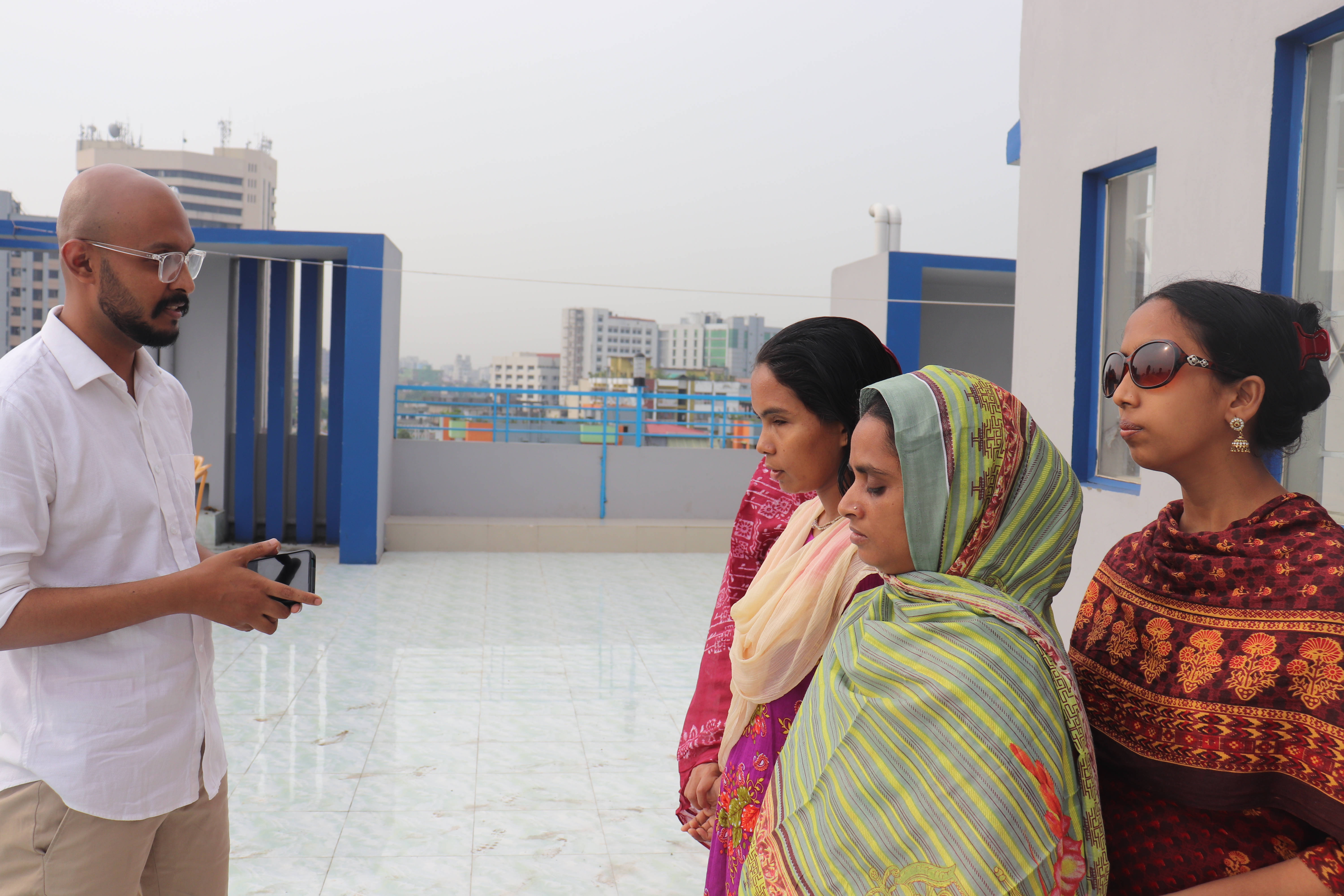
Photo: Courtesy
The initiative took shape through the Awareness 360 Fellowship in 2023. Before organising sessions, the team spent time listening.
They visited educational institutions serving visually impaired students across Dhaka, speaking with teachers, administrators, caregivers and students about reading interests, experiences and barriers. Rather than arriving with ready-made solutions, the goal was to build the initiative alongside the community.
That approach shaped six Human Library sessions. Volunteers prepared around the selected literary works while learning how to facilitate inclusive discussions built on dialogue instead of lectures.
One of our earliest sessions took place at the Bangladesh Disability Development Trust (BDDT) girls’ hostel, recognising that visually impaired girls often face overlapping barriers linked to disability and gender. The students did not want sympathy. They wanted opportunities to discuss literature, express opinions, challenge notions and participate as equals.
When students found their voices
The initiative is also a unique experience for the participants. Many were understandably quieter at first. The transformation became most visible once students began talking about their favourite books and characters.
Students were initially hesitant. But as the discussion continued, one participant began talking about a favourite literary character, prompting another to offer a completely different interpretation. Before long, the room had shifted into lively conversations about character motivations, moral choices and the differences between Bengali and international literature. Students also drew connections between fictional stories and their own experiences. By then, disability was no longer at the centre of the room. As Jobair recalls, “We were simply a group of readers discussing literature.”
After one session, a visually impaired student said, “People usually come here to teach us. Today, someone came here to listen to us.”
That remark reshaped Jobair’s understanding of the challenge. Access to books was only part of the issue. Exclusion could also come from not being invited into meaningful conversations.
Braille exists, why then a Human Library?
Jobair believes Braille, audiobooks and digital technologies have made education more accessible for visually impaired students, but accessibility should not stop at academic books.
“Literature nurtures imagination. It introduces us to cultures beyond our own. It helps us understand emotions, relationships, ethics, and identity,” he says.
For him, if a student can study mathematics, history or science but cannot experience the works of Rabindranath Tagore, Jibanananda Das, Humayun Ahmed, Shakespeare, Maya Angelou or Khaled Hosseini, then inclusion remains incomplete.
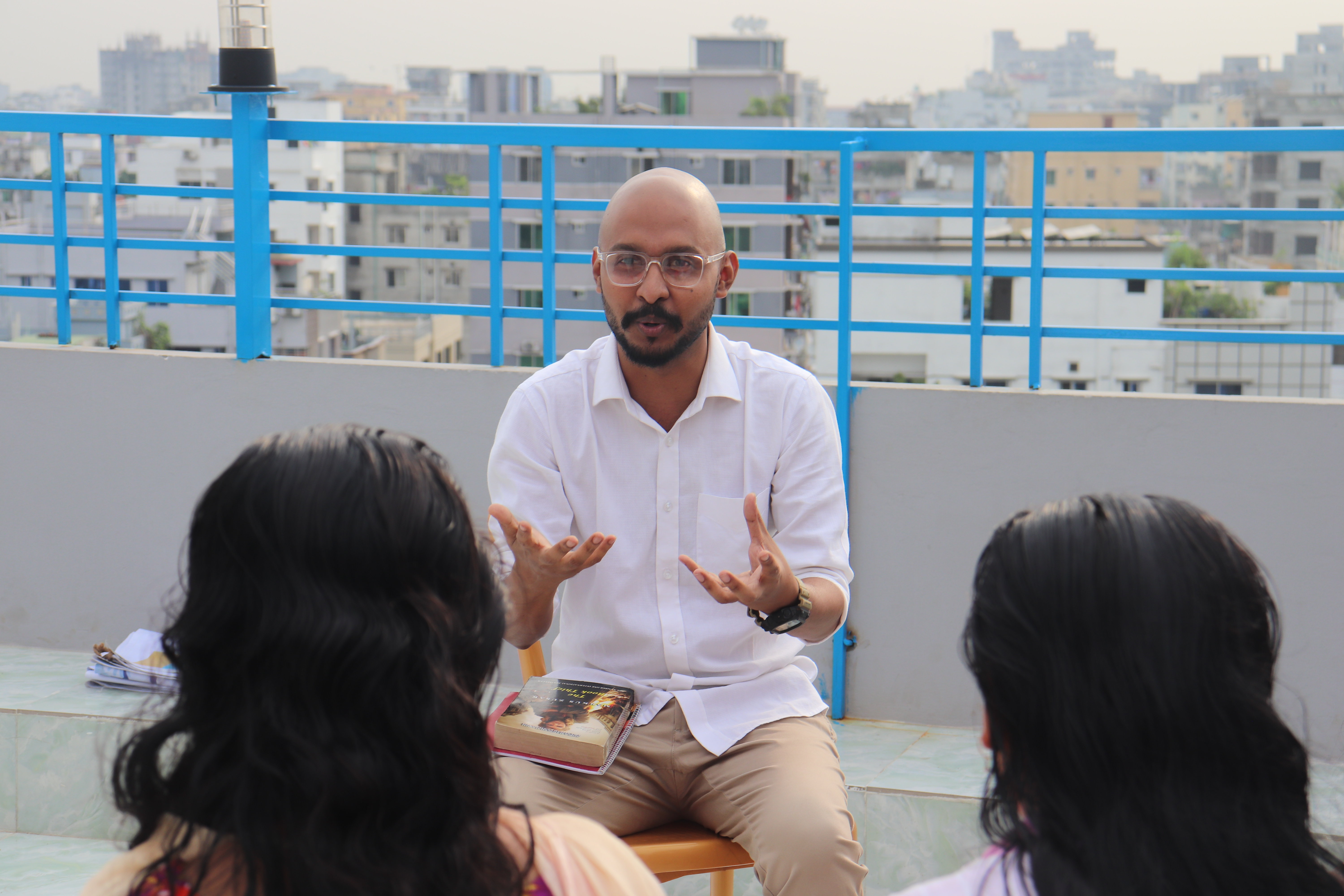
Photo: Courtesy
He sees initiatives like the Human Library as complementing existing technologies by creating spaces for stories, conversations and, most importantly, human connection.
From a project to a wider model
Light of the Sound has since grown beyond a community initiative to become the subject of a peer-reviewed international study titled Breaking Barriers: Establishing a Human Library to Foster Inclusivity for Visually Impaired Students in Bangladesh.
Publishing research was never his original goal. But the documentation pushes to create a meaningful impact beyond community initiatives, he believes.
“Research allows those stories to travel further,” he says.
By documenting the initiative, he hopes educators, practitioners, policymakers and researchers can learn from the model and adapt it to their own communities.
The research found noticeable improvements in participants’ confidence, cultural awareness and critical thinking. Students who were initially reluctant to speak became active contributors, while discussions encouraged them to question narratives, defend interpretations and appreciate different cultural perspectives. Perhaps most importantly, many began recognising the value of their own voices.
The experience also influenced volunteers. Many entered the programme with limited experience communicating with visually impaired students, which highlights the need for better training in respectful communication, assistive technologies, discussion facilitation and inclusive learning practices.
His ambition now is to expand the model across Bangladesh through Human Library chapters in schools and universities, backed by trained volunteers and partnerships with publishers, disability organisations and educational institutions. He hopes literary inclusion becomes part of mainstream education rather than something dependent on isolated projects.