DUNITE: The student-led platform reconnecting Dhaka University
Hasibul Hossain Asif still remembers the silence.
DUNITE: The student-led platform reconnecting Dhaka University
Hasibul Hossain Asif still remembers the silence.
Not the uneasy kind that follows political tension, but a rare, almost unfamiliar calm that settled over the University of Dhaka campus after the July Revolution.
As a student of the Anthropology Department from the 2021–2022 session, he was watching his own campus with new eyes. For the first time in a long while, there were no guestroom politics dominating corridors, no unrest swallowing conversations whole. Students and teachers were really talking about reform, about what the university could become.
And yet, something was missing.
“It felt incomplete,” Asif told me, replaying the moment. “The conversations were hopeful, but the reality hadn’t changed. Students were still trapped in the same cycles: private tuition to survive, BCS as the ultimate destination, government jobs as the only definition of success.”
What troubled him most was not individual ambition, but collective stagnation. Dhaka University, he believed, was producing some of the brightest minds in the country and then leaving most of that potential untouched.
That realisation would eventually grow into DUNITE.
A campus full of talent, cut off from itself
Asif’s frustration was deeply personal. Like most DU students, he had navigated the chaotic hunt for internships and part-time work. Opportunities were not scarce, but access was. Everything depended on who you knew. Facebook groups were flooded with posts, many political, most quickly buried. As a founder trying to hire students, he faced the same problem from the other side: visibility without structure, talent without connection.
“The problem was never capability,” he said. “It was architecture. There was no system designed to connect people meaningfully.”
Private tutoring had become the default income source for students, not because it was aspirational, but because it was available, flexible and familiar. Other forms of early professional work, such as research, project-based roles and internships, remained distant concepts for most undergraduates simply because no one showed them where to look.
What struck Asif most was the irony. Dhaka University has one of the strongest alumni bases in the country, with entrepreneurs, academics, development professionals and corporate leaders spread across Bangladesh. They existed, they cared, but there was no neutral, non-political space to bring them back into students’ lives.
Listening before building
Before writing a single line of code, Asif listened.
He spoke to alumni and students obsessively, conducting more than 200 in-depth interviews and surveys involving over 3,000 members of the DU community. The answers were uncannily aligned. Students wanted guidance, access and exposure. Alumni wanted to give back, to mentor and to hire, but they did not know how to reach students at scale.
“Alumni were deprived too,” he said quietly. “They had no structured way to reconnect. Most alumni organisations were politically paralysed. The will was there. The platform wasn’t.”
That was the missing piece.
By December, DUNITE was ready.
Not a job portal. Not a social network. Something else.
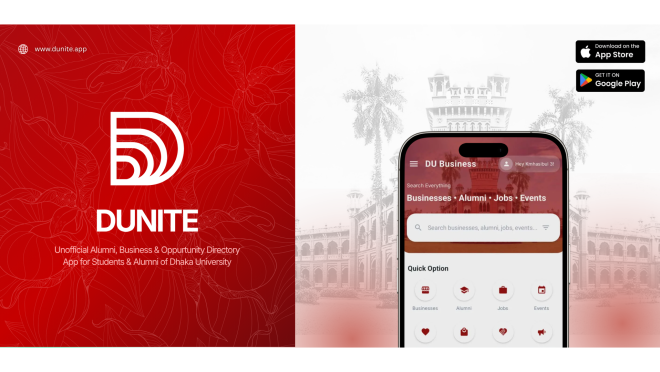
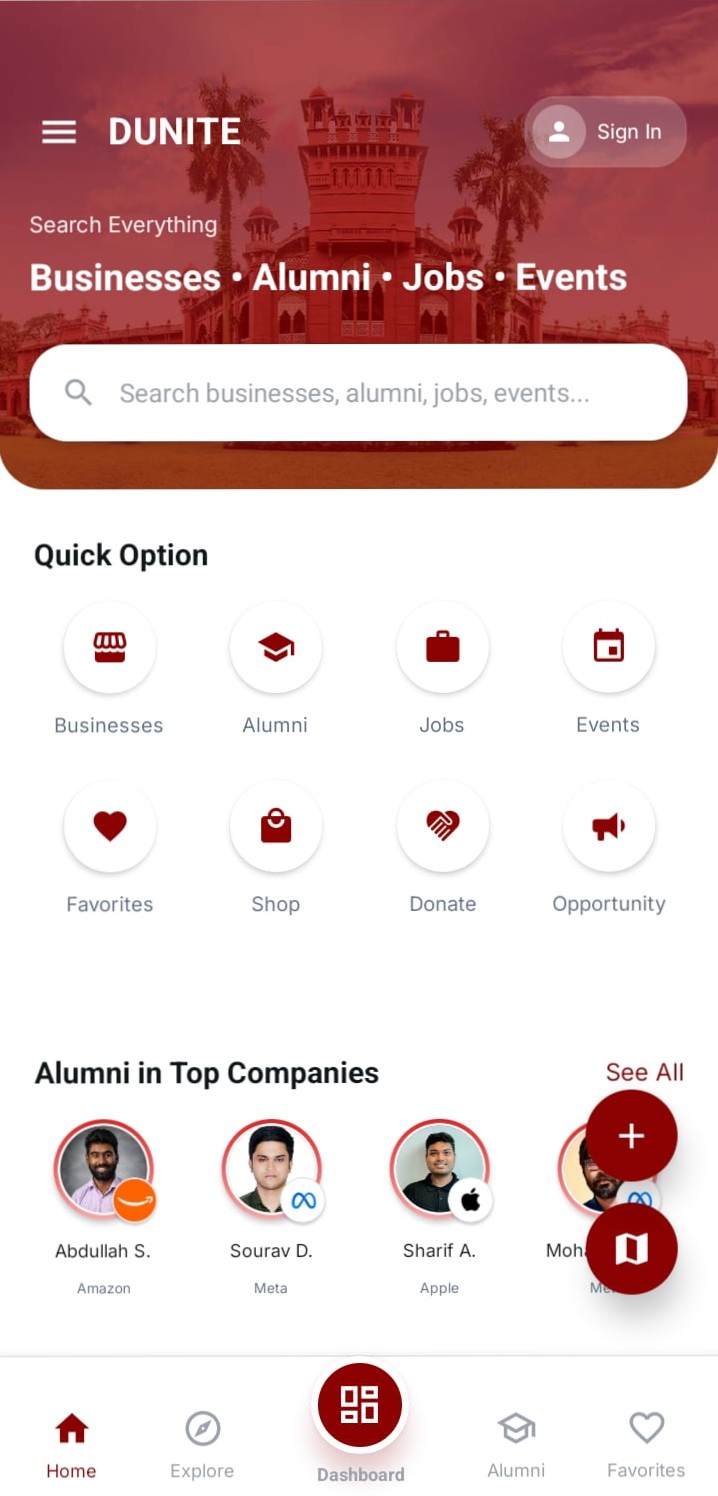
In simple terms, DUNITE connects Dhaka University students, alumni and businesses through one ecosystem. But its ambition goes further than job listings.
Students can find internships, part-time roles, scholarships, fellowships, competitions, volunteering opportunities, research positions and mentors from their first year onward. Alumni can recruit talent, guide students, promote their businesses and re-enter campus life without politics. Employers gain direct access to one of the country’s most concentrated pools of young talent.
What sets DUNITE apart is integration. Job portals focus on vacancies. Alumni associations host events. Facebook groups rely on chance. DUNITE brings all of it together: searchable, verified and structured.
“We wanted students to start building experience early,” Asif said. “Not wait until graduation to realise they’re behind.”
Trust before technology
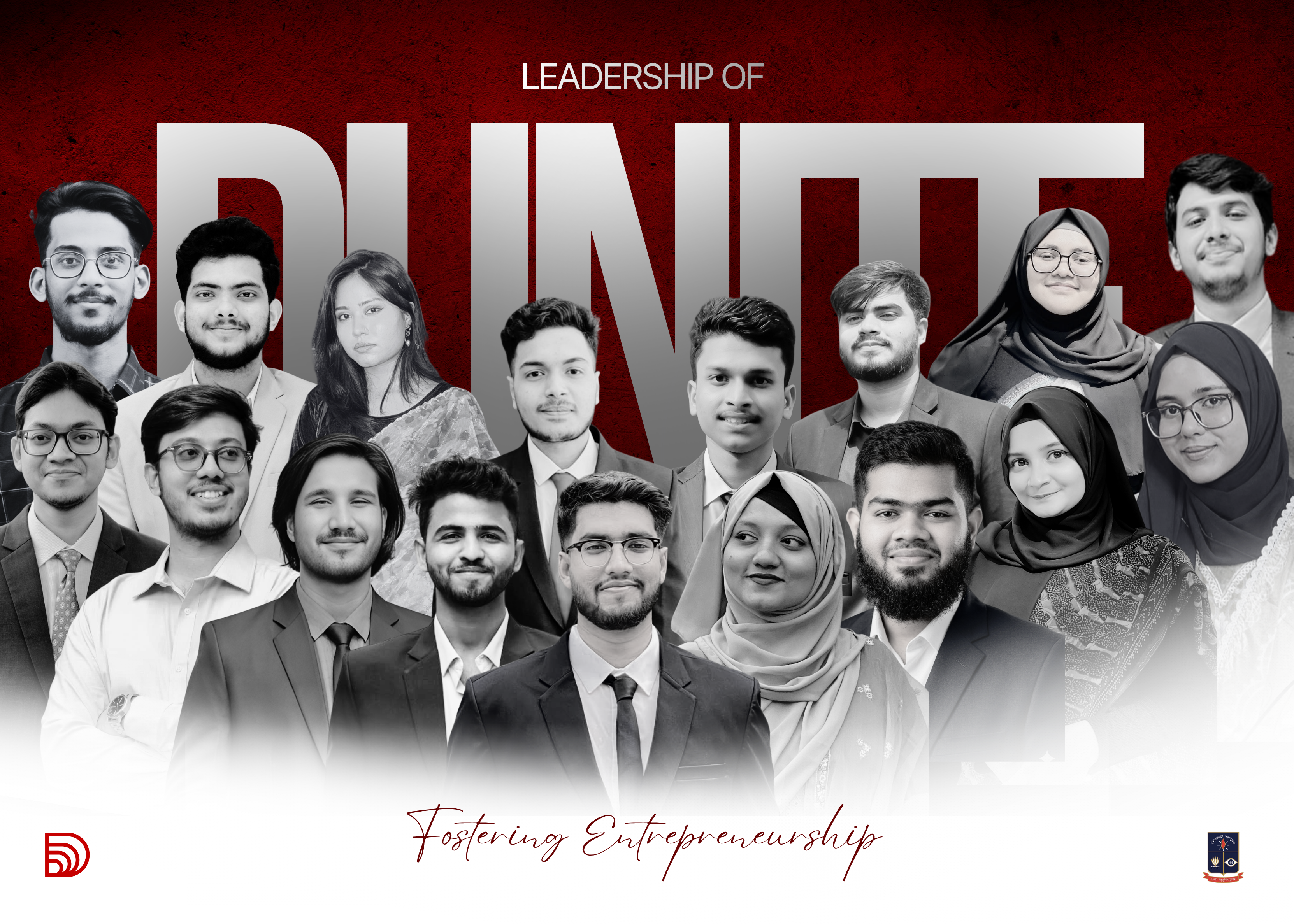
Launching a student-led platform at this scale was never going to be easy. Funding, data reliability and adoption were all uncertain. Asif funded the initial technology himself. The organisation grew into a 37-member team, operating as a central DU student club powered by some of the university’s sharpest minds.
There were moments of doubt. Would people believe in it enough to participate?
The response answered that question quickly.
Within two months, DUNITE recorded nearly 10,000 followers, over 3 million in active reach, 120,000 monthly visits and more than 1,900 app downloads. More than 340 alumni formally came on board, with hundreds more in the pipeline. Dozens of alumni-owned businesses joined, offering real opportunities.
But Asif is careful not to reduce success to numbers.
“Communities aren’t built on technology,” he said. “They’re built on trust. Tech only enables what people already want to do.”
A bridge between generations
Asif insists DUNITE will always belong to Dhaka University. There are no plans to expand elsewhere, though he believes the model can inspire similar platforms across public universities.
For him, this is not just about employment metrics or app growth. It is about repairing a generational disconnect.
“DUNITE is an attempt to strengthen the bond between students and alumni,” he said. “To remind people that this university is a living ecosystem, not a phase you leave behind.”
Five years from now, he hopes people will say something simple: that students’ lives became easier in an increasingly unforgiving, AI-driven job market; that alumni finally found a way back; and that potential stopped going to waste.
As we wrapped up the interview, Asif returned to where it all began: that quiet campus after the revolution.
“For me,” he said, “DUNITE is entrepreneurship in its truest sense. You see a systemic problem. You listen deeply. And you build something that outlives you.”
DUNITE is, at its core, a project of faith: faith in the healing power of institutions, faith in generational connection, and faith that students deserve more than mere survival tactics disguised as ambition.
It has been a journey for Hasibul Hossain Asif to regain his belief in the potential of a university community when it comes together. DUNITE is not a showy, revolutionary organisation, but it holds great promise: to create meaningful opportunities for talented students, to bring remarkable people together without politics or prejudice, and to help make Dhaka University stronger through the connections its students will be able to build.