In conversation with a IBA valedictorian in navigating the landscapes of BBA
A business degree like BBA is the most sought-after degree in Bangladesh. It gives a solid foundation to enter the corporate world and business management. However, most business graduates can’t reach their full potential due to a lack of competent guidance.
In conversation with a IBA valedictorian in navigating the landscapes of BBA
A business degree like BBA is the most sought-after degree in Bangladesh. It gives a solid foundation to enter the corporate world and business management. However, most business graduates can’t reach their full potential due to a lack of competent guidance.

A business degree is currently one of the most sought-after degrees in Bangladesh. It gives a solid foundation to enter the corporate world and business management. However, most business graduates can’t reach their full potential due to a lack of competent guidance
Recent times, degrees like BBA has been the subject of intense criticism for its lack of specialized learning, yet globally, a reputed business degree is a vessel equipped for navigating countless opportunities for its recipients.
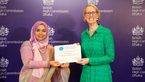
As it opens so many doors, it’s very easy to get confused. That’s a similar story faced by Monamee, a Management Trainee at Unilever who recently graduated from IBA as a valedictorian with a gold medal for academic excellence, with the top CGPA of 3.96. For a modern corporate high-achiever, possessing a wide range of skills is often the ultimate competitive advantage. Monamee has checked all the boxes of being an extreme high achiever in Extracurricular with team Pixie Dust and academics. Let’s get to know how we can maximize our achievements!
My friends who study business majors almost had no idea on how to maximize their career opportunities. The mindset of productivity rarely arrives inside people before 3rd or 4th year. This became a subject of fascination to me and that’s why I chose to speak to Monamee, to know what it is like to conquer a degree many view futile, yet to do it from an institution that is well established as the country’s best.
Navigating academics
Despite such academic success, a BBA degree was not even her target. It was a choice that came way after she achieved her actual goal of getting admitted into a medical school. Regardless of her extraordinary result, she excelled in business competitions.
She, like most students planning to pursue a BBA degree, had no idea what things would look like further down the line or how to handle academics properly. When asked about the uncertainty of choosing this career path, Maisha said, “I simply wanted to prove to myself that I could succeed in an entirely unfamiliar field. Everything that followed was a result of that decision.”
One thing to note is that Monamee had an advantage through her IBA community, alumni, and environment.
“I rarely skipped classes, regardless of my tight schedule; attending all classes remained non-negotiable.” She simultaneously had two part-time jobs, did a research assistant stint at her university, wrote for The Daily Star, and was involved in tuition. In classes, she focused on paying complete attention and using the time to understand each topic. One thing that surprised me is that she claims to be a bit of a procrastinator, yet she urges others to be a bit more consistent.
“In university life, you have complete freedom, but with that freedom comes complete responsibility.” She added, “You have to learn how to manage your own time, make use of the resources available to you, and stay accountable without someone constantly looking over your shoulder.”
I asked Monamee how to stay ahead of the majority. She says, “I focused on doing consistently well across every component rather than trying to optimise percentages or calculate the minimum marks I needed.”
One of the most underrated things that I believe Maisha said that often goes ignored is the essence of class participation. She advised, “Class participation is not just a necessity for good grades but for essential soft skills as well.” Again, she is not advising an introvert to be an extrovert or vice versa. In her words, “It is to engage meaningfully and consistently.”
“The process of writing things down helped me organise scattered information into a coherent structure and made concepts much easier to visualise and remember later.”
One common theme I have heard as a fresher is to enjoy our first year and then focus on CGPA afterwards. She warned strongly against it, saying, “As the university progresses, each course’s difficulty increases, and the loss of CG in the first years becomes progressively harder as more credits accumulate.”
This is one of the most important things highlighted by Monamee. A student must learn how to balance fun, academics, and extracurriculars to both enjoy and excel. Maisha’s advice is, “Enjoy university by all means, but don’t postpone building the academic foundation that you’ll depend on for the next four years.”
Navigating extracurriculars
Monamee has won some of the most prestigious business competitions, like HSBC Business Case Competition, BizMeastros, Marketiniac Beyond the Metrics, and many more. These require extreme dedication and countless hours of effort to craft the best possible solution. It was astonishing how she managed to balance both an extraordinary result and ECA.
“I always use a Google Calendar to track all my weekly activities.” She added, “It became much easier to understand what my week realistically looked like and where my limited time needed to go.”
The next thing she referred to is proper prioritisation. For this, she suggested being honest with ourselves about focusing more time on the weaknesses and reducing time on easier tasks.
She advised, “Time management is not just about working harder; it is about making conscious trade-offs. Once you accept that you cannot give 100% to everything simultaneously, decision-making becomes much easier.”
“My compromise was usually temporary sleep deprivation rather than permanently giving up experiences.”
She never missed the chance to enjoy her journey despite the busyness of her schedule.
“The biggest factor was choosing the right people to work with.” She added, “The team coordination should make the workload management much easier.” As these games are voluntary, they should not be a point of stress for any team members if all members perform with equal integrity.
Maximising opportunities
Monamee’s dynamic academic life was a combination of strategic planning and well-dedicated execution. I asked how she navigated this entire landscape of opportunities.
“The first year should primarily be about exploration.”
Upon a vast exploration across all the fields and looking at individual strengths, a certain field should be prioritised.
For Monamee, it was finance.
“Finance fascinated me far more than marketing, and I preferred analytical, problem-solving work.” She insisted that the second year should be to add work experience.
“Early in your career, experience often matters more than compensation.” She added, “Each experience was another data point that helped me understand what I genuinely enjoyed.”
By the third year, she began to work as a product manager at Intelligent Machines. The next years were quite hectic for her, as she had to balance academic work, research assistantship, and the aforementioned professional roles.
“Spend your first year discovering yourself, your second year experimenting widely, and your final years doubling down on what genuinely excites you.”
The anatomy of resilient success
Probably the most crucial skill for a BBA student is networking.
“Alumni, professors, seniors, competition judges, and even classmates can become valuable professional connections over time.”
For this, LinkedIn can be deemed the most essential tool across digital media. Monamee shared her strategy to create meaningful connections through LinkedIn.
She advised, “Be specific. Tell them why you’re reaching out and what exactly you’d like their advice on.” Specificity makes it easy for the person to help you overcome issues.
“A strong academic record signals qualities like consistency, discipline, and the ability to perform under pressure.” So, it acts as the first pillar of differentiation and opens a lot of doors, and adding these extracurriculars can open all the doors in the job market. From MNCs to banks, no opportunity is left out.
Another suggestion is to work at startups or smaller organisations and explore multiple positions.
“In a startup environment, you often get to wear multiple hats.” This helps to understand the operational structure of a company. She added, “I don’t think corporate internships are the only route to building a strong profile.” The most important thing here is self-learning and experience.
These work experiences foster work ethic, an understanding of accountability, communication with managers and colleagues, and the ability to manage responsibilities that don’t come with a grading rubric.
On the flip side, stress of maintaining all this is a big issue.
“Stress builds gradually over a longer timeframe. I avoided stress by making time for myself, even during the busiest weeks.”
The best thing she highlighted is knowing when to stop. Overworking looks productive at first but hampers actual productivity over time. She emphasised, “Knowing when to pause is just as important as knowing when to work.”
“I was also incredibly fortunate to have parents who believed in me, even during moments when I doubted myself.” She added, “That combination of faith and family gave me the confidence to keep moving forward whenever self-doubt crept in.”
“Surround yourself with ambitious people: people who inspire you to become better versions of yourself in their own unique ways.” She added.
She reflected, saying, “The fear is temporary; the journey is absolutely worth taking.”