AI may soon help humans communicate with animals
Researchers have long known that animals use sophisticated forms of communication, but the sheer volume of data involved has made it difficult to study these systems manually
AI may soon help humans communicate with animals
Researchers have long known that animals use sophisticated forms of communication, but the sheer volume of data involved has made it difficult to study these systems manually
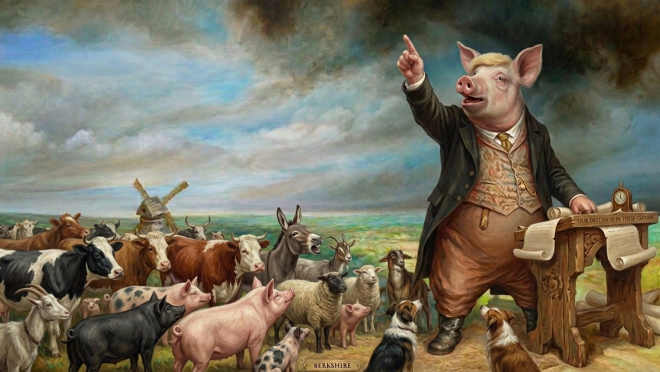
Artificial intelligence could soon help scientists decipher animal communication, allowing humans to better understand the sounds, behaviours and social interactions of species ranging from whales and crows to dogs and farm animals.
A recent article published by Scientific American explores how advances in machine learning are opening new possibilities for decoding animal communication, while also raising questions about the limits and ethics of using AI to interact with other species.
Researchers have long known that animals use sophisticated forms of communication, but the sheer volume of data involved has made it difficult to study these systems manually. Cheaper sensors, underwater microphones, drones and other technologies are now generating vast amounts of recordings and behavioural data that AI can analyse at a scale humans cannot.
Christian Rutz, a behavioural ecologist at the University of St Andrews in Scotland, became interested in the possibilities after years of studying New Caledonian crows, among the few birds known to manufacture tools.
The crows not only make tools but also live in complex social groups and appear to pass toolmaking techniques to their offspring. Different groups have also been found to use distinct vocalisations, prompting researchers to investigate whether these dialects might be linked to cultural differences in toolmaking.
New AI systems could help analyse such vocal patterns. Aza Raskin, one of the founders of the nonprofit Earth Species Project, says machine learning may soon make it possible to decipher animal calls.
“people realize that we are on the brink of fairly major advances in regard to understanding animals’ communicative behavior,” Rutz says.
The Earth Species Project is collecting data from different species and developing machine-learning models to identify patterns in their communication. Meanwhile, Project CETI is concentrating on sperm whales and their complex vocalisations.
Research on sperm whales offers one of the clearest examples of how AI could accelerate the process. Shane Gero, a scientist in residence at Carleton University in Ottawa, has spent nearly two decades recording two clans of sperm whales in the Caribbean and documenting what they do when producing different sounds.
The whales use recurring sound patterns known as codas, which appear to help them identify one another. After researchers manually decoded some of these codas, they tested whether AI could identify individual whales from their vocalisations.
A neural network correctly identified a small subset of individual whales from their codas 99 percent of the time. Project CETI has since deployed an underwater microphone attached to a buoy to record the vocalisations of Dominica’s resident sperm whales around the clock.
The enormous amount of data generated by such projects is particularly suited to machine learning. Unlike traditional methods that require humans to label and analyse information, newer models can learn patterns from large datasets through self-supervision.
Advances in language technology have also encouraged scientists to consider whether the same principles could be applied to animal communication. Machine-learning systems can identify relationships between words in human languages and can analyse different forms of information simultaneously.
This multimodal capability could be crucial because animals, like humans, often communicate through several channels at once. Sounds may be accompanied by body movements, facial expressions or other behaviours that provide context.
AI has already proved useful in identifying animal sounds. Merlin, a free app developed by the Cornell Lab of Ornithology, analyses bird recordings by converting them into spectrograms and comparing them with a large audio database. It can identify calls from more than 1,000 bird species.
One major challenge, however, is separating individual sounds from background noise. Researchers refer to this as the “cocktail party problem”. The Earth Species Project has developed a neural network capable of separating overlapping animal sounds and filtering out background noise.
Such technology could have important implications for conservation. Researchers are using AI to examine the vocal repertoire of the Hawaiian crow, or ‘Alalā, which went extinct in the wild in the early 2000s. Rutz and the Earth Species Project are comparing calls made by captive birds with historical recordings to determine whether the species has lost important forms of communication during captivity.
AI could also change how humans understand domestic animals. Behavioural consultant Con Slobodchikoff, who has studied prairie dogs and dogs, argues that humans often overlook the non-verbal signals pets use alongside sounds.
“We are so fixated on sound being the only valid element of communication that we miss many of the other cues,” he says.
Slobodchikoff is developing an AI model designed to interpret dogs’ facial expressions and barks for their owners.
“Animals have thoughts, hopes, maybe dreams of their own,” he says.
Farmed animals may also benefit. Elodie F. Briefer, an associate professor in animal behaviour at the University of Copenhagen, has developed an algorithm trained on thousands of pig sounds that can predict whether the animals are experiencing positive or negative emotions.
However, researchers caution that identifying patterns is not the same as understanding meaning. AI systems can find relationships in huge datasets, but scientists may not always know why a model reaches a particular conclusion.
Benjamin Hoffman, who helped develop Merlin before joining the Earth Species Project, says the technology itself can influence the scientific questions researchers are able to ask.
“The choices made on the machine-learning side affect what kinds of scientific questions we can ask,” Hoffman says.
Merlin Sound ID, for example, can identify which bird species are present in an area, but it cannot necessarily determine how those birds communicate with potential mates.
At Project CETI, researchers are attempting to go beyond identifying individual sounds and investigate whether sperm whale vocalisations contain structures resembling language.
“Once you have this basic ability,” Rus says, “then we can start studying what are some of the foundational components of the language.”
The team is “analyzing whether the [sperm whale] lexicon has the properties of language or not.”
Researchers are also exploring whether AI could eventually generate animal vocalisations. Raskin believes systems capable of mimicking animal communication could allow scientists to conduct two-way experiments and observe how animals respond.
The Earth Species Project is already testing artificially generated calls with zebra finches. The ultimate goal, Raskin says, is to reach a point where animals cannot distinguish a machine-generated communication from that of another member of their species.
“We’ll be able to pass the finch, crow or whale Turing test,” Raskin asserts.
“The plot twist is that we will be able to communicate before we understand.”
Ethical risks
The prospect of communicating with animals also comes with significant ethical risks. Karen Bakker, a digital innovations researcher and author of The Sounds of Life: How Digital Technology Is Bringing Us Closer to the Worlds of Animals and Plants, warns that the technology could be misused.
Commercial operators could use animal sounds to locate fish, while poachers might exploit the technology to find endangered species or imitate their calls to lure them.
For species such as humpback whales, synthetic sounds could also have unpredictable effects on populations.
“Inject a viral meme into the world’s population,” Bakker says, describing the potential consequences of introducing artificial songs into whale populations.
As the field develops, researchers are calling for safeguards alongside technological advances. Rutz and his co-authors argued in a 2023 Science article that “best-practice guidelines and appropriate legislative frameworks” are urgently needed.
“It’s not enough to make the technology,” Raskin warns. “Every time you invent a technology, you also invent a responsibility.”
Ultimately, understanding animal communication may require researchers to look beyond the assumption that language must resemble human speech.
Studies of animals have already shown similarities in how different species communicate with their young. Mammalian infants, for example, can produce cries that elicit responses from other species, while harbour seal pups and human babies both learn to manipulate vocal pitch.
Whether animal communication should actually be considered language remains disputed. Some researchers argue that human language is fundamentally different because of its grammar and syntax, while others believe this definition may prevent scientists from recognising meaningful communication in other species.
Raskin expects future research to reveal common forms of expression across species.
“It wouldn’t surprise me if we discovered [expressions for] ‘grief’ or ‘mother’ or ‘hungry’ across species,” he says.
The question may ultimately be less about teaching machines to translate animal sounds and more about changing how humans perceive other species.
Observations of sandhill cranes, for instance, have suggested behaviours that resemble grief following the loss of offspring. Researchers George Happ and Christy Yuncker have documented similar reactions among a pair of wild cranes they studied for two decades.
Happ acknowledges that scientists cannot definitively establish the physiological basis of such behaviour, but argues that dismissing the possibility of emotion does not fit the evidence they have observed.
“We cannot precisely specify the underlying physiological correlates.”
“Flies in the face of the evidence.”
The broader promise of animal communication research, however, lies in its potential to challenge the boundary humans have traditionally drawn between themselves and the rest of nature.
“We’re always looking at nature,” Yuncker says, “when really, we’re part of it.”