Bright moon to reduce visibility of Eta Aquarid meteor shower
The meteor shower will reach its peak from Tuesday night into early Wednesday
Bright moon to reduce visibility of Eta Aquarid meteor shower
The meteor shower will reach its peak from Tuesday night into early Wednesday
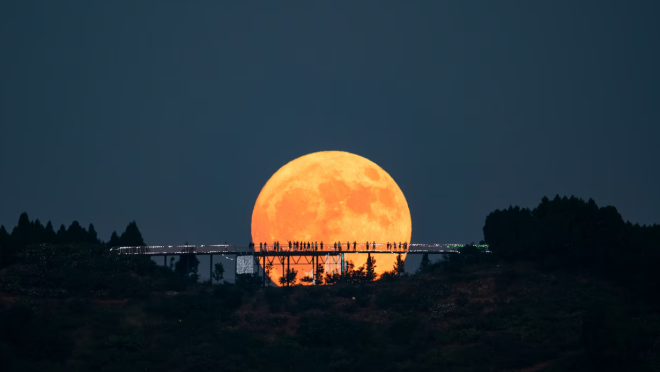
The Eta Aquarid meteor shower, created from debris of Halley’s Comet, is set to light up the night sky this week, but a bright moon is expected to make viewing more difficult.
The meteor shower will reach its peak from Tuesday night into early Wednesday. While viewers in the Southern Hemisphere can usually see up to 50 meteors per hour at peak time, this year’s bright moon may reduce that number by about half. In the Northern Hemisphere, observers are likely to see fewer than 10 meteors per hour.
Teri Gee, manager of the Barlow Planetarium in Wisconsin, said the display will be less impressive for those in the north, adding that people farther south will have a better chance of seeing more meteors.
Meteor showers occur when Earth passes through trails of dust and debris left behind by comets or asteroids. As these particles enter the atmosphere at high speeds, they burn up and create bright streaks of light, commonly known as shooting stars.
Although a few meteors can be seen on any clear night, meteor showers provide a more noticeable and predictable display each year. The Eta Aquarids are linked to Halley’s Comet, which orbits the sun and passes near Earth roughly every 76 years. It is expected to return again in 2061.
Experts suggest heading outdoors just before dawn for the best chance to see the meteors. Choosing a dark location away from city lights and tall buildings can improve visibility. Finding a spot that blocks the bright waning gibbous moon, which will be about 84% full, may also help.
Viewers are advised to bring blankets or chairs, avoid looking at phones and allow their eyes to adjust to the darkness. Looking toward the eastern sky near the Aquarius constellation can increase the chances of spotting meteors.
Astrophysicist Nico Adams said the meteors often appear as quick flashes of light in the corner of the eye.
Despite the reduced visibility this year, experts say watching a meteor shower in person remains a unique experience.