The fish that lives without fathers: Nature’s female-only fish that reproduces without males
The fish that lives without fathers: Nature’s female-only fish that reproduces without males
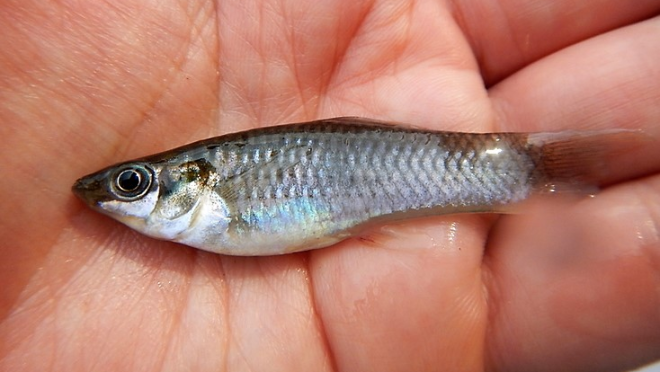
At first glance, the Amazon molly appears to be an evolutionary contradiction. It is a vertebrate that survives without males, reproduces without sex, and still thrives across freshwater ecosystems in North America and Mexico.
Yet this small fish is not an anomaly. It is a living challenge to one of biology’s most deeply held assumptions: that sexual reproduction is essential for long-term survival.
Known scientifically as Poecilia formosa, this all-female species reproduces through a rare mechanism called sperm-dependent parthenogenesis. It does not need male genetic material to reproduce, only the presence of sperm to trigger development.
In evolutionary terms, it is both dependent on sex and entirely separated from it.
The illusion of mating without genetic exchange
Amazon mollies coexist with closely related species such as sailfin and Atlantic mollies, relying on their males to initiate reproduction. The males court and attempt mating, unaware that their genetic contribution is usually discarded.
In most cases, the sperm acts only as a biological trigger. The offspring are genetic clones of the mother.
Occasionally, however, fragments of male genetic material are incorporated, producing rare genetic variation. But these events are exceptions, not the rule.
This system creates a paradox: males continue to interact with a species that offers them no genetic return, while females sustain entire populations without sexual reproduction.
The evolutionary puzzle
The existence of Amazon mollies raises a fundamental question in evolutionary biology: if asexual reproduction provides a two-fold reproductive advantage, why hasn’t it replaced sex?
In theory, a female producing only daughters should outcompete sexual species rapidly. Yet sexual reproduction remains dominant across most complex organisms.
Two major explanations are still debated.
The first suggests that sex allows harmful mutations to be purged and beneficial ones to combine more efficiently. The second, known as the Red Queen hypothesis, argues that sexual reproduction helps species stay ahead in an evolutionary arms race with parasites.
Neither explanation fully resolves the stability of Amazon molly populations alongside their sexual relatives.
A system balanced on biological tension
What makes the Amazon molly system particularly striking is its stability.
Despite theoretical advantages of asexual reproduction, Amazon mollies do not eliminate their sexual counterparts. Instead, both persist in shared environments.
This coexistence suggests that ecological and behavioural factors may regulate population balance more than genetics alone.
Male mating behaviour, for instance, may reduce excessive reproduction of asexual females. Environmental pressures and differences in life history patterns may also contribute to maintaining equilibrium.
In other words, evolution here is not a linear competition, but a managed tension.
What this fish reveals
Beyond its unusual reproductive strategy, the Amazon molly forces biologists to rethink fundamental assumptions about sex, survival, and diversity.
It demonstrates that reproduction is not always about genetic exchange. It also shows that biological systems can remain stable even when they appear, in theory, to be evolutionarily “unsustainable”.
Perhaps most importantly, it exposes a deeper truth: evolution does not always optimise for simplicity or efficiency. It often preserves complexity, even when simpler systems appear more advantageous.
In this sense, the Amazon molly is not an exception to biology.
It is a reminder that biology is far less predictable than it first appears.