How Ancelotti’s tactical masterclass unlocked Japan’s blue samurai
Real Madrid playing in a yellow jersey. Sounds strange, right? But that’s exactly what Carlo Ancelotti’s Brazil looked like against Japan. And he tore up Japan’s Death Note script in his signature style.
How Ancelotti’s tactical masterclass unlocked Japan’s blue samurai
Real Madrid playing in a yellow jersey. Sounds strange, right? But that’s exactly what Carlo Ancelotti’s Brazil looked like against Japan. And he tore up Japan’s Death Note script in his signature style.
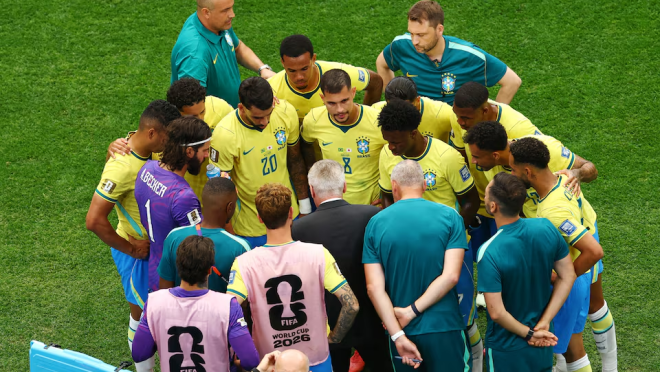
Don Carlito, as they say, has charged up this Brazilian team, not in the joga bonito style but in his trademark Italian fashion. Eyebrows raised. Unfazed. Not a single celebration.
I’m not talking about those Instagram aura edits. I’m talking about the tactical genius Ancelotti scripted in Brazil’s dramatic 2-1 win over Japan, sealed by Gabriel Martinelli’s stoppage-time winner. As a Real Madrid fan, I’ve seen this movie so many times.
The comeback victory that secured Brazil’s place in the Round of 16 was a tactical lesson from one of football’s greatest managers.
Japan had the perfect first half.
Whenever Brazil had possession, Japan dropped into a compact 5-4-1 defensive block from their 3-4-2-1 shape. Every passing lane through the middle disappeared, forcing Brazil to circulate the ball without creating meaningful chances.
Hajime Moriyasu’s plan to frustrate Brazil with their structure worked. Despite missing three key players, Japan pressed aggressively, defended intelligently and matched Brazil physically. They took the lead in the 29th minute after a misplaced pass from Danilo allowed Sano to win the ball and break into the space behind Brazil’s high defensive line. He drove forward and finished calmly into the bottom corner, showing how dangerous Japan could be on the counter despite having less possession.
For much of the first half, they were the better side.
And then Ancelotti did what Ancelotti always does.
Aerial domination
At half-time, Endrick replaced the injured Lucas Paquetá, and Brazil shifted into a much more aggressive shape. Vinícius Júnior stopped drifting inside and hugged the touchline instead, stretching Japan’s defence much wider than before. More importantly, Brazil stopped trying to play intricate football through the middle. They accepted that Japan had closed those spaces and began attacking in a completely different way.
The crosses started flying into the box.
Casemiro perfectly summed up Ancelotti’s thinking. He had struggled badly in the first half. He looked slow, misplaced passes and lost possession several times. But Carlo did not substitute him.
He understood that once Brazil started crossing the ball and playing more directly, Casemiro would become one of their biggest weapons. The decision paid off. Gabriel whipped in an excellent cross from the left, Casemiro ghosted into space at the far post, and his header found the corner to make it 1-1.
Brazil were now in control, but they still needed a winner.
Checkmate!
Japan adjusted once again, protecting the wide areas better while continuing to frustrate Brazil. Vinícius created a brilliant chance for himself, dribbling past two defenders inside the box and nearly scoring the best goal of this World Cup.
Typically, in these types of situations, managers bring on players who can create chances, add creativity and inspire a goal out of nowhere. With Neymar on the bench, that seemed like the obvious move.
But Ancelotti, being the manager he is, surprised everyone by bringing on Gabriel Martinelli. And it paid off!
Deep into stoppage time, Ao Tanaka lost possession in midfield. Brazil moved the ball forward immediately. Bruno Guimarães spotted Martinelli’s clever run and played a perfectly weighted pass between Sugawara and Tomiyasu. Martinelli met it first time, and his finish clipped the post before rolling into the net.
Japan played the better football for long stretches. They ran harder, defended brilliantly and came within minutes of one of the biggest results in their history. Big shout-out to Zion Suzuki. He is a crazily good goalkeeper. The late winner reflected not a flaw in Japan’s structure but the cumulative effect of sustained pressure on a side defending deep for extended periods. But the five-time Champions League-winning manager knows his football, and he found a way to unlock the Blue Samurai in his own style.
One tactical puzzle has been solved. Bigger ones lie ahead over the next four matches. But if there’s one man who has built a career on finding answers when the odds seem against him, it’s Carlo Ancelotti.
Brazil’s dream of ending their 24-year wait for football’s greatest prize is still alive, and Don Carlo now holds the pen.