Transgender athletes can not participate in female category events
Only biological female athletes, whose gender has been determined by a one-time gene-screening test, will now be eligible to take part in female category events at the Olympic Games, the International Olympic Committee (IOC) said on 26 March.
Transgender athletes can not participate in female category events
Only biological female athletes, whose gender has been determined by a one-time gene-screening test, will now be eligible to take part in female category events at the Olympic Games, the International Olympic Committee (IOC) said on 26 March.
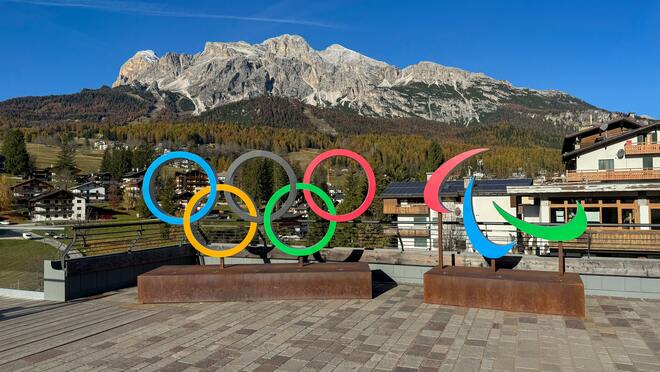
The new rules essentially stop transgender athletes from competing in female category events at the Olympics. They had previously been eligible to compete at the Games once cleared by their respective federations.
Following an 18-month consultation phase, the IOC unveiled its policy for the Olympic Games, Youth Olympics and Games qualifiers. It is widely expected to be adopted by international sports federations and become a universal rule for competitors in female elite sports, after years of fragmented regulation that led to major controversies.
All athletes wanting to qualify or take part in female category events from the LA2028 Olympics onwards will have to undergo an SRY gene test to determine their eligibility.
“Based on scientific evidence, the IOC considers that the presence of the SRY gene is fixed throughout life and represents highly accurate evidence that an athlete has experienced male sex development,” the IOC said in a statement.
The screening will be conducted via saliva, cheek swab or blood sample and is unintrusive compared to other methods, the IOC said, and will be done only once in the athlete’s career. SRY stands for sex determining region Y gene.
The Olympic body had long declined to apply any universal rule on transgender participation in the Olympics and in 2021 instructed international federations to come up with their own guidelines.
New IOC President Kirsty Coventry did a U-turn immediately after taking over in June last year, saying her organisation would take the lead for a uniform approach.
“At the Olympic Games, even the smallest margins can be the difference between victory and defeat,” Coventry said. “So, it is absolutely clear that it would not be fair for biological males to compete in the female category. In addition, in some sports it would simply not be safe.”
“I really believe this policy is foundationally based in science and led by medical experts,” she told a press conference. “We know that this topic is sensitive.”
“Safety on the field of play and fairness. One of the things we like to see in sport is fair and equal treatment of everyone on that field of play. Those the two personal reasons I felt very strongly about this.”
The French Olympic Committee reacted to the decision with a statement saying: “The SRY tests referred to raise major ethical and scientific concerns for all those affected.
“Practical difficulties also arise, particularly in France, where carrying out such tests would conflict with bioethics laws and the civil code, which currently prohibit their use in laboratories in the country.”
The new rules have no retroactive power and no impact on grassroots or amateur sports.