Investigation finds billions lost to poor-quality meals in primary schools
An investigation by Jamuna TV has found serious allegations of corruption and poor food quality in the government’s primary school feeding programme, which runs in about 150 upazilas and started on 17 November 2025 with nearly BDT 50 billion in funding.
Investigation finds billions lost to poor-quality meals in primary schools
An investigation by Jamuna TV has found serious allegations of corruption and poor food quality in the government’s primary school feeding programme, which runs in about 150 upazilas and started on 17 November 2025 with nearly BDT 50 billion in funding.
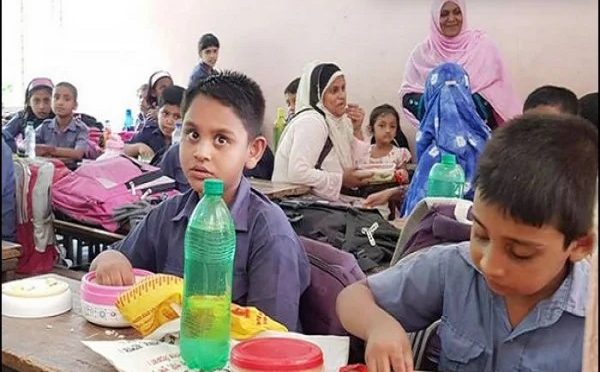
According to the report, the programme is supposed to provide students with five types of food – eggs, bread, milk, bananas and biscuits. However, Jamuna TV’s investigation in 11 upazilas revealed that cheaper, lower-quality bananas and eggs are being supplied, and approximately BDT 1.7 billion is being misappropriated each week as a result.
Parents and students reported serious concerns. One girl, Raysa Muntaha, was hospitalised for two days with stomach pain after eating the midday meal. Her mother said the food “felt like chemicals”.
At one government primary school in Kalai upazila, teachers found fungal growth on the supplied bread, and some students refused to eat it because of the smell.
Officials also found that eggs supplied weighed far less than the required minimum (most less than 60g), and bananas in some areas were of poor quality and hard to eat. Local suppliers said smaller eggs cost less, which encourages cheating.
According to calculations, by providing under-weight eggs and poor-quality fruit and bread in the midday meals, officials and suppliers are unlawfully profiting millions of taka every day across the country.
Health experts warned that rotten or poorly cooked food could lead to diarrhoea, jaundice and hepatitis, while the education ministry said it would instruct school authorities to better monitor food quality going forward.