Secondhand book sales surge as AI companies seek training data
Secondhand book sales surge as AI companies seek training data
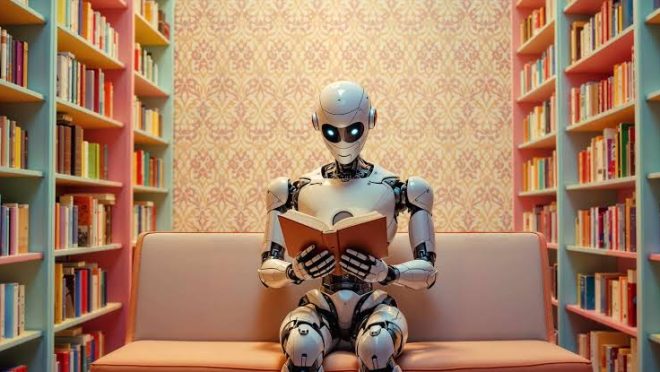
Secondhand booksellers around the world are reporting an unusual surge in bulk purchases, with thousands of books being shipped to distant warehouses — raising questions about whether the growing demand is linked to artificial intelligence.
Stuart Manley of Barter Books in Northumberland, UK, says his shop normally sells around 2,000 to 3,000 books a week. Recently, however, a single order from a Canadian company matched the volume he would usually sell in an entire week.
After three decades in the secondhand book trade, Manley says he has never seen demand like it.
Similar reports have emerged from booksellers in different countries, although many remain unsure where the books are ultimately going.
The unusual buying spree has drawn attention to the AI industry, particularly following a 2025 US court ruling involving AI company Anthropic.
A US judge ruled that Anthropic’s use of books to train its AI system was sufficiently transformative to fall within US copyright law. Court documents later revealed that books acquired for the company’s AI training project had been dismantled and scanned, with the remains recycled.
The project was reportedly known internally as “Project Panama” and involved what company documents described as plans to “destructively scan” books on a large scale.
Destructive scanning involves removing the spine of a book so its pages can be scanned quickly, after which the physical copy is discarded or recycled.
Anthropic has said its AI systems are trained using publicly available web data, commercially acquired datasets and data generated by the company itself. It also said its programmes do not buy and destroy rare or antiquarian books.
Still, the possibility that ordinary secondhand books could be bought only to be digitised and destroyed has unsettled booksellers.
David Tobin of Walden Books in north London said the recent demand was welcome from a business perspective, particularly for titles that had been sitting unsold for years.
“But it would be sad if they are ultimately destroyed,” he said.
The mystery surrounding the purchases highlights a growing tension between the expanding appetite of AI companies for training data and the fate of physical books that have survived for decades.
Insights taken from: BBC