US, China and Russia compete to deploy nuclear reactors on Moon
The deployment of nuclear reactors on the Moon presents safety and engineering challenges
US, China and Russia compete to deploy nuclear reactors on Moon
The deployment of nuclear reactors on the Moon presents safety and engineering challenges
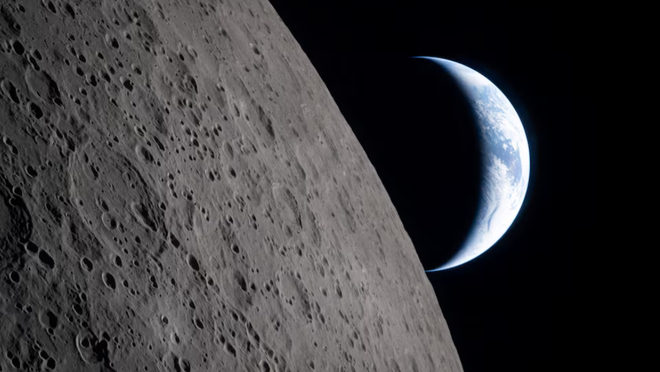
The United States, China and Russia are competing to build and deploy nuclear reactors on the Moon to support permanent lunar habitats, resource exploration and deep-space missions.
Early lunar base operations are expected to rely on solar panels and radioisotope systems to charge rovers and heat equipment. But nuclear reactors are considered necessary for sustained power during lunar nights, which last more than two Earth weeks, says NDTV.
The United States plans to launch a lunar reactor in December 2030 near the Moon’s south pole. Nasa’s proposed Lunar Reactor 1 is designed to produce 20 kilowatts of electricity and operate autonomously for five years without maintenance.
Nasa accelerated its schedule over concerns that a Sino-Russian lunar reactor could establish restricted zones on the Moon.
Russia and China are aiming to deploy a reactor by 2036. Russia is developing the Selena reactor, which is designed to generate up to 10 kilowatts of autonomous power for 10 years to support Chinese-led lunar stations.
Safety and engineering challenges
The deployment of nuclear reactors on the Moon presents safety and engineering challenges.
Rocket launch failures could result in severe accidents that disperse radioactive material. To reduce risks during transit, both the United States and Russia intend to launch their reactors in an inactive state.
Building heavy containment structures similar to those used on Earth is technically difficult on the lunar surface. Physical exclusion zones around reactors will therefore likely be required to protect astronauts and sensitive equipment from radiation.
Legal and geopolitical questions
The competition also raises questions about access to the lunar surface and the use of its resources.
Under the 1967 Outer Space Treaty, no nation can claim territory on the Moon. However, it remains legally unclear whether countries can restrict access to surrounding safety zones or claim ownership of extracted lunar resources.
Nasa is concerned that a Chinese-Russian reactor could establish an exclusion zone that restricts where American rovers and astronauts can travel.
Space law experts have said safety perimeters may conflict with the treaty principle guaranteeing free access to space.