Zahir Raihan: Remembering the architect of Bangladeshi cinema
Zahir Raihan was a journalist, a novelist, a political activist, and a visionary filmmaker. On what would have been his 91st birthday, we look back at his brief, blazing life of
Zahir Raihan: Remembering the architect of Bangladeshi cinema
Zahir Raihan was a journalist, a novelist, a political activist, and a visionary filmmaker. On what would have been his 91st birthday, we look back at his brief, blazing life of
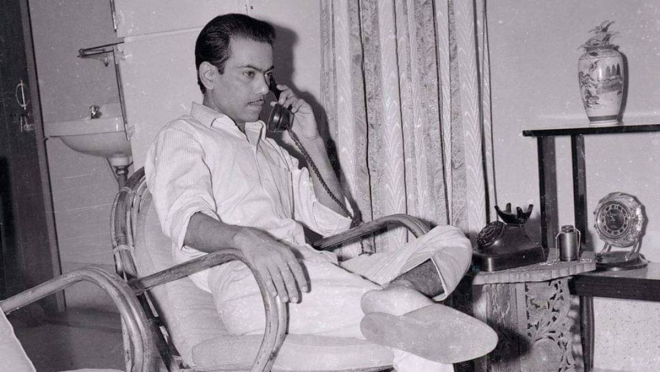
Seneca, the ancient Roman philosopher, once wrote, ‘As is a tale, so is life: not how long it is, but how good it is, is what matters.’ Few lives fit those words as squarely as Zahir Raihan’s.
Mohammad Zahirullah, known to the world as Zahir Raihan, was born on 19 August 1935 in the village of Majupur in Noakhali. Today marks what would have been his 91st birthday. Though he lived to be only 37, his brief, incandescent life left an indelible mark on the cultural and political canvas of Bangladesh. He was not just a storyteller; he was a mirror reflecting the agonies, the superstitions, and the relentless struggles of the Bengali people.
Following the partition of 1947, Raihan returned from Kolkata and immersed himself in the literary world. Inspired by his elder brother, the prominent writer Shahidullah Kaiser, he initially pursued journalism and short stories. His literary debut, the short story collection ‘Suryagrahan’, arrived in 1955, followed by masterful novels like ‘Borof Gola Nodi’, ‘Arek Falgun’, and the epic ‘Hajar Bochhor Dhore’.
His writing forced society to look at its own ugliness. Through his characters, he dissected the cruel realities of exploitation, child marriage, polygamy, and greed. He possessed a rare ability to lay bare the quiet, devastating tragedies of ordinary lives without ever romanticising their pain.
However, his restless creative spirit soon found a new medium: the camera. After studying at the Pramatesh Barua Memorial Photography School in 1952, Raihan ventured into films as an assistant director on ‘Jago Hua Savera’ in 1959. By 1961, he had made his directorial debut with ‘Kokhono Asheni’. What followed was a decade of groundbreaking cinematic achievements. He gave Pakistan its first-ever colour film, ‘Sangam’ (1964), and its first cinemascope Urdu film, ‘Bahana’ (1965).
But Raihan was never just a commercial filmmaker. He was a revolutionary holding a camera. He actively participated in the 1952 Language Movement – backing the fateful decision to violate Section 144 – and the 1969 Mass Uprising. These political convictions bled sharply into his art.
His 1970 masterpiece, ‘Jibon Theke Neya’, remains the ultimate blueprint for Bangladeshi national cinema. Through the suffocating dynamic of an autocratic matriarch ruling over a middle-class family, Raihan delivered a razor-sharp allegorical takedown of Ayub Khan’s dictatorship.
The film captured the explosive energy of the Language Movement and the stifled cries of a populace desperate for freedom. When legendary actor Khan Ataur Rahman belted out the fiery prison anthem ‘E Khacha Vangbo Ami Kemon Kore’, it was not just a song; it was a rallying cry that made the blood of an entire nation boil. Renowned directors across the border, including Satyajit Ray, Mrinal Sen, and Ritwik Ghatak, were left mesmerised by the film’s sheer audacity and brilliance.
When the Liberation War erupted in 1971, Raihan was serving as the general secretary of the Bangladesh Liberation Council of Intelligentsia. He immediately abandoned his ongoing project, ‘Let There Be Light’, crossed into Kolkata, and picked up his camera to fight the war on the global stage.
The result was ‘Stop Genocide’ – a haunting, visceral documentary that exposed the horrific atrocities committed by the Pakistani military to the entire world. Despite enduring severe financial hardship as a refugee, Raihan donated all the proceeds from the Kolkata screenings of ‘Jibon Theke Neya’ to the Freedom Fighters Trust.
The tragedy of Zahir Raihan is as poetic and heartbreaking as the stories he wrote. On 30 January 1972, barely a month after the country had won its independence, he left his home in search of his brother, Shahidullah Kaiser, who had been abducted by Pakistani forces and their local collaborators just days before the victory.
He never returned.
It is widely believed that he was shot and killed by hiding collaborators and Pakistani soldiers, his body lost forever in the very soil he fought so fiercely to liberate.
If Zahir Raihan had not vanished into the abyss of a war-torn Dhaka, the landscape of Bangla literature and cinema would undoubtedly be richer. Perhaps, like Satyajit Ray, we would have seen him standing on the global stage, telling the stories of our soil.