A hundred and five Years of gratitude: To the most creative Bengali who's ever lived
There is a Ray I carry with me everywhere. Not the giant of world cinema, which he certainly was. Not the beloved author of my childhood, nor one of the most creative minds to walk on earth, though he was that too. But the man who taught me to see, observe, listen, and write.
A hundred and five Years of gratitude: To the most creative Bengali who's ever lived
There is a Ray I carry with me everywhere. Not the giant of world cinema, which he certainly was. Not the beloved author of my childhood, nor one of the most creative minds to walk on earth, though he was that too. But the man who taught me to see, observe, listen, and write.
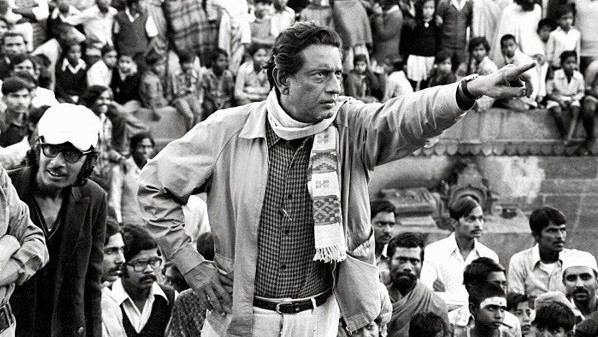
Satyajit Ray whom I carry with me as the ideal version of every creative aspect in life.
I picked up his book in a library when I was much younger. I did not know then that I was picking up a way of living. That the man behind those pages would eventually be behind everything: every sentence I attempt, every afternoon I spend actually looking at something instead of just passing through it, every moment I believe, however briefly, that paying attention to the world is work worth doing.
Today is his birthday. The debt, as always, is entirely mine.
I picked up a Feluda story first. I was young enough that the plot mattered more than anything else, and the plot delivered. A sharp detective with a sharper mind, moving through cities and mountains and history with the quiet confidence of someone who never doubts that the truth, if pursued with enough patience, will eventually surrender itself. But it was not the mystery that held me.
It was Topse, the nephew, the note-taker, the faithful chronicler sitting at the edge of greatness, writing everything down, too aware of his own ordinariness to claim the centre but too loyal to leave it.
I became Topse. Not metaphorically, quite literally. I would sit with the book in the amber light of an afternoon and believe, without embarrassment, that I was there. In a moving train towards Darjeeling. In a narrow alley in Varanasi. Following a man who is always on purpose.
Feluda made me a traveller before I had ever travelled. That is perhaps his most underappreciated gift: not the solving of crimes, but the cartography of imagination he handed to a young reader who had nowhere to go and all the time in the world to get there.
But Satyajit Ray is not one man. He is an entire universe with different versions to offer.
Ray was a filmmaker who fundamentally rewrote what Bengali and, by extension, South Asian cinema believed itself capable of.
Pather Panchali, made in 1955 with borrowed money and stolen weekend shoots, did not just win international acclaim; it quietly dismantled the assumption that art of global consequence could not emerge from this part of the world. The Apu Trilogy — Pather Panchali, Aparajito, Apur Sansar — remains one of cinema’s most humane achievements, a portrait of poverty and aspiration so honest it seems to have been lived rather than directed.
He was equally a graphic designer of rare distinction. He founded the font Ray Roman, which won an international competition. He designed book covers, illustrated magazines, and crafted the visual identity of Sandesh, the literary magazine he revived and edited, with the same meticulous care he brought to a two-hour film. He composed the musical scores for his later works. He wrote screenplays, short stories, detective fiction, science fiction, and essays. He drew. He painted. He designed.
Professor Shonku arrived in my life a little after Feluda, and the effect was different: quieter, stranger, more unsettling.
If Feluda was the rational mind triumphant, Shonku was the rational mind humbled. A scientist living alone in Giridih, accompanied by a robot named Bidhushekhar and a cat named Newton, journeying into corners of the world where logic is necessary but insufficient.
The stories feel more like dreams than adventures, not because they lack rigour, but because they operate in that precise zone where rigour meets wonder, and neither can quite claim the other. Ray wrote science fiction that feels, even today, decades ahead of much of what the genre produces.
There is a quietness to Shonku’s world that contemporary science fiction, with its noise and spectacle, rarely achieves.
These are not the stories of a man guessing at the future. They are the stories of a man who had looked at the present with such unblinking clarity that the future was simply the next logical room.
And then there is Tarini Khuro.
If I am being honest, and a piece like this demands honesty, Tarini Khuro is my favourite. Not Feluda, for all his brilliance. Not Shonku, for all his quiet profundity. Tarini Khuro: the ageing bachelor, the teller of impossible tales, the man who sits with local children on an ordinary evening, pours himself a cup of unsweetened raw tea, and proceeds to describe experiences so extraordinary that reality bends just slightly around them, like light around a heavy object.
Tarini Khuro is Ray’s most personal creation, I suspect, though I cannot prove it. He is what happens when a man has lived so fully, has seen strange things in strange places, has accumulated a life too large for ordinary conversation, that the only available container is the story.
Not the formal story, dressed in craft and distance, but the spoken story, offered to whoever is present on whatever evening presents itself. There is no performance in Tarini Khuro’s telling. There is only the absolute, unhurried conviction of a man who knows what he saw and is not particularly interested in whether you believe him.
What Ray gave me, what he continues to give me, is more difficult to name than any particular story or film.
It is something closer to a permission.
Permission to believe that a creative life is not a luxury but a necessity. That intelligence and imagination are not in opposition but in conversation. That one person can write a detective story in the morning, compose a film score in the afternoon, and design a book cover in the evening, and these are not distractions from a central purpose but expressions of it.
That art made with absolute seriousness can also be deeply, warmly human.
I think my creative gene, if I have such a thing, does not come from a single source. But it comes from Ray more than anywhere else. Not because I aspire to his scale, which would be absurd. But because he modelled something I needed to see modelled: the life of a person who made things because making things was how he understood being alive.
The fact that you can be yourself and make everything you do appear as truly yours is something that moved me so deeply that I never could get out of it.
That is the Ray I carry with me. The definition of creativity, probably a god of it.