'All happy families are alike; each unhappy family is unhappy in its own way' – Leo Tolstoy
Following the old Julian calendar, Today is the birthday of Leo Tolstoy
'All happy families are alike; each unhappy family is unhappy in its own way' – Leo Tolstoy
Following the old Julian calendar, Today is the birthday of Leo Tolstoy
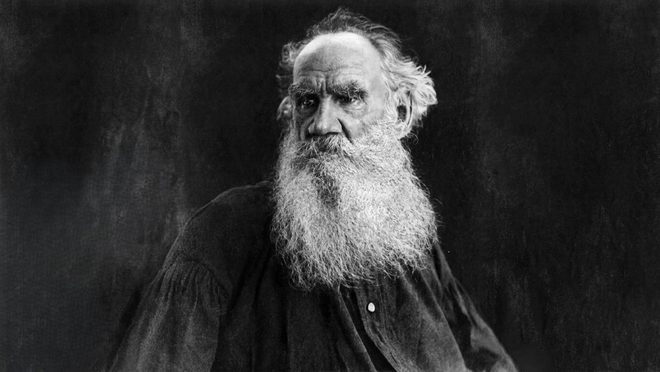
One of my favourite parts about reading old novels is realising how much we are still the same.
There is something both humbling and exciting about realising that the people who came before us were just like us. They wanted to be better people and then ended up doing the complete opposite. People have been a jumble of emotional and moral confusion, always.
This is what Tolstoy has beautifully and simply highlighted in his writings.
The characters he wrote do not feel like people from the 1800s. Yes, they are attending balls and living in giant estates or doing whatever rich Russians did in the 19th century. But the true essence of these people, their personality, their dilemmas, will feel so relatable to you at times. The fear of being judged or wanting something you know you should not. There has always been a constant struggle of trying to fit your personal happiness into a society that expects something else from you.
Tolstoy was very good at that. He could create completely different characters and make you understand them, even when you did not particularly like them. His characters get thrown around by circumstance, their own bad decisions, other people’s decisions, society, family and sometimes just life being life, and through all of it, somehow you could relate to their thought process by how Tolstoy described them in his writings.
Apart from War and Peace and Anna Karenina, Tolstoy wrote a lot of short stories, novellas and non-fiction. The Death of Ivan Ilyich, The Kreutzer Sonata, What I Believe, The Kingdom of God Is Within You, The Three Questions and plenty more. A lot of his writing is about morality, religion, death and how a person should live, which sounds like a very exhausting list of topics, but relatable.
Tolstoy gets called boring, melodramatic and pedantic.
He, a man who spent so much of his life thinking and writing about how people can be, was also deeply flawed himself. He had strong moral ideas, complicated relationships and plenty of contradictions. He wrote so well about humans because, unfortunately, he was also one. Compared to Dostoevsky, Tolstoy gets criticised a lot more. Dostoevsky seems almost immune to modern-day criticism.
However, to some other readers, Tolstoy is generally considered greater than Dostoevsky. Although maybe there is something about Tolstoy that is lost in translation, or maybe Dostoevsky simply works better for the modern internet. His characters are always going through something. Murder, guilt, religion, existential crisis, poverty, madness.
Whereas, Tolstoy gives you life, and life can be boring.
People repeat themselves. Anna keeps making choices that, from the outside, seem almost painfully avoidable. Ivan Ilyich spends years building the respectable life everyone tells him he should want, only to realise far too late that he may have been living for all the wrong things. In War and Peace, Pierre spends most of his life wandering from one purpose to another, while Natasha makes decisions in a moment that change everything around her. Then something happens, a death, a war, an illness, a love affair, and suddenly the life they thought they understood is no longer the same.
These stories will make you realise there is probably not a thought any of us have ever had that somebody else has not had already. Someone, somewhere, has loved like you, been jealous like you, embarrassed themselves like you, made drastic choices like you and wondered whether they were wasting their life just like you.
Perhaps this is a good reason to read Tolstoy on his birthday today. Not just to celebrate a man who wrote some of the greatest novels ever written, but to be reminded of what he understood so well: that people do not really change as much as we think they do. It is humbling, exciting and somehow comforting.
The people who came before us were not that different. They were us.