Beyond awareness: The urgent fight for true equality
Every year on 1 March, the world marks Zero Discrimination Day, a global observance dedicated to dignity and fairness.
Beyond awareness: The urgent fight for true equality
Every year on 1 March, the world marks Zero Discrimination Day, a global observance dedicated to dignity and fairness.
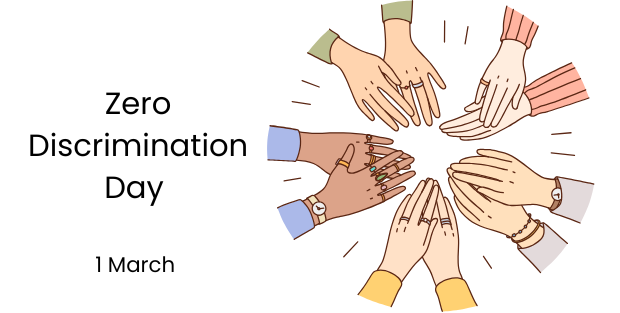
Established in 2014 by UNAIDS, the day has since served as a beacon of hope in the fight against discrimination worldwide.
Over time, the scope of Zero Discrimination Day has broadened to address inequality based on gender, race, religion, nationality and socioeconomic background.
The existence of such a day underscores a sobering reality. It is a reminder that even after centuries of enlightenment and social progress, discrimination continues to persist. Despite countless legal reforms, linguistic shifts and societal advancements, inequality still occupies a front-row seat in the grand theatre of opportunity, justice and security.
In the 21st century, discrimination is often less visible than in the past, but no less harmful. Explicit segregation laws may have been dismantled in many regions, yet structural barriers remain. Wage gaps between men and women continue to be stubbornly wide. Ethnic and racial minorities frequently report unequal treatment in policing and criminal justice systems. Migrant workers and refugees face limited protections and social hostility. Persons with disabilities still encounter inaccessible infrastructure and exclusion from employment.
Such disparities are not merely social concerns; they are economic and political ones.
Research consistently shows that societies that exclude certain groups tend to experience slower economic growth and greater instability. In contrast, inclusive practices strengthen both economies and institutions.
International human rights frameworks, including the Universal Declaration of Human Rights, enshrine equality as a fundamental principle. Many national constitutions and labour laws contain anti-discrimination provisions. However, the question remains: how effectively are these provisions implemented?
For example, in Bangladesh, electoral regulations require political parties to nominate at least 5% women candidates. Yet implementation has fallen short.
Similarly, the most recent parliament of Nepal included 91 women out of 275 members, below the mandated threshold for female political representation.
Discrimination often operates subtly — through unconscious bias or economic systems that advantage some while disenfranchising others.
A qualified applicant may be overlooked because of a foreign-sounding name. A family may be denied housing without explanation. A child from a low-income background may attend an underfunded school that limits future prospects.
The origins of Zero Discrimination Day are closely linked to the global response to HIV. Stigma and social dogma have historically deterred individuals from seeking testing or treatment. Fear of social exclusion or being ostracised prevents many from accessing essential services. The HIV response demonstrated that discrimination can directly undermine public health efforts.
The COVID-19 pandemic further revealed how inequality magnifies vulnerability. In many countries, marginalised communities experienced higher infection and mortality rates, often linked to precarious employment, limited healthcare access and inadequate living conditions.
Economic discrimination remains one of the world’s most persistent challenges. Informal workers — many of whom are women and migrants — often lack access to social protections such as health insurance or paid leave. Such systemic disadvantages weaken public trust in institutions and intensify economic insecurity, particularly for women.
Education inequality compounds this problem. In parts of Africa and other developing regions, schools lack adequate infrastructure and resources to meet students’ needs. Without equitable access to quality education, the cycle of inequality will persist.
As societies digitise, discrimination has taken new forms. Online harassment, hate speech and algorithmic bias present complex challenges. Facial recognition technologies have been criticised for higher error rates among darker-skinned individuals. Automated hiring systems risk replicating existing workplace inequalities. At the same time, digital exclusion prevents many communities from participating fully in education, employment and civic life.
Zero Discrimination Day should not merely be symbolic. Its impact depends on policymakers’ willingness to enact and enforce meaningful reforms. In democratic systems, citizens indirectly shape this reality through their choices and civic engagement. Employers must adopt inclusive recruitment practices that are structured fairly and transparently.
Media organisations also play a powerful role in shaping narratives. In an era where journalism faces challenges of credibility and systemic corruption, responsible reporting can challenge stereotypes and amplify underrepresented voices. Upholding truth and accountability is essential to sustaining equality.
Zero Discrimination Day is more than a ceremonial observance; it is a reminder that equality remains unfinished business. Progress in some regions contrasts sharply with regression in others. In certain countries, protections for marginalised groups have expanded; in others, legal restrictions and social hostility persist.
The word “zero” sets an uncompromising standard. It affirms that no degree of discrimination is acceptable. While absolute equality may seem aspirational, it establishes a moral and policy benchmark against which societies can measure themselves.
Let the commitment to zero discrimination extend beyond speeches and declarations.
Let it be visible in classrooms, workplaces, hospitals and every public space.
Until then, the call for zero discrimination remains urgent.