Beyond the report card: Bangladesh must stop failing its failing students
As Bangladesh debates why SSC pass rates have fallen sharply, the real crisis may be the nearly 700,000 students who failed—and a system that offers them little academic, financial, or psychological support
Beyond the report card: Bangladesh must stop failing its failing students
As Bangladesh debates why SSC pass rates have fallen sharply, the real crisis may be the nearly 700,000 students who failed—and a system that offers them little academic, financial, or psychological support
I first learned through social media that the SSC exam results were released, showing a pass rate of around 62% to 63%. Almost instantly, my feed was flooded with commentary from intellectuals, analysts, and self-proclaimed experts. The central debate seems to revolve around headlines asking why figures have plummeted from previous highs of over 90%.
The popular consensus online is that past figures were artificially inflated by the former administration to project a facade of success. But while commentators clash over political score-settling, I cannot help but ask: why are we ignoring the deeply human crisis staring us in the face?
No one can evade responsibility for what has transpired in our education system. Consider the structural chaos: over the past 17 years, the national curriculum has been revised a number of times. Sad but true is adding political narratives in the name of history, upgrading text-based education to practical skills-based, competency-based learning methods.
We have run project after project to revisit and revise our curriculum, with an end result of a frustrating outcome. Anyone who has worked in or around education knows the immense time, effort, and resources required to train thousands of teachers across the country for every single shift in the module. Each rapid change put teachers under stress, and that burden ultimately trickled down to the students.
The previous regime may have believed that lenient grace marks and inflated pass rates served as positive motivation. Yet, it proved to be self-sabotage. The very generation that passed through those artificially boosted marks eventually entered our universities, took to the streets, and ultimately ousted that regime—entering official residences, posting celebratory photos with undergarments.
Many of us watching from a distance express shock at their language and actions and see this as a devaluation of education. But we must remember: they are the direct product of the system we built for them.
There were several viral videos of this generation where random content makers journalist were asking the very basic questions about Bangladesh and its historical days where got shocking Reponses which tells how poorly we tried to feed them things that they never owned. Means the essence of the content that we wanted them to learn was always missing.
Now, looking at today’s numbers from a different angle, out of every 100 students, roughly 37 have failed, around 700 thousand students in total.
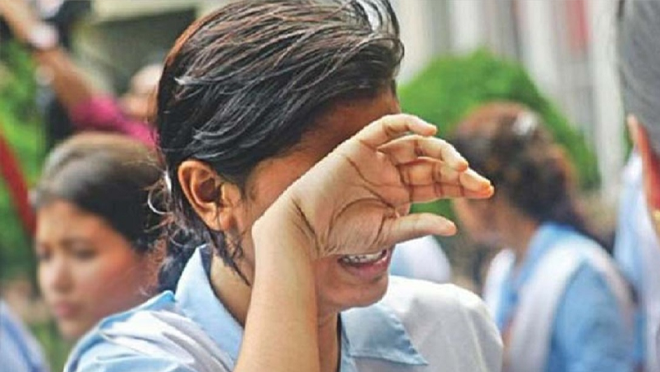
Let us pause and think about these 7 lakh young souls of our country. What is happening inside their homes right now? How are they facing their parents? These are not all urban, affluent, or upper-middle-class families. For a vast majority coming from marginalised backgrounds, a single failed exam means their educational journey ends right here —they simply cannot afford a second chance.
In a few days, media outlets, major brands, and admission coaching centres will launch elaborate celebrations for the “Golden GPA” achievers. But what about the ones who stumbled? What is the state doing for them? To my knowledge, not a single major NGO has an inspiring, dedicated project to uplift those who failed. The Ministry of Education has no clear roadmap for its reintegration.
Meanwhile, we overlook a devastating statistic: between 2025 and 2026, approximately 350 students in Bangladesh took their own lives—one of the highest figures in our 53-year history. Our youth are struggling with fragile mental health and immense pressure, lacking the tools or safe spaces to communicate their distress to parents, siblings, or friends. When a child sees no way out and chooses suicide, that failure rests not just on the family, but on the state and society as a whole.
People often ask me, “What are you doing about it?” And truthfully, as an individual, I feel helpless. But imagine what could happen if those with authority and influence shifted their priorities:
- If I were the Director General of the NGO Affairs Bureau, I would call civil society leaders tomorrow and demand actionable proposals on how to reintegrate, train, and support failing students.
- If I were in the Ministry of Education, I would push for national budget provisions to waive re-examination fees so that financial hardship never permanently cuts a child’s education short.
- If I were an iconic rock band like Warfaze, I would perform a free concert in an open stadium specifically to sing for and encourage the young people who felt left behind.
- And if I were a motivational speaker, instead of focusing solely on corporate brand gigs and monetised YouTube videos, I would stand on that stage to tell these children that a single exam does not define their worth.
An academic examination should be a checkpoint, not a dead end. While these young minds may have faltered at an academic milestone, we fail them every day by offering no hand to help them back up. It is time we stop debating the political metrics of pass rates and start building a compassionate system that catches our children when they fall.

Sketch: TBS
Tony Michael is a concerned citizen, observer and development expert
Disclaimer: The views and opinions expressed in this article are those of the author and do not necessarily reflect the opinions and views of The Business Standard.