Beyond the spotlight: Spain’s case as 2026 World Cup contenders
Whenever discussions about the 2026 FIFA World Cup begin, the spotlight usually falls on traditional powerhouses like Argentina, Brazil, France, and increasingly Portugal. Yet amid the noise surrounding football’s biggest names, one team continues to lurk in the shadows despite possessing all the ingredients of a future champion- Spain.
Beyond the spotlight: Spain’s case as 2026 World Cup contenders
Whenever discussions about the 2026 FIFA World Cup begin, the spotlight usually falls on traditional powerhouses like Argentina, Brazil, France, and increasingly Portugal. Yet amid the noise surrounding football’s biggest names, one team continues to lurk in the shadows despite possessing all the ingredients of a future champion- Spain.
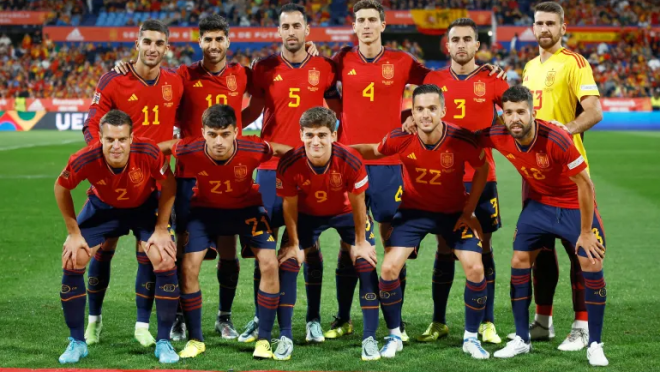
Calling Spain a ‘dark horse’ may sound strange. They are European champions alongside the highest-ranked teams in the world, and boast one of the most talented squads in international football. Yet compared to the hype surrounding Argentina’s title defence, France’s golden generation, or Portugal’s star-studded squad, Spain often receives less public attention.
That can be a dangerous mistake.
If recent performances, squad development, tactical evolution, and statistical trends are anything to go by, Spain may be the team best positioned to shock the football world in 2026. Even many data models and analysts already rank them among the strongest contenders for the trophy.
One of Spain’s greatest strengths is something every successful World Cup winner possesses: balance. Unlike teams heavily dependent on one superstar, Spain has elite talent spread across every area of the pitch.
The new generation includes Lamine Yamal, Pedri, Gavi, Nico Williams, Dani Olmo, Martin Zubimendi, Pau Cubarsi, Dean Huijsen, and Alejandro Balde.
Most of these players are still in their early twenties, meaning they will arrive at the World Cup with both experience and room for further growth.
What makes this generation special is that they combine Spain’s traditional technical excellence with modern athleticism and attacking directness. Another open secret that lies in the squad is: every youngster from this squad has played in major leagues in crowned team. The name that comes first is Barcelona FC.
The result is a team that can dominate possession while also devastating opponents in transition.
Lamine Yamal: Football’s next global superstar
Every World Cup-winning team usually has a player capable of changing games on his own. For Spain, that player is Lamine Yamal.
The teenage sensation has already become one of football’s biggest stars and is viewed by many as a potential breakout performer of the tournament. Analysts and bookmakers have even listed him among the leading candidates for individual awards despite his young age.
What makes Yamal unique is his ability to create chances from nothing, beat defenders gradually, deliver under pressure, influence matches against elite opposition, and most importantly, his elite experience at Barcelona FC.
By 2026, he could be entering the tournament as one of the world’s best players.
Spain’s golden era between 2008 and 2012 was built around midfield dominance. The current generation is beginning to recreate that formula. Pedri provides creativity and control. Gavi brings intensity and aggression.
Zubimendi offers defensive balance and tactical intelligence, whereas Dani Olmo contributes goals and final-third quality. Together they form a midfield capable of controlling matches against any opponent.
In tournament football, where possession and game management become increasingly important, midfield superiority often determines success. Spain possesses one of the strongest midfield units in the competition.
Previous Spanish teams often faced criticism for lacking defensive physicality. That concern has largely disappeared. Young defenders such as Pau Cubarsi and Dean Huijsen have emerged as some of Europe’s most promising centre-backs. Meanwhile, Alejandro Balde provides pace and attacking threat from full-back.
Modern football demands defenders who can initiate attacks as well as stop them. Spain now possesses exactly the same profile.
The strongest argument for Spain’s chances is not emotional. It is statistical.
Spain ended 2025 at the top of the FIFA World Ranking for the first time since 2013 and entered 2026 among the highest-ranked nations in the world.
Under Luis de la Fuente, Spain also assembled a remarkable unbeaten run in competitive matches and consistently dominated World Cup qualifying opponents. FIFA highlighted that Spain went undefeated in normal time throughout 2025 and won their opening World Cup qualifiers without conceding a goal.
These are not the numbers of an outsider. These are the numbers of a genuine contender.
Winning major tournaments changes mentality. Spain’s triumph at UEFA Euro 2024 transformed them from a promising side into a proven winner. History shows that teams entering World Cups after winning continental championships often perform strongly because they already understand how to navigate knockout football. Spain no longer needs to wonder whether they can win.
They already know they can. This psychological advantage becomes invaluable during the pressure of World Cup knockout matches.
Data models love Spain
Perhaps the most convincing endorsement comes from advanced football analytics.
Opta’s supercomputer simulations ranked Spain as the most likely team to win the 2026 FIFA World Cup before the tournament draw, giving them the highest championship probability among all competing nations. When statistics, predictive models, and expert opinion all point in the same direction, it becomes difficult to dismiss a team as merely hopeful contenders.
Why Spain remains a ‘dark horse’
The irony is that Spain may be the strongest ‘dark horse’ football has ever seen. Argentina commands attention because they are defending world champions. Brazil commands attention because of their history. France commands attention because of Kylian Mbappé. Portugal commands attention because of Cristiano Ronaldo and their golden generation.
Spain, meanwhile, operates with less noise. They rarely dominate headlines. They rely less on individual superstardom. They win through collective quality, tactical intelligence, and depth. That relative lack of hype may actually work in their favour.
Spain may not receive the same global obsession as Argentina, Brazil, or Portugal, but the evidence suggests they deserve equal attention. It is high time the participating nations take them seriously.
They possess one of the youngest elite squads in football. They have world-class talent across every position, one of the game’s most exciting superstars in Lamine Yamal, and statistical indicators that place them among the strongest teams on the planet.
If the football world continues focusing on the usual favourites, Spain could quietly do what dark horses do best- arrive underestimated and leave with the trophy.