Drowning in development: How Bangladesh is losing its wetlands
Bangladesh has one of the largest river, canal, floodplain, haor, beel and wetland systems in the world, which constitute the basis of its ecology, economy and culture. These aquatic systems provide a buffer against floods, recharge groundwater, support fisheries, conserve biodiversity and mitigate climate change.
Drowning in development: How Bangladesh is losing its wetlands
Bangladesh has one of the largest river, canal, floodplain, haor, beel and wetland systems in the world, which constitute the basis of its ecology, economy and culture. These aquatic systems provide a buffer against floods, recharge groundwater, support fisheries, conserve biodiversity and mitigate climate change.
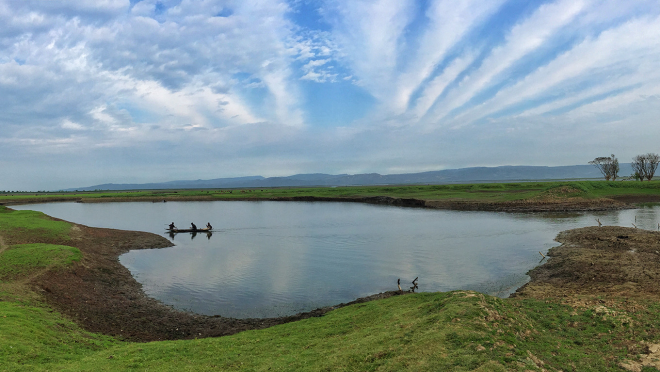
However, rapid urbanisation, unplanned development and land speculation have resulted in widespread illegal filling of wetlands and water bodies, particularly in and around urban areas.
Dhaka is one of the most densely populated cities in the world and an example of how unplanned urban development has impacted natural drainage systems. Most of the areas in and around Dhaka, such as Bashundhara Residential Area, Banasree and Uttara, are built on low-lying wetlands and flood flow areas. Similar patterns are observed in Chattogram, Khulna, Sylhet, Narayanganj and Gazipur.
In urban and semi-urban areas, these vital water bodies are being illegally drained under the pretext of development. Although these activities are expressly prohibited by law, enforcement is often weak, selective and influenced by political and economic interests.
The legal promise of environmental protection
The Constitution of the People’s Republic of Bangladesh recognises the duty of the state to protect the environment. Article 18A of the Constitution of Bangladesh mandates the state to safeguard and enrich the environment and conserve natural resources for present and future generations. This duty is further reinforced by a number of statutory laws, such as the Bangladesh Environment Conservation Act 1995, which empowers the Department of Environment to prevent environmental degradation and regulate activities that cause environmental harm.
Under this Act and the Environment Conservation Rules 1997, large-scale development projects are required to obtain environmental clearance and conduct Environmental Impact Assessments, and ideally, this would prevent the destruction of wetlands. However, in practice, clearances are often granted retroactively or after minimal review.
In particular, the Wetland Conservation Act 2000 (জলাভূমি সংরক্ষণ আইন, ২০০০) directly prohibits filling, altering or changing the natural character of rivers, canals, lakes, ponds, floodplains and other wetlands (Section 5). However, violations are rampant, with little to no enforcement action taken.
The judiciary has stepped in to protect rivers and wetlands, with the High Court and Appellate Division ruling in several high-profile public interest litigation cases filed by organisations such as the Bangladesh Environmental Lawyers Association (BELA) and Human Rights and Peace for Bangladesh (HRPB). These rulings have affirmed that rivers and wetlands are public trust resources and have directed the government to remove illegal encroachments and restore natural water bodies regardless of the identity of the encroachers. However, enforcement of these rulings remains inconsistent.
When rivers and wetlands give way to encroachment
While laws and judicial orders exist, the actual illegal filling of wetlands continues unabated. In Dhaka, residential and commercial developments have encroached on canals and retention ponds that once functioned as natural drainage systems, leading to severe waterlogging during the monsoon season and turning moderate rainfall into catastrophic urban flooding. Restoration of natural flood flow systems now appears increasingly difficult, as illustrated by long-standing criticism of areas such as Bashundhara Residential Area.
Residential and commercial projects have filled many canals and ponds in Banasree and Uttara. The situation is even worse in other parts of Dhaka. Rivers such as the Buriganga, Turag, Shitalakshya and Karnaphuli have been narrowed by encroachment, dumping of industrial waste and land reclamation, often with the implicit permission or lack of intervention from local authorities.
The human face of climate injustice
Wetlands also act as buffers against climate change, which poses an increasing threat to Bangladesh as rainfall becomes more intense, temperatures rise and sea levels increase. The loss of wetlands undermines the country’s ability to deal with climate-related impacts.
Those most affected by wetland degradation are the poorest, most vulnerable and marginalised groups: informal settlers, agricultural workers and fishermen, who suffer from flooding and loss of income and whose living conditions are further worsened. Meanwhile, those responsible for environmental harm are often protected by economic or political power, reflecting a clear pattern of climate injustice.
Bridging the gap between law and effective enforcement
This continued loss of wetlands reflects a governance failure. Several institutions, including the Department of Environment, urban development authorities and local government bodies, are responsible for environmental protection. However, they are poorly coordinated, and there are insufficient mechanisms for monitoring and accountability. Enforcement is often weak due to corruption, lack of transparency and arbitrary decision-making.
Once wetlands and flood flow zones are demarcated and made publicly available online, any filling in these areas should trigger immediate stop-work orders, on-site inspections by the Department of Environment and local authorities, and penalties as stipulated under the Wetland Conservation Act 2000. Public access to such maps would enable citizens, journalists and activists to monitor violations in real time, reduce corruption by limiting administrative discretion and ensure consistent application of court rulings.
The illegal filling of rivers, canals, ponds and wetlands across Bangladesh violates constitutional provisions, statutory laws and court directives, deepening climate vulnerability, social inequality and environmental degradation. The mere presence of laws is not enough. What is needed is political will, institutional responsibility and sustained public engagement from law students, climate activists and concerned citizens who must document violations, engage in strategic litigation, raise awareness and demand compliance with existing laws.
Protecting wetlands is not opposed to development but essential for sustainable development, climate resilience and the future of Bangladesh.
The writer Rakib Sarder is a student of North South University