Equal pay is not charity
Every year, 18 September arrives with familiar language. Equality, fairness, opportunity and justice.
Equal pay is not charity
Every year, 18 September arrives with familiar language. Equality, fairness, opportunity and justice.
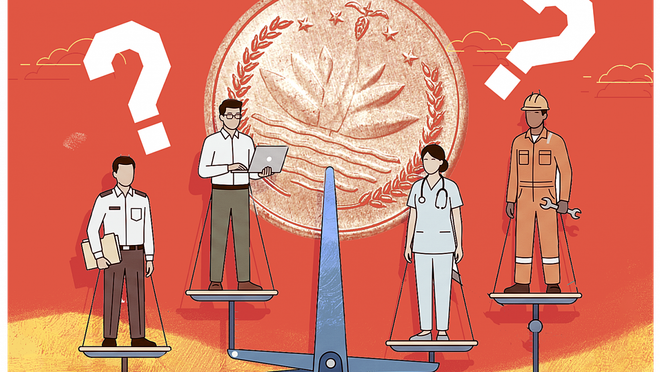
International Equal Pay Day gives us another opportunity to discuss the persistent gap between what women and men earn daily.
But perhaps we have been asking the question from the very wrong direction.
We often say women should be paid equally because it is fair. But there is another pragmatic argument that deserves considerably more attention: equal pay is economically rational.
Pay is not merely a number printed on a salary statement or bank cheque. It is a signal of how an economy values labour. When that signal is distorted by gender, the consequences extend far beyond the individual employee. It influences economic growth. This is why equal pay should not be treated as charity extended to women. It is a question of how efficiently an economy allocates its resources.
The economic value of a worker should not depend on gender. Imagine two workers performing substantially the same job, possessing comparable qualifications, carrying similar responsibilities and producing similar outcomes. If one receives less simply because she is a woman, the problem is not only discrimination.
From an economic perspective, it is a mispricing of labour.
Markets are generally expected to reward productivity. Wages, in theory, reflect the value of workers’ contributions to production. But real labour markets are rarely perfect. Information is incomplete, bargaining power is unequal, social expectations influence occupational choices, and discrimination can affect hiring, promotion and remuneration.
Therefore, the existence of a wage gap cannot automatically be interpreted as proof that every difference in earnings is caused by discrimination. Women and men may work in different occupations, industries and positions. Women may experience career interruptions because of caregiving responsibilities, and working hours may differ greatly.
Yet this complexity should not become an excuse to stop asking difficult questions. If two workers contribute comparable value, why should their gender influence their compensation? That is where equal pay becomes an economic principle. The wage gap is larger than a payslip.
When we discuss the gender pay gap, it is tempting to imagine a simple comparison. A man earns BDT 200 while a woman earns BDT 140 for the same work. Reality is considerably more complicated.
The gender pay gap can emerge through occupational segregation, differences in access to senior positions, promotion patterns, bonuses, working hours, employment arrangements and unpaid care responsibilities. Women are also disproportionately represented in many forms of informal and vulnerable employment. This means that simply asking, ‘Do women and men receive the same salary for the same position?’ may not reveal the entire dilemma.
Consider two graduates entering the labour market at 24. At the beginning of their careers, their salaries might be relatively similar. But one eventually receives a promotion, another takes a career break after having a child, one moves into a high-paying managerial position while another remains in a lower-paid occupation, and one negotiates aggressively while the other faces social expectations that discourage such behaviour. After 10 or 15 years, their incomes can look dramatically different. The gap then compounds.
A lower salary today can mean lower savings tomorrow, smaller pension contributions, reduced financial independence and fewer opportunities to invest. What appears to be a monthly difference can therefore become a lifetime economic disadvantage.
Unpaid work has an economic value too
Perhaps one of the most overlooked dimensions of this conversation is work that never appears on a payslip. Cooking, cleaning, caring for children, looking after elderly family members, managing a household. Much of this work remains unpaid, and women disproportionately carry it.
Economics teaches us to think about scarcity and opportunity cost. Time is scarce. Every hour spent performing unpaid care work is an hour that cannot simultaneously be spent in paid employment.
Yet because this labour does not always enter conventional market transactions, it can become economically invisible.
This does not mean that every household activity should necessarily be converted into a wage. It means that policymakers and societies should recognise its economic significance when designing labour, taxation and social protection policies.
A woman who leaves employment because affordable childcare is unavailable has not suddenly become less productive. The economy has simply failed to create the conditions under which her productivity can be utilised.
One of the clearest examples is the so-called motherhood penalty.
Having children can alter women’s employment trajectories much more significantly than men. This creates a paradox.
We often encourage women to participate in the labour market, acquire education and build careers. But once they enter the workforce, the institutional structures surrounding childcare and caregiving may make continued participation substantially more difficult. The answer cannot simply be ‘women should negotiate better’. Negotiation matters, but institutions matter too.
Affordable childcare, parental leave, flexible work arrangements, fair promotion systems and protection against discrimination can help make labour markets more compatible with family life. These are not merely social benefits. They can also be investments in labour force participation and human capital.
The economy loses when talent is undervalued
Suppose an economy has two equally talented graduates. One receives opportunities based on merit, while the other’s career progression is constrained by gender-based expectations. The economy loses part of its potential.
This is particularly important for developing economies such as Bangladesh, where increasing productivity and expanding the productive workforce are central to long-term economic development.
Bangladesh has experienced significant progress in women’s participation in economic life. But participation alone is not enough. The question should gradually move from ‘Are women working?’ to ‘What kind of work are women doing, what are they earning, and how far can they progress?’
An economy can increase female labour force participation while still failing to fully capture women’s economic potential if women remain concentrated in low-paid jobs or encounter barriers to leadership and advancement. The objective should therefore not be simply more women working. It should be more women working in productive, fairly compensated and economically meaningful positions.
Women’s economic independence can also strengthen their bargaining power within households. This is not about suggesting that women should become economically valuable only because their income benefits their families. Women deserve economic equality as individuals. But from a macroeconomic perspective, the household effects are impossible to ignore.
A salary that is unfairly reduced because of gender is income that could otherwise have entered consumption, savings or investment. The economic impact therefore extends beyond the employee sitting across the office desk.
For me, as an economics student, this is the most important way to understand 18 September.
Because when we talk about equal pay, we are not merely talking about fairness between two employees. We are talking about the efficiency of an entire economic ecosystem. If an economy undervalues half of its potential, it cannot truly claim to be maximising its potential.