How to read a research paper without reading every word
As a student of International Relations, I can’t completely rely on traditional textbooks like students of other departments of social science. We mostly need to read research articles, academic papers and newspapers.
How to read a research paper without reading every word
As a student of International Relations, I can’t completely rely on traditional textbooks like students of other departments of social science. We mostly need to read research articles, academic papers and newspapers.
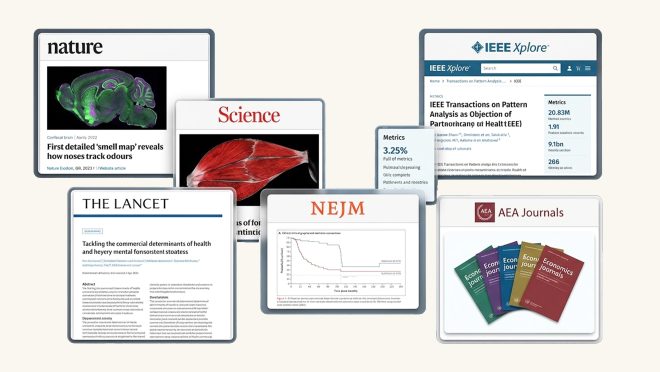
Sometimes, our teachers provide us with 20-25 articles just for a single topic; at other times, they provide none. In such circumstances, we have to search by ourselves, and in that practice, I am forced to read papers most of whose pages can be counted through the hundreds.
So how do I read scientific social science articles?
I mostly read descriptive, theoretical and event-based social science articles, not only for my academic studies but also to develop my thoughts and gain more knowledge. I usually find articles through Google Scholar, ResearchGate, open-access journals, and websites like E-IR, FAIR.
I follow three steps: Scan, Understand and Analyse.
So, the first step is to scan. I start by checking the title to see whether it matches my interest or not. Then, I look at the writer, their academic background, origin, like Western or Southern, ideology and research interests. Because this helps me get the perspective from the author. After that, I check the published date to assess whether the article is up to date, as well as to understand the timeframe and context in which it was written. Because context matters in social science.
I don’t read paper line by line; rather, I check the index first if there is one. Otherwise, I quickly go through the article from the first page to last, looking at the headings and subheadings to specify the main discussions. I always read the abstract carefully. It gives me a roadmap of the research problem, questions, argument, method, findings and sometimes recommendations.
I also read the conclusion at the beginning as it leads where the writer wants to drive me. If I find out the article is interesting, then I move to the second step. Otherwise, I put it aside.
The second step is understanding. In this step, I start with the introduction part to clear the concept, definition and key terms. After that, I read the theoretical framework, which I consider one of the most important parts for a social science student. I don’t simply check which theory the author has used; rather, I try to understand how the theory is applied and how it is connected. Then I go for the discussion section for better understanding of the author’s arguments. Finally, I look at the recommendations or solutions if there are any.
Sometimes I face difficulties to understand the background or context, so I search for additional information online to fill those gaps.
The third and final step is analysis. Here, I study the methodology, evidence, limitations, and counter-arguments. After completing the article, I try to recall the main arguments to evaluate my own understanding. I then try to analyse from my own perspective rather than simply accepting the author’s argument.
If I have enough time, I also check the citations and references to see which the author is referring to. I try to skip some unfamiliar words. Throughout my reading, I keep a notebook and write down important information and the sequences. Most importantly, I try to stay neutral during my reading. So, this is how I read social science research articles efficiently within a very short period.