In defense of CR7
Legacies are not defined by the final chapter alone. And when the story of Portuguese football is told a century from now, there will be a chapter before Cristiano Ronaldo and a chapter after Cristiano Ronaldo. The latter exists because of him. For Portugal, Cristiano Ronaldo is not merely a player. He is an era. He is a symbol. He remains, in every meaningful sense, the beating heart of Portuguese football.
In defense of CR7
Legacies are not defined by the final chapter alone. And when the story of Portuguese football is told a century from now, there will be a chapter before Cristiano Ronaldo and a chapter after Cristiano Ronaldo. The latter exists because of him. For Portugal, Cristiano Ronaldo is not merely a player. He is an era. He is a symbol. He remains, in every meaningful sense, the beating heart of Portuguese football.
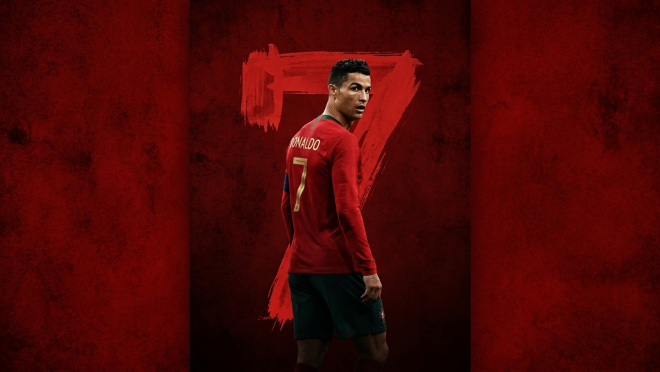
When Portugal take the field, they do not merely wear a jersey. They wear an era and that era is Cristiano Ronaldo’s
Football is often cruel to legends. It judges them not by what they have given, but by what they can still give. One goalless game becomes evidence of decline. One disappointing draw becomes an indictment of an entire career. Yet, if football history has taught us anything, it is that Cristiano Ronaldo’s legacy with Portugal cannot be measured by a single night in Houston or by a temporary scoring drought. Because before Ronaldo, Portugal were talented dreamers. With Ronaldo, they became believers.
When the young Cristiano made his international debut in August 2003, Portugal had never won a major international trophy. Their golden generation of Luís Figo and Rui Costa had dazzled Europe but left empty-handed. In the 100-plus years of Portuguese football before Ronaldo, the nation had reached only one World Cup semi-final and one European Championship final.
Then came Cristiano Ronaldo. Twenty-three years later, Portugal is one of world football’s modern powerhouses, and no player in international football history has contributed more to his nation than Ronaldo has to Portugal.
The numbers are staggering. Ronaldo is the all-time leading scorer in men’s international football with 143 goals, a record that may stand for decades. He has registered more than 220 international appearances, another world record, meaning he has represented Portugal more times than some nations have played competitive fixtures in their entire history. He has scored against more than 50 different national teams, in every major tournament and at every stage of his career. He is also the only player to score in six different European Championships and the first male footballer to appear in six World Cups.
But statistics alone do not tell the story. Portugal’s modern identity is inseparable from Ronaldo. He scored his first World Cup goal in 2006 and inspired Portugal to the semi-finals, their best performance in forty years. He carried an ageing Portuguese side to the semi-finals of Euro 2012. Then came the summer of 2016. Against all odds, Portugal won the European Championship. Ronaldo scored three goals and provided three assists during the tournament. He was directly involved in six of Portugal’s nine goals en route to the title. Even after being forced off injured in the final against France, he spent the remaining minutes on the touchline, coaching, motivating, and emotionally dragging his teammates towards history. That image remains symbolic of his relationship with Portugal: even when he could not play, he still led.
Three years later, he inspired Portugal to another trophy, the inaugural UEFA Nations League. Once again, he delivered when his country needed him most, scoring a hat-trick against Switzerland in the semi-final. Portugal’s two major international trophies, the only two in their history, were both won during Ronaldo’s captaincy. Coincidence? Hardly.
No player has contributed more match-winning performances for Portugal. More than 80 of Ronaldo’s international goals have either given Portugal the lead, equalised a match, or directly secured victory. He has scored decisive goals in European Championships, World Cups, Nations League finals, World Cup qualifiers, and European qualifiers. Even his critics inadvertently prove his importance.
Every discussion about Portugal’s prospects begins with one question: What should be done with Ronaldo? Not Bruno Fernandes. Not Bernardo Silva. Not Vitinha. Not João Neves. Cristiano Ronaldo. Because his presence still shapes Portugal’s tactical, emotional, and psychological landscape.
And there is another reality often ignored in debates about age and decline. Portugal’s current golden generation grew up idolising Ronaldo. Bruno Fernandes once called him “the greatest Portuguese player ever.” Bernardo Silva has spoken about learning professionalism by observing him. Rafael Leão has repeatedly described him as an inspiration. Gonçalo Ramos, João Neves, and António Silva all belong to a generation that first fell in love with football by watching Ronaldo wear the national team’s colours.
To them, he is not merely a striker. He is the standard. He is the reason Portugal believe they belong among football’s elite. Could Portugal eventually need to transition beyond him? Of course. Every footballing era ends. But history should not be rewritten because time has finally caught up with a 41-year-old body. Cristiano Ronaldo did not hold Portugal back. He carried them forward. He transformed a nation that had never won a major trophy into one that expects to compete for every trophy. He turned Portugal from outsiders into contenders. He gave Portuguese football its greatest nights, its most unforgettable memories, and its first taste of international glory.