Michelangelo: Sculpting the soul of the Renaissance
Michelangelo Buonarroti was born on 6 March 1475 in the small Tuscan town of Caprese, which is near Florence.
Michelangelo: Sculpting the soul of the Renaissance
Michelangelo Buonarroti was born on 6 March 1475 in the small Tuscan town of Caprese, which is near Florence.
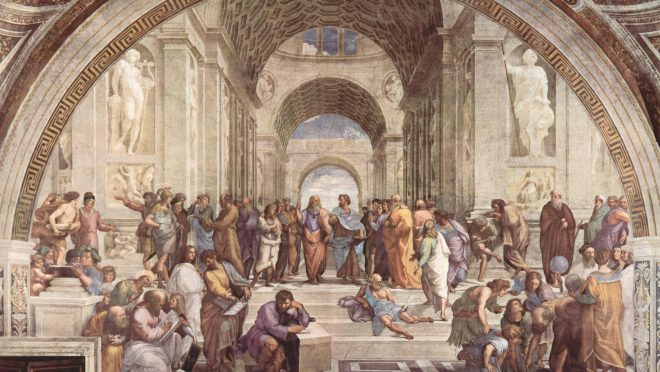
At the time, the world was at the precipice of change. Five and a half centuries later, people still think of him as a great artist. But he was more than just an artist.
Michelangelo was a sculptor, painter, architect, and poet. He created art the way we know today.
Michelangelo grew up in Florence, which was then the centre of Renaissance humanism. He became an adult in a city where classical revival and intellectual ambition met. He started working as an apprentice for Domenico Ghirlandaio when he was only 13. Not long after, he went to court with Lorenzo de’ Medici, where he saw ancient Roman sculptures that sparked a lifelong interest in anatomy, movement, and perfect form.
Early reliefs like “Madonna of the Steps” (c. 1491) and “Battle of the Centaurs” (c. 1492) show that the artist was already thinking about sculpture. The bodies are twisting with tension, and the figures seem to come alive from the stone. Political unrest in 1494 compelled him to depart from Florence to Bologna and subsequently to Rome, where challenges intensified his ambition.
Michelangelo thought of himself as a sculptor above all else. He thought that marble held a figure that was ready to be freed. His Roman Bacchus (1496–97) was very daring and intimate, showing the god of wine in a dangerous state of drunkenness. But the Pietà (1498–99), which is in St. Peter’s Basilica, is what made him famous. The sculpture, which he carved when he was only 24, shows the Virgin Mary holding Christ with incredible care and accuracy. This is still the only work he has signed.
Florence soon got him back to work on what would become one of the most famous sculptures in Western art: “David” (1501–04). The 17-foot figure was carved from a flawed and abandoned block of marble. It shows a quiet tension before battle. David was more than just a hero in the Bible; he was a symbol of Florence’s republican spirit, a small state that stood up to powerful enemies. The sculpture combined the classical contrapposto style with the psychological intensity of the Renaissance.
Later works, like Moses (1513–15) for Pope Julius II’s tomb and the dramatic figures in the Medici Chapel (1520s), show more emotional power, which people at the time called terribilità, or awe-inspiring power.
Michelangelo didn’t want to be known as a painter, but he agreed to paint the ceiling of the Sistine Chapel (1508–12) for Pope Julius II. He turned more than 9,000 square feet into a visual epic of Genesis, mostly by himself. There are more than 300 figures in the vault, and their strong bodies remind one of sculptures.
The Creation of Adam is at the centre of the ceiling. In it, God’s hand almost touches Adam’s hand, which has become one of the most famous images in art history.
Years later, Michelangelo went back to the chapel to paint The Last Judgment (1536–41), a swirling picture of salvation and damnation that sparked both praise and criticism for its open nudity.
As he got older, Michelangelo became more interested in architecture, seeing buildings as huge sculptures. The Laurentian Library in Florence (1524–34) changed classical design by adding dramatic staircases and dynamic spatial tension, which was a sign of the Mannerist movement.
He was named the main architect of St. Peter’s Basilica in Rome in 1546. His design for the huge dome, which was finished after he died, topped the Vatican skyline, combining the grandeur of ancient Rome with the new ideas of the Renaissance. The dome would have an impact on famous buildings all over Europe and beyond.
Michelangelo was the perfect example of the Renaissance ideal of the uomo universale, or universal man who could be great at anything. His poems were about love from God and the struggle of the soul. His dissections and anatomical studies took realism to new heights, affecting generations of artists and even the study of the human body.
In Florence, “David” became a symbol of politics. During the Reformation, the Sistine Chapel in Rome helped the Pope’s power grow. His daring use of scale and unfinished surfaces, a technique called “non finito”, inspired later styles, such as the dynamic Baroque style of artists like Bernini and the modern, expressive style of Rodin.
Millions of people go to Florence and Rome every year to see his works, which helps Italy’s cultural tourism economy and shows how popular the Renaissance is around the world.
Michelangelo worked until he died in 1564 at the age of 88. His last sculpture, the “Rondanini Pietà”, is still not finished.
The figures are long and ghostly, as if they are melting into the marble. It is a good metaphor for an artist who thought that creation was never really done.
Michelangelo’s legacy lives on 551 years after his birth, not only because he was a master of his craft, but also because he pushed the limits of what art could do. He gave stone, paint, and buildings psychological depth and spiritual power. He turned the artist from a craftsman into a visionary, which made sure that the Renaissance would have an impact on places far beyond Italy.