More than street food: The lives who feed Bailey road
Some time has passed since I last visited a place I once called home. During my college days, I spent countless evenings there, eating out with friends and my significant other.
More than street food: The lives who feed Bailey road
Some time has passed since I last visited a place I once called home. During my college days, I spent countless evenings there, eating out with friends and my significant other.
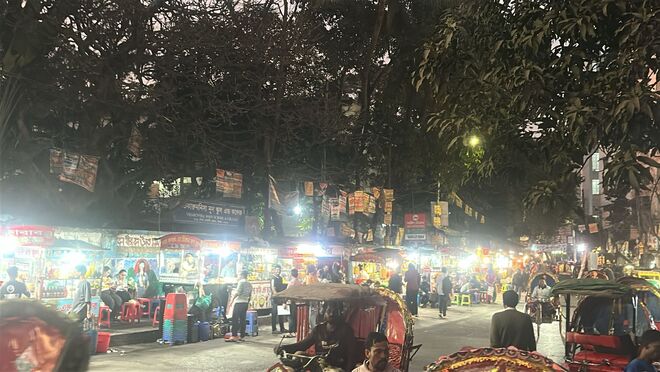
Bailey Road, home to countless stories across Dhaka, is not only special to students but has long been a bustling centre of street food for people from all walks of life.
Its street food culture is built around small and medium-sized carts, mostly run by young entrepreneurs. Thanks to Bailey Road’s location, people naturally flock here whenever they need a quick, affordable bite.
The nearby schools, along with its close proximity to Motijheel and Shahbag, give the area a colourful and lively character every evening, exactly what a thriving street food hub demands.
As I reminisced about the good old days, I found myself standing at the very epicentre of Bailey Road, just beside Viqarunnesa. Families waited patiently there, enjoying snacks from the carts as they awaited their daughters after school.
There were plenty of carts around. I counted roughly 30, which is a striking number. The narrow streets and constant traffic make the carts feel even more tightly packed.
For students, the menus are affordable even on a limited budget. And the food is, quite frankly, a chef’s kiss. The variety feels endless.
These vendors are true street artisans. Name a dish, and they will prepare it quickly and almost perfectly. Many of them were my age, some even younger, confidently running their carts. Elderly women had carts of their own too. Some worked with family members, others with friends. It was an inspiring and empowering sight.
This time, however, I looked at Bailey Road differently. Curious about the people behind the carts, I spoke with several owners.
Among them, Tofazzul Hossain, owner of Sumaiya Fuchka, stood out. He claims to be the oldest street food cart owner in Dhaka. While that may be debatable, his 24 years in business certainly give weight to the claim, dating back to a time when Bailey Road was packed like a can of sardines.
After speaking with locals, I realised he is something of the Vito Corleone of Bailey Road’s street food scene. A kind-hearted man, he even invited me to his home for dinner. He runs his fuchka cart alone and has expanded into a nearby kabab cart, now managed by his son. Over the years, he has served several well-known personalities, most recently Rafsan the Chotobhai and Hania Aamir.
Financially, he appears to be the most successful among the cart owners I spoke to. His monthly costs range between Tk 2 to 2.5 lakh, while profits reach around Tk 1.5 lakh. Daily profits from both carts combined fall between Tk 4,000 and Tk 5,000, with peak hours running from 4 pm to 9 pm.
Next, I met 20-year-old Saber Hossain, owner of Cravings Corner, who is currently studying Islamic Studies at Dhaka College.
In business for just six months, Saber serves momos, fuchka, meat boxes and fries, all priced under Tk 160. That is less than half the cost of similar items at many restaurants. He also works as a journalist at a media outlet. After finishing work, he heads straight to his cart.
Despite his age, life seems heavy with responsibility for Saber. He opens his cart around 6 pm and works tirelessly. To maintain hygiene, he prepares ingredients at home to avoid exposure to insects and dust.
On average, he earns around Tk 70,000 per month, rising to nearly Tk 80,000 during good months. After expenses and unofficial payments, his profit can reach up to 50 percent. His dream is to open his own restaurant someday. I wished him well, and he took my number. I feel lucky to call him a friend.
My curiosity did not stop there. I was drawn to a Japanese cuisine cart next to Saber’s, built entirely from bamboo and wood. Every detail reflected thoughtful design. It was not just the appearance but also the mindset behind it that reminded me of Japan.
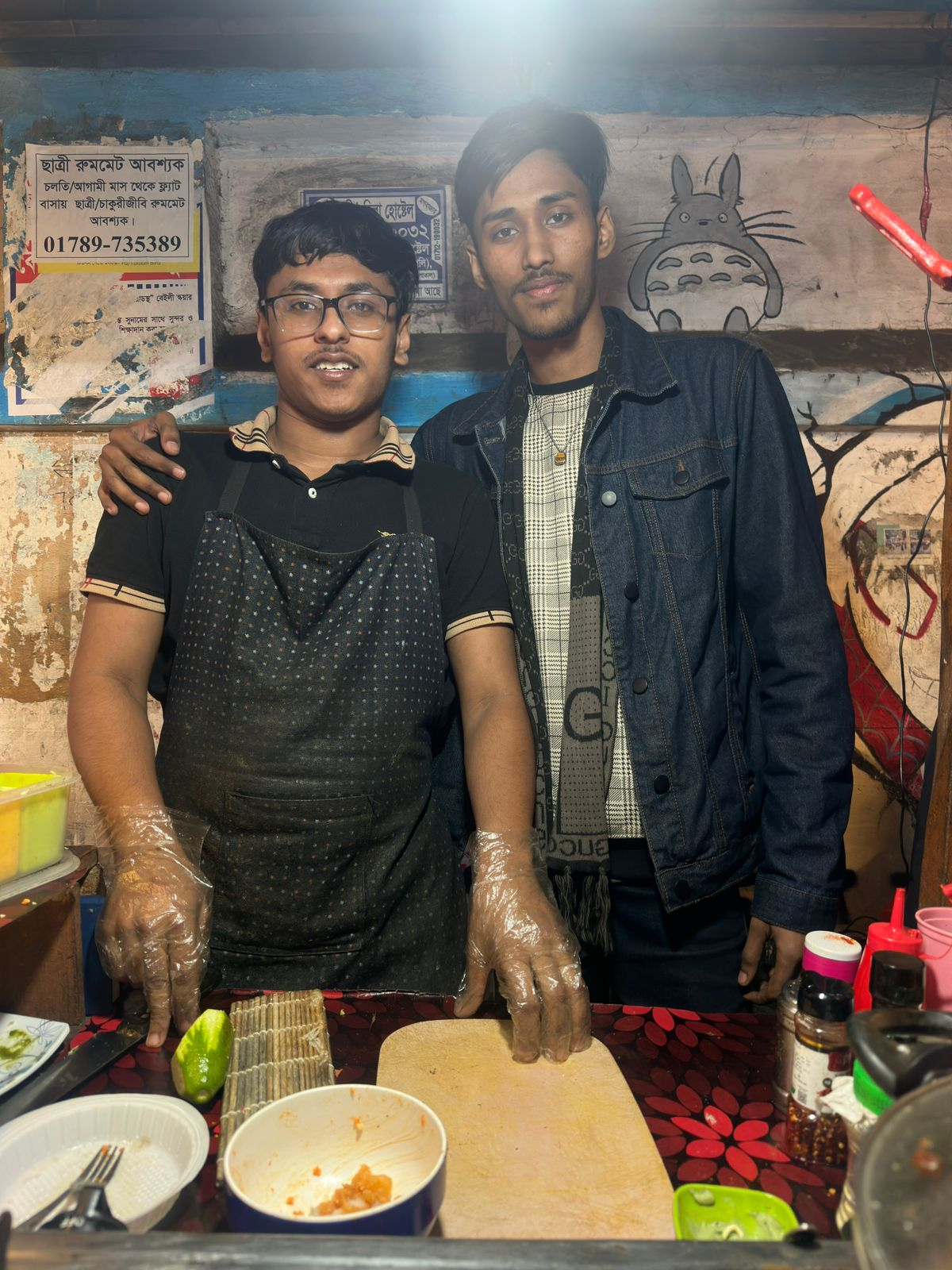
Photo: Mursalin Haque/TBS Graduates
The owners, Enamul (21) and Hamim (23), are students and young entrepreneurs. Their menu began with wasabi and crab sticks before expanding to ramen. Their journey has not been easy. The two brothers started the business to support their family of five amid rising inflation. Since 2024, they have faced scams and fraud, but perseverance paid off. Today, they earn around Tk 80,000 a month and support both themselves and their family.
I then met a warm-hearted woman, the sister of Tofazzul Hossain, who runs Rajdhani Kabab Ghor with her husband. Their menu includes various types of chap, fries, luchi and gurda.
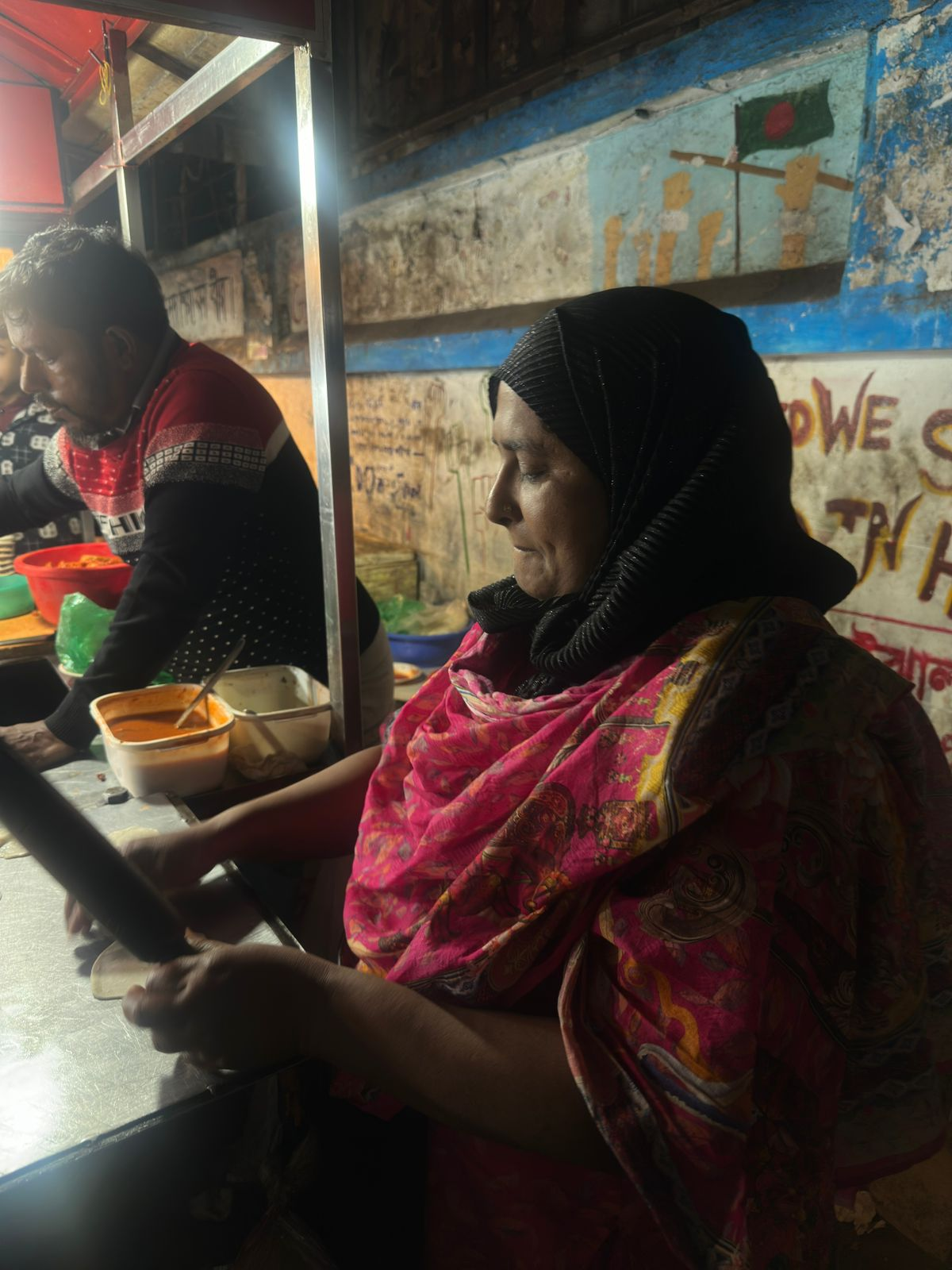
Photo: Mursalin Haque/TBS Graduates, Rajdhani Kabab Ghor
When I asked why she chose to work in such a hectic place alongside much younger vendors, she smiled and said,
“Son, I love cooking. Serving people like you, and the families waiting under the scorching sun for their daughters, gives me joy. I do not need extra money. Their love is my currency.”
Bailey Road also caters to my personal favourite: American-style pizza. A cart called Live Pizza serves handmade pan pizzas ranging from Tk 250 to Tk 450. The owner, a self-taught chef, prepares pizzas comparable in quality to upscale restaurants in Gulshan. The pizzas are made live in a controlled environment, and customers can customise their orders. The cheese, generously layered, looks exactly like the menu photos.
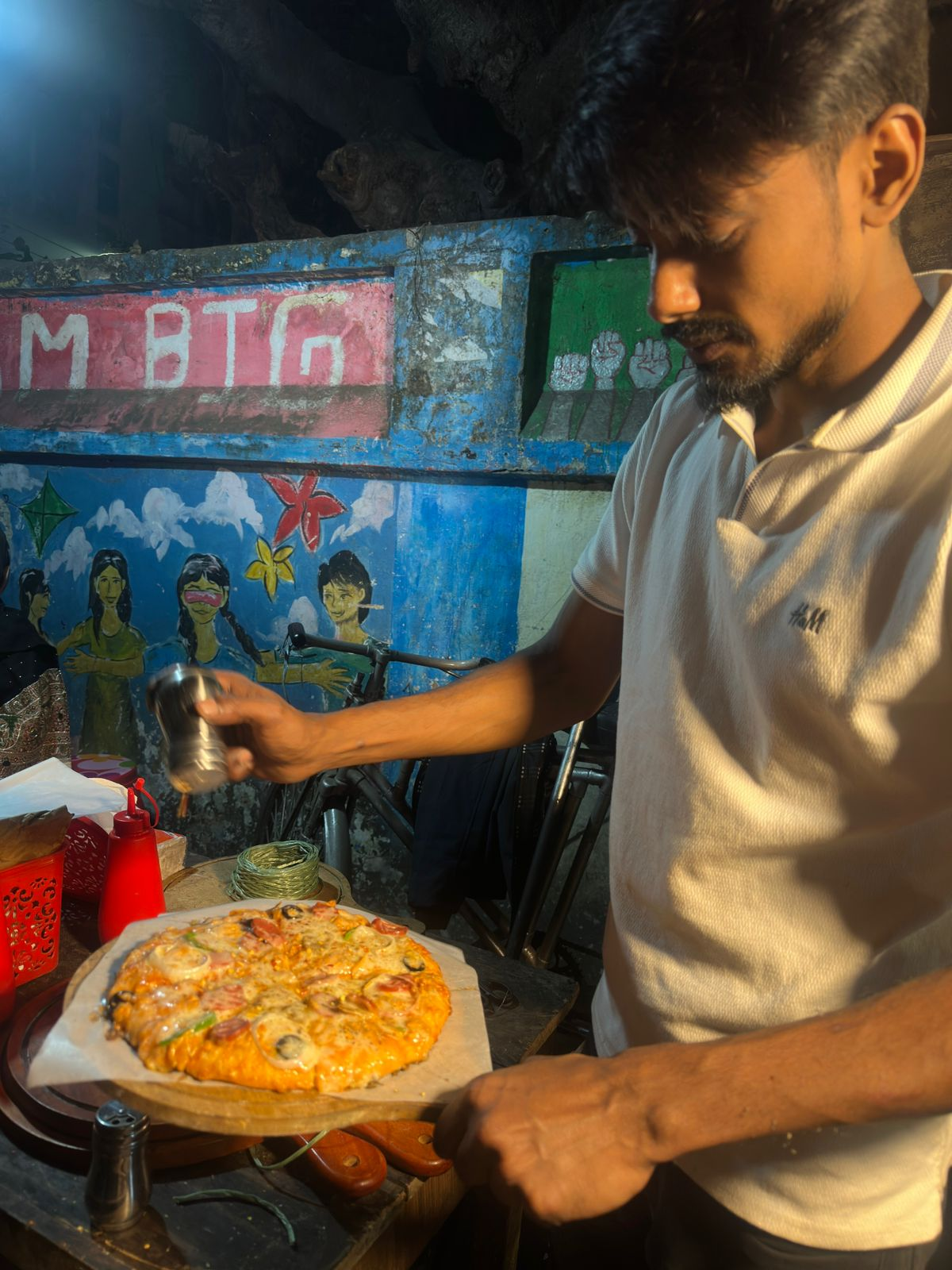
Photo: Mursalin Haque/TBS Graduates, Live Pizza
When I asked about his earnings, he smiled and replied, “Alhamdulillah, I earn enough to feed my family three meals a day and save for the future.”
Stories like these live openly on Bailey Road. People from every background come together over affordable food, and behind every cart is a story waiting to be heard.
The next time you visit Bailey Road, taste the food, but also talk to the people serving it. You might find their stories even more compelling than a Hollywood screenplay.