Nimsdai Purja: The man who pushed the limits too far
News broke on a Saturday, and it spread fast. Nirmal “Nimsdai” Purja is dead.
Nimsdai Purja: The man who pushed the limits too far
News broke on a Saturday, and it spread fast. Nirmal “Nimsdai” Purja is dead.
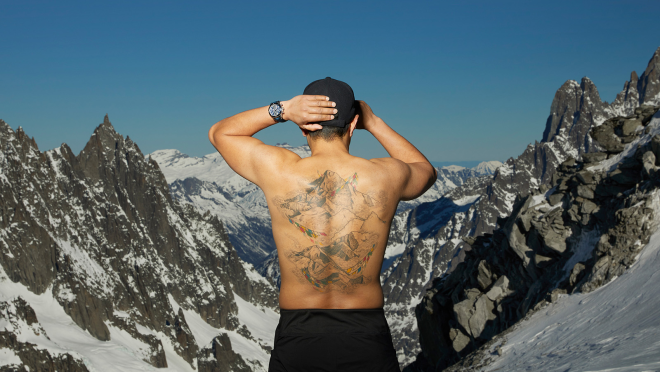
For a moment, it simply did not make sense. Some names do not feel like they belong next to the word “dead”. Purja’s was one of them. For ten years, he had made mountains look almost safe. On 30 July 2026, Broad Peak proved that was never true.
To understand why this hit so hard, you have to understand what Purja meant to people who had never even seen a mountain up close. In 2019, he decided to climb all fourteen of the world’s 8,000-metre peaks in under seven months. The old record was nearly eight years. He did it in six months and six days, and called the project “Project Possible”. Netflix later made it into a documentary, 14 Peaks: Nothing Is Impossible, and something shifted when it aired. For years, Nepali guides had carried the ropes, the oxygen, and sometimes the blame, while foreign climbers took the photos and the fame.
Purja changed that. He put himself, and his people, right at the front of the story, where they had always belonged.
Then came K2, in the dead of winter, 2021. No one had ever summited it in that season. Purja led ten Nepali climbers up anyway, and they reached the top together, singing Nepal’s national anthem at 8,611 metres. That single video, arms linked, voices carrying over the wind, became one of the most watched moments in climbing history. Still not done, he went back in 2024 and climbed all fourteen peaks again, this time without oxygen tanks. The hardest way anyone can do it. He finished in just over two years. Every time people thought he had reached his limit, he simply moved it further out.
By late July 2026, most teams had already packed up and left Broad Peak. Heavy snow had fallen all month, and the mountain felt different, unsettled. A couple of climbers noticed it and walked away days before anything happened. Purja’s team stayed.
At around nine in the morning on Thursday 30 July, the mountain let go. An avalanche came down Broad Peak’s main gully and swept away all ten climbers on the team, people from Nepal, Pakistan, Oman, the United States and China. It hit at roughly 6,660 metres, between Camp Two and Camp Three, and carried the group almost a vertical mile down the slope.
Rescue teams moved as fast as they could, but Broad Peak sits deep in Pakistan’s Karakoram Range, where the kind of helicopter rescues used in Nepal simply are not possible. So it came down to drones and ground crews, working through brutal terrain, day after day. Four bodies were recovered first. By the following weekend, seven had been found, including Purja’s. The last three, including a Pakistani guide who had planned this as his final climb before retiring, were found soon after. All ten were gone. It was Pakistan’s worst mountaineering tragedy since 2008, when eleven climbers died on K2.
Usually, this is where the story would end. A name, a headline, a week of condolences and then silence. But Purja’s death has not faded that way, and it is worth asking why. Part of it is simply the scale of it. Not one life lost but an entire team together. And part of it is the cruelty of the irony. A man who spent his whole career proving that human limits could be pushed and broken was finally stopped by the one thing no skill or courage can control. How a mountain happens to feel on a given morning. Nepal’s Prime Minister said the country was in shock. Messages poured in from people who had never met Purja but had watched him on their phones for years and had quietly borrowed a bit of his fearlessness for themselves.
What he leaves behind matters too. His company, Elite Exped, was the first international expedition outfit owned and run entirely by Nepalis. His way of making sure his own people finally owned a piece of an industry they had long powered from behind the scenes. His foundation still supports high-altitude workers and their families. And his old catchphrase, “giving up is not in the blood, sir”, is being repeated everywhere now, not as motivation this time, but as farewell.
It would be easy to leave it there, as a tribute and nothing more. But his death asks something harder of the climbing world too. Broad Peak’s danger was visible enough that other teams chose to leave. Purja’s did not. That single decision, made by one of the most experienced climbers alive, is a reminder that skill and experience can only take you so far against a mountain that has already made up its mind. Purja spent his life proving that limits could be argued with. Broad Peak was the one argument he could not win.