On finding a sister in a classroom
I know this is long overdue. But some gratitude is worth writing even late, because it was never really about timing… it was about finally finding the words, and I’m not entirely sure I’ve found the right ones even now.
On finding a sister in a classroom
I know this is long overdue. But some gratitude is worth writing even late, because it was never really about timing… it was about finally finding the words, and I’m not entirely sure I’ve found the right ones even now.
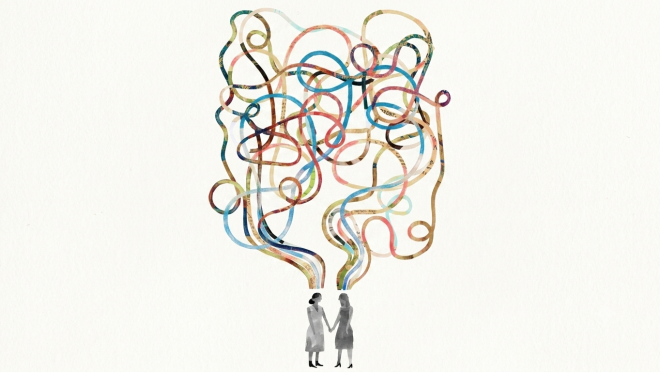
I came from a school whose name you’d recognise instantly, the kind whose students flood your timeline every time a board result is announced. But inside that loud, competitive world, I was quiet. I cried easily, kept to myself, and hadn’t yet learned that a life could hold more than textbooks and solitude. It’s a small, almost embarrassing confession, but that was my childhood: books, television, and the quiet company of my own thoughts, as if no one else’s world really touched mine.
That belief cracked early, and painfully. In class two, a classmate turned away from me, a small cruelty by adult standards, but to a seven-year-old it felt like exile. From it, I drew the wrong lesson, the way children often do: that love has to be earned, over and over, even from people who give nothing back. I carried that quietly for years, trusting no one fully, always waiting for the moment someone would look at me and decide I wasn’t worth staying for. I did make friends along the way, real ones, with real memories. But none of them felt like home. Not yet.
Then came class seven, a new section, and a girl one bench ahead of me who seemed to belong in a different, kinder story than mine. She smiled easily, waved at everyone, and filled her notebook margins with doodles too lovely for a school desk. I watched her from a distance for days, wanting to speak, finding no courage, quietly ashamed of how badly I wanted to be near someone that warm. There’s an old, humbling truth in this: the philosopher Michel de Montaigne once described his friendship with Étienne de La Boétie as something that simply happened to him, “because it was he, because it was I,” with no better explanation available even to a man famous for having explanations for everything. I understand that helplessness now. I couldn’t have explained it either. I just knew I wanted in.
The bridge between us was a gaaner khata, the songbook every music-loving Bengali teenager once kept, pages filled with hand-copied lyrics. It was 2016, and I asked, hesitantly, if I could borrow hers. She didn’t pause for even a second. She handed it over and started telling me, unprompted, how she’d found each song and why she loved it, and something in me that had stayed closed for years quietly, that I couldn’t trust anyone, was being healed unknowingly.
I remember the day our teacher confiscated a novel she’d smuggled into class, one she’d been too eager to wait to read at home. She took the disappointment quietly, the way generous people often do. I went home and cried about it anyway, mourning a heartbreak that wasn’t even mine. Looking back, I think that was the first sign I’d caught something rare, the kind of care that spills over uninvited.
We shared tiffin before the tiffin period even began, trading bites of ruti and kebab under the teacher’s radar like two small conspirators. My classmates called me bhanga radio for my love of RJ dramas and old songs. She never once laughed at that. Instead, she wrote me song lists, as if my strange little habit deserved to be taken seriously simply because it mattered to me. When “Closer” by The Chainsmokers and Halsey came out that year, it became ours, sung carelessly and loudly, and even now the song brings back not just a tune but an entire version of who I used to be.
Class nine separated us into different sections, and I remember believing, with the full drama a teenager can summon, that this was the end of something. I didn’t yet know that some friendships don’t run on proximity at all. The biblical story of Ruth and Naomi has stayed with me for the same reason: two women bound by loyalty rather than blood, who chose each other again and again, long after circumstance had given them every excuse to drift apart. I think of that whenever I think of her.
Now we study at different universities, and I’ll admit, humbly, that I haven’t kept many friendships alive since starting mine. But she has never once let distance become her excuse. Even when I’ve shown up clumsy and overwhelmed, saying “dost, raag korisna, kintu ekta jhamela hoise,” she has met my chaos with patience instead of judgement. She has held me together when I came undone, told me gentle truths when the world around me was only offering comfortable ones, and celebrated my smallest wins as if they were hers to celebrate too. Twice a year, she shows up with flowers in her hands and says, simply, “Sudipta, dekh tor jonno ansi,” and in that one ordinary sentence I find more steadiness than I’ve found almost anywhere else.
C.S. Lewis once wrote that friendship is the least biological of our loves, the one least needed for survival, and yet the one that gives survival its meaning. I didn’t need her, not in any way that keeps a person alive. But I don’t know what kind of person I’d have become without her, and I’m grateful I never had to find out.
She wrote to me recently: “Everything will make sense in due time, my little grasshopper.” I hope it does, for both of us, and for everyone still waiting for their sense to arrive.
I find myself strangely thankful, even now, for that first small wound in class two. It taught me, painfully, not to hand out my trust carelessly. And I am endlessly thankful that somewhere beyond that early loneliness, life quietly arranged for me to find a sister disguised as a classmate, not through anything dramatic, but through a songbook, a stolen bite of tiffin, and a girl who simply kept showing up when she didn’t have to.
Wherever you go, and whatever this life asks of you, I hope you keep blooming, even in the seasons that are hard on you. And know that every time you look back, you’ll find me there too, cheering, rooting, keeping watch. Always, pakhi.