Medals and moral failure: Why we need more men as feminists
A viral Olympic locker-room moment revealed more than poor judgement. It exposed a deeper cultural discomfort with recognising women’s achievements—one that mirrors the persistent absence of women in Bangladesh’s political and social leadership
Medals and moral failure: Why we need more men as feminists
A viral Olympic locker-room moment revealed more than poor judgement. It exposed a deeper cultural discomfort with recognising women’s achievements—one that mirrors the persistent absence of women in Bangladesh’s political and social leadership
When the United States men’s ice hockey team put on their Olympic gold medals at the 2026 Winter Games, the scene was supposed to be the perfect expression of unrestrained ecstasy. The victory itself was remarkable because both the men’s and women’s teams succeeded, with each winning Olympic gold simultaneously.
Shortly afterwards, however, a video from the men’s locker room went viral for all the wrong reasons. In the clip, several athletes were seen laughing during a telephone interview with a political figure whose remark suggested that, unfortunately, they had to invite “the ladies” as well. The comment diminished what should have been a shared celebration with their female counterparts.
Instead of acknowledging the achievements of the women’s team—who had succeeded despite longstanding obstacles and fewer resources—the men responded with awkward, light-minded amusement. In doing so, they squandered an important moment of solidarity.
This episode was not merely a clumsy exchange. It reflected a broader cultural failure of collective recognition. It revealed an unwillingness to fully accept that women deserve equal celebration of their excellence, and an inability to articulate that recognition when the moment demands it.
For observers, this is troubling because it reflects a deeper structural dynamic beyond the ice rink. In any political system, the security and dignity of the most vulnerable citizens depend on those seated at the decision-making table. The situation in Bangladesh today provides a vivid illustration of this reality.
The representation of women in politics tells a stark story in the country’s most recent parliamentary election. Out of nearly 2,000 candidates, only seven women were elected directly. This marginalisation became even more visible after the formation of the new government under Prime Minister Tarique Rahman.
Among the 50 members of the cabinet, only three are women, and none hold a full ministerial portfolio.
The situation is further complicated by the position of the new main opposition party, Jamaat-e-Islami. The party formally excludes women from leadership on doctrinal grounds, yet paradoxically organises rallies where segregated spaces are provided for female activists. This contradiction amounts to a form of political doublethink: women are welcome to mobilise voters but are deemed unfit to lead.
The absence of women in positions of power has real and devastating consequences. Over the past month, Bangladesh has witnessed a disturbing surge in child abuse and violence against women, including brutal cases of rape.
Whenever the country faces such tragedies, the familiar patriarchal chorus emerges, asking where the women’s organisations or feminists are. But the more urgent question should be: where is the government?
Feminist groups have long been active in addressing these issues. Yet the burden of confronting systemic violence should not fall solely on exhausted women activists. Protecting citizens is fundamentally the responsibility of the state, which must take proactive measures to prevent violence and support those seeking justice.
This reality exposes how limited genuine male allyship still is. Despite ongoing struggles against systemic violence, many men remain passive observers rather than active supporters of women’s rights.
Men who recognise the principle of gender equality can no longer remain on the sidelines. It is increasingly urgent for them to take a visible role in challenging misogynistic narratives and defending the ideals of equality.
Feminism is not a zero-sum struggle or an attack on men. Rather, it seeks to dismantle hierarchies that ultimately constrain everyone. When men support gender equality, they also free themselves from rigid expectations of masculinity. In doing so, they help build forms of leadership rooted in empathy, moral responsibility and justice.
In Bangladesh, the argument for greater male participation in feminist advocacy is not merely theoretical. It is a practical necessity for national progress. The country has made significant advances in female literacy and women’s participation in the economy—achievements driven largely by the determination of women themselves.
Yet progress cannot be sustained without structural support. Women need genuine partners in building an equitable society, not perplexed bystanders.
The viral Olympic moment illustrated how little it sometimes takes: a simple, sincere acknowledgement of equal achievement. Bridging the gap between token gestures and genuine recognition remains one of the central challenges of our time.
Whether in a sports locker room, a university classroom, or the halls of parliament, women’s success and security deserve more than polite applause. They require recognition, solidarity and the courage to speak out.
If we are serious about building a just, secure and equitable state, then equal voices must be present at every decision-making table.

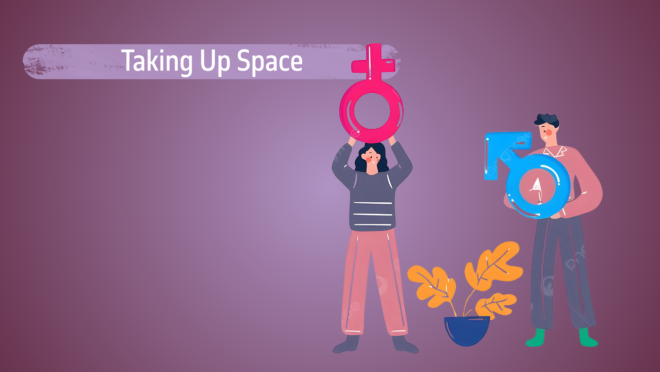
Sketch: TBS
Naziba Mustabshira is a fourth-year International Relations student and a research intern at the Organization for Identity and Cultural Development (OICD), Japan. She also serves as a Research Intern at the Nepal Institute of International Cooperation and Engagement (NIICE).
Disclaimer: The views and opinions expressed in this article are those of the author and do not necessarily reflect the opinions and views of The Business Standard.