Pahela Baishakh is not just a festival, it is a statement of identity
Pahela Baishakh is the first day of the Bengali calendar. Along with the beginning of a new year, it brings a collective return to its roots.
Pahela Baishakh is not just a festival, it is a statement of identity
Pahela Baishakh is the first day of the Bengali calendar. Along with the beginning of a new year, it brings a collective return to its roots.
Most festivals in our society are bound by religion. But Pahela Baishakh goes beyond that, as it is not tied to any single faith.
Instead, the celebration of this day is deeply rooted in Bengali culture. It is a cultural celebration that belongs only to the Bengalis.
The origins of this day can be traced back to the Mughal era, when Mughal Emperor Akbar introduced the Bengali calendar to align with agricultural cycles. It initially began as an administrative reform, but gradually evolved over centuries into one of the most vibrant cultural festivals in the region.
Today, Pahela Baishakh stands as a marker of new beginnings. It is now celebrated on 14 April of the Gregorian calendar.
One of the earliest traditions of Pahela Baishakh is the opening of Halkhata. On this day, traders open new account books. It is a traditional practice for shops to welcome customers with sweets on this day, which marks the beginning of renewed relationships and trust.
At dawn, the celebration of Pahela Baishakh begins at Ramna Batamul, where Chhayanaut hosts its iconic musical programme.
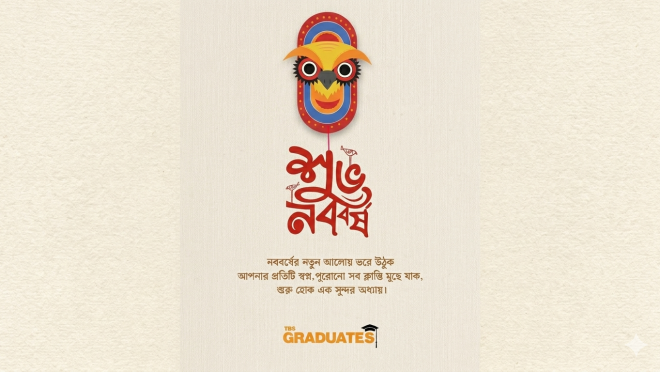
Soon after, the streets transform with the Mangal Shobhajatra, which is organised by the Faculty of Fine Arts, University of Dhaka. The Mangal Shobhajatra carries giant masks, animal figures, and symbolic motifs, which turn the procession into a moving canvas of expression.
Mangal Shobhajatra was recognised by UNESCO in 2016 as an intangible cultural heritage. This procession goes beyond just celebration, as it is believed to represent resistance against evil, oppression, and social injustice.
Across Bangladesh, red and white dominate the streets. Men and women wear traditional sarees and punjabis. Vibrant alpona patterns decorate streets and courtyards.
Food carries that same connection. The traditional pairing of panta bhaat and ilish replaces modern breakfasts, bringing people back to their roots. At the same time, restaurants and businesses across cities introduce special Baishakhi menus and collections, turning the day into a significant moment for the local economy.
From urban to rural life, the celebration of Pahela Baishakh takes on different forms of the same spirit. In Dhaka, large-scale processions, university events, and cultural performances dominate the day.
Many university campuses organise Baishakhi melas and cultural events. University clubs decorate their campuses with vibrant alpona and festive elements. The whole campus takes on the calm essence of new beginnings as well.
In rural areas, Baishakhi melas dominate Pahela Baishakh celebrations. The melas are filled with handmade crafts, folk music, and the familiar whirl of the nagordola rides. These rural celebrations show a more traditional version of the festival, rooted in community life.
Beyond urban and rural celebrations, the spirit of Pahela Baishakh extends into the Chattogram Hill Tracts. Indigenous communities carry celebrations that are just as unique as themselves. Different ethnic groups celebrate Pahela Baishakh with different festivals like Biju, Sangrai, Boisuk, etc. They celebrate this day with water rituals and traditional dances alongside their community feasts.
In the past few years, the celebration of Pahela Baishakh was somewhat subdued because of its overlap with Ramadan and Eid, but last year, the celebration returned with greater energy, and this year is expected to carry the same spirit.
Pahela Baishakh goes beyond culture. It carries a deeper political and social significance. It stands as a symbol of Bengali identity that brings people together, regardless of religion or background. It connects people through shared heritage and traditions. For this one day, all the differences fade away.
From the artistic resistance of the streets to the quiet rhythms of rural fairs, from Halkhata traditions to indigenous festivals, Pahela Baishakh brings together many worlds into one.
Many Bangladeshi immigrants are also seen celebrating Pahela Baishakh even amid snow. This reflects how the celebration remains constant beyond borders. It brings Bengalis together through a shared sense of identity.
For many, this day is not just about celebrating new beginnings, but an emotional tie to their roots and heritage.
On this day, Bangladesh does not just welcome a new year. It carefully revisits traditional practices and celebrates the pride of being Bengali.
This year, the people of Bangladesh are set to welcome 1433 with the same excitement, but with even brighter celebrations.