A book for all the true crime fans: A review of Val McDermid’s ‘Forensics’
A book for all the true crime fans: A review of Val McDermid’s ‘Forensics’
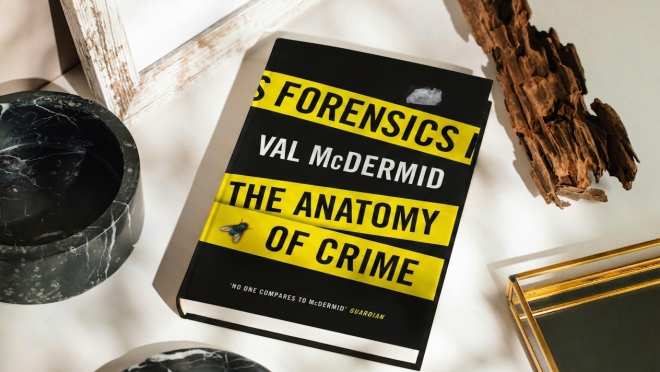
First published in 2014, Forensics: What Bugs, Burns, Prints, DNA and More Tell Us About Crime is a non-fiction book written by Scottish crime writer Valarie McDermid. Even though non-fiction is a different route from her usual sub-genre known as ‘Tartan Noir’, this book is one of her finest works.
The author wastes no time in irrelevant discussions and dives into the main theme right away. Within the 300-something pages of the book, McDermid manages to discuss various fields of forensics, their history, how it works and the future in that field.
The title of the book is one of ‘THE’ most to-the-point titles. As it happens with many books, the titles are misleading and you start reading expecting one thing and it turns out to be something completely different. There is no beating around the bush with this book. The book discusses exactly what the title says and, one by one, the writer goes through the different types of evidence — bugs, burns, prints, DNA etc. — and how forensic science deals with them.
There are twelve chapters in the book and they discuss older forensic practices like blood spatter analysis to more modern practices like ‘digital forensics’ and ‘facial reconstructions’. When relevant, the author discusses the origin of a particular type of forensic practice, how it evolved, some high-profile cases and their impact on forensic science and even the future of forensic sciences and what we can expect. It’s an interesting journey as we read about the first recorded example of forensic entomology as mentioned in The Washing Away of Wrongsand how today’s forensic scientists can extract more facts from the maggots on a corpse.
Throughout the book, there are many examples from real-life crimes and interviews with real forensic scientists who discuss their experiences and how they analyse a crime scene or a particular piece of evidence. If you are already familiar with the field of criminology, you can tell that the author really did her homework, which is not surprising since she is a crime writer.
The book flows smoothly but is not exactly what you would call a beach read. Real cases are described in detail and the investigation process is outlined in many instances, making it a gritty read. It can be slightly triggering sometimes but overall, the book is easy to go through.
It’s non-fiction but not exactly what one would call a science book. The book follows a more narrative style that discusses the different kinds of evidence, how they are processed and what we can learn from that evidence. There are photos whenever relevant. But most importantly, the book is stuffed with facts about forensic evidence which is a useful tool for writers and criminology students because the book makes a clear distinction between what you can learn from the evidence and how much of it can be used in court. And make no mistake, whatever you can learn from evidence has to hold up in court in a cross-examination.
If you are a criminology student who wants to know more about forensics, or if you are a writer who requires some knowledge about the crime scene and crime scene investigation, or if you are just simply a true crime fan with interest in forensic science, this is a great book to start your journey.