Cyberpunk Edgerunners: The series that ruined my ability to watch anything else in peace
Those who know me closely probably won’t be shocked by what I’m about to confess. Fair warning before we go any further: spoilers are coming, and they’re coming because my emotions genuinely cannot be contained enough to avoid them.
Cyberpunk Edgerunners: The series that ruined my ability to watch anything else in peace
Those who know me closely probably won’t be shocked by what I’m about to confess. Fair warning before we go any further: spoilers are coming, and they’re coming because my emotions genuinely cannot be contained enough to avoid them.
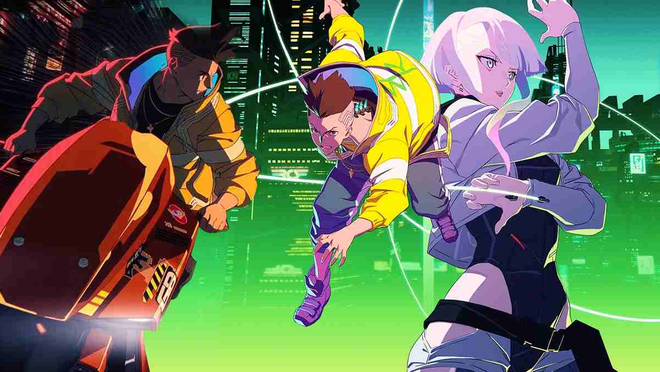
Let me set the scene. This was somewhere after my first year of university, deep in a term break, and I had fully committed myself to a reckless movie-and-series binge, chasing anything sitting above ninety percent on Rotten Tomatoes like it was a personal treasure hunt.
That’s exactly how I stumbled onto Cyberpunk: Edgerunners, released in September 2022, a show holding a genuinely rare, perfect one hundred percent critic score. Naturally, I thought, how could I possibly resist that?
For anyone unfamiliar, the story is set in Night City, a place that feels less like a city and more like a living organism built entirely out of neon, desperation, and chrome. It follows two people trying to survive inside that organism.
David Martinez is a street kid raised by a hardworking single mother, someone who claws his way into an elite academy run by Arasaka, only to discover that raw brilliance means very little when you’re surrounded by wealth you’ll never belong to. Lucy is a gifted netrunner carrying a past she guards like a wound still healing.
Before I even get into the emotional wreckage this show left me in, I need to talk about how it looks, because Edgerunners is, without exaggeration, one of the most visually alive pieces of animation I’ve ever watched.
It comes from Studio Trigger, the same studio behind shows known for their chaotic, hyper-kinetic energy, and here that energy is turned into something genuinely purposeful rather than just stylish for its own sake. The character designs are sharp and exaggerated in exactly the right places, David’s silhouette literally changing shape as his augmentations pile up, becoming more angular, more armoured, less human with every passing episode, so that the art style itself is quietly narrating his descent before the story even says it out loud. The action sequences move with this frantic, almost desperate momentum, all speed lines and impossible angles, and yet somehow the quieter emotional scenes are given just as much visual care, softer palettes, stiller frames, a kind of trust in silence that a lot of action-focused shows never bother to earn.
The soundtrack deserves its own paragraph entirely, because it might genuinely be one of the best original scores I’ve encountered in animation. It’s such a specific, layered mix, industrial synths and aggressive electronic production sitting right alongside these unexpectedly tender, melancholic tracks that show up exactly when the story needs you emotionally disarmed.
Franz Ferdinand’s contribution to the opening sequence sets this relentless, propulsive tone that primes you for chaos before a single line of dialogue lands. But it’s the quieter needle drops that actually wrecked me, tracks that feel less like background music and more like a second narrator, telling you how to feel about a scene before you’ve even consciously processed what’s happening in it.
The way the show uses music to signal emotional shifts, sometimes stripping everything back to near silence in the middle of devastating scenes, shows a level of restraint you don’t often get from a story this visually maximalist.
David’s arc is where the real devastation begins. He starts as someone painfully ordinary, a boy who just wants to matter, who wants his mother’s sacrifices to have meant something, who wants to walk into a room full of wealthy, indifferent classmates and not feel like an intruder in his own life. When tragedy forces his hand and he steps into the underground world of edgerunners, mercenaries who augment their bodies with cybernetic implants to survive, something in him changes that can never fully be undone.
Cyberpunk as a genre has always obsessed over one brutal question, how much of yourself are you willing to trade for power, and this show forces you to watch that trade happen in real time, piece by piece, until the boy you met in episode one is barely recognisable by the end.
And then there’s David and Lucy’s love, which is where this show stopped being entertainment for me and started being something closer to an open wound. They didn’t start out gentle with each other, they started guarded, almost combative, two people who had every reason not to trust anyone and somehow, against every instinct, chose to trust each other anyway. Once they did, they didn’t just fall for each other, they built an entire future together out loud, promise by promise: the moon, leaving Night City, a life that belonged only to them. You don’t hand two characters that many specific, tender promises unless you intend to make the breaking of them unbearable.
And it is unbearable. There’s a particular cruelty in watching two people who hated each other learn to love each other, only to be dragged through a devastating unraveling with no real closure, no real conversation, nothing. Even after everything falls apart between them, David still doesn’t forget her. When Lucy is in danger, he comes anyway. He never stopped choosing her, which makes it worse that the show never lets them properly reconcile.
At the very least, couldn’t they have been given a real goodbye, a real reunion, even a brief one, before the ending closed in on them? Every promise David ever made to her, about the moon, about a future, about staying, gets left hanging in the air, unresolved.
I think about the song “I Really Want to Stay at Your House” every time I revisit this show, and it destroys me a little more each time, because it plays like a wish neither of them ever actually gets to have, a small, simple domestic peace that Night City was never going to allow either of them to keep.
Night City isn’t just a setting, it’s every version of real life that demands everything from you and gives you no say in your own happiness, no guarantee you get to keep the people you love close once the world decides it needs something from you instead. You don’t get to choose. You’re simply forced to let go of the hope of being with them, and I don’t think that’s something you’re supposed to just accept quietly.
And here’s what genuinely frustrates me, the thing I don’t see people talk about enough: everyone glorifies David’s sacrifice, turns it into this noble, tragic, beautiful act of love, and meanwhile Lucy is left to actually live with the aftermath, and nobody talks about that with the same reverence. Lucy suffers too. She doesn’t get a peaceful, triumphant ending, she gets an empty apartment and a view of the moon she now has to look at alone. She isn’t happy without him.
She was never going to be, because David was the one person she could be fully real with, and he’s the one who decided, unilaterally, that his death was the only way to fix things. There must have been another way. But David did what David felt was right, without giving her a choice in the matter, and then the narrative lets him be remembered as the hero while Lucy just quietly, endlessly grieves in the margins. Her pain deserves the same weight his sacrifice gets, and it never quite receives it.
Beyond the central pair, though, the found family David builds among the other edgerunners deserves real credit for how wholesome it manages to feel amid all this chaos. Maine, the crew’s older, battle-worn leader, has this gruff, protective energy that makes his eventual descent into full-body cybernetic dependency hit even harder, because you watch someone who once looked out for everyone slowly lose the ability to look out for himself.
Rebecca, small and explosive and fiercely loyal, brings a chaotic warmth to every scene she’s in, the kind of friend who’d start a fight for you without a second thought, and her bond with her brother Pilar adds another quiet layer of tenderness to a crew otherwise defined by violence. Watching this ragtag group tease each other, cover for each other, and occasionally betray each other over money or fear makes the eventual unraveling land even harder, because loyalty in this show was never evenly distributed, and you feel every uneven crack in it by the end.
What elevates all of this beyond simple shock value is how earned every beat feels. Nothing about David’s descent is manipulative. Every choice traces back to something achingly human, wanting his mother to be proud, wanting Lucy safe, wanting to matter in a world engineered to make people like him invisible. That’s what makes the ending so hard to sit with. You’re not mourning someone who made reckless choices in a vacuum, you’re mourning someone who made completely understandable choices inside a system built specifically to punish people for wanting more than it was willing to give them.
By the time the credits rolled on the final episode, I sat in silence for an embarrassingly long time, not just sad, but angry too, the specific kind of anger that only comes from loving a story enough to resent how it ended.
If you haven’t watched Cyberpunk: Edgerunners yet, prepare yourself honestly. This isn’t a show you casually put on in the background. Between the art, the soundtrack, and a love story that refuses to give you any mercy, it demands everything from you and gives almost nothing back in return, which, I suspect, was exactly the point it was trying to make all along.