A24's Backrooms misses the point of liminal horror
The moment I saw the trailer of the movie, I was instantly hooked. Kane Parsons’ The Backrooms shorts didn’t just go viral; they transformed a niche internet image into one of the most influential horror concepts of the past decade. In many ways, they defined what modern liminal horror could look and feel like.
A24's Backrooms misses the point of liminal horror
The moment I saw the trailer of the movie, I was instantly hooked. Kane Parsons’ The Backrooms shorts didn’t just go viral; they transformed a niche internet image into one of the most influential horror concepts of the past decade. In many ways, they defined what modern liminal horror could look and feel like.
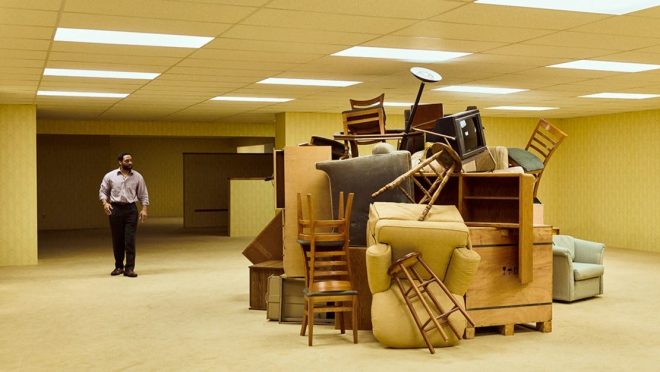
For anyone unfamiliar with it, The Backrooms is deceptively simple. Imagine accidentally slipping out of reality and finding yourself trapped in an endless maze of identical yellow rooms, stained carpets, buzzing fluorescent lights and low ceilings. There are no windows. No exits. No indication that another person has ever existed there. Just miles upon miles of empty office-like corridors stretching into infinity.
That simplicity is exactly what makes it terrifying.
Unlike traditional horror, liminal horror isn’t built around jump scares or monsters lurking behind every corner. It’s about spaces that feel strangely familiar but fundamentally wrong. Empty schools after dark. Endless hotel hallways. Shopping centres after closing time. Places designed for people, but completely devoid of human life. They trigger an uncanny feeling that you’re somewhere you recognise, yet somewhere you were never meant to be.
The horror comes from absence rather than presence.
Now let’s come to the movie. I had serious high hopes for the movie. A24 has produced some of the finest horror films of the 21st century, from slow-burn psychological nightmares to existential dread wrapped in gorgeous cinematography. It also had Kane Parsons involved, whose original shorts practically wrote the rulebook for liminal horror. On paper, it should have been a perfect match.
The film follows Clark, the owner of a struggling furniture shop. Bitter, alcoholic and perpetually angry, Clark blames everyone but himself for the collapse of both his business and his marriage. He’s not particularly likeable, but that’s clearly intentional. He’s a man stuck in his own emotional dead end long before he becomes trapped somewhere far worse.
One night he finds a glowing slit on one of the basement walls and he “no-clips” to another world that seems to be an extension of his furniture shop at first glance. As Clark ventures deeper, the environment begins to behave like a living organism. Walls shift the moment he looks away. Corridors silently rearrange themselves. Rooms that should connect don’t, while impossible spaces somehow do. Time itself becomes unreliable, making it increasingly difficult to tell how long he’s been wandering.
Then there are the entities.
One of the smartest choices the film makes is avoiding conventional monsters. These creatures aren’t grotesque in the traditional sense. Instead, they’re almost human, but only almost. Their proportions are subtly wrong. Their movements lack natural rhythm. They mimic people without ever convincing you they’re alive. Watching them feels like seeing a dream trying, and failing, to recreate a person from memory.
They’re disturbing not because they’re violent, but because they occupy that same uncanny space as the Backrooms themselves: recognisable enough to feel familiar, yet wrong enough to make every instinct tell you to run.
The story takes an interesting turn when Clark tells his therapist about his experience in the Backrooms. On paper, it’s a clever idea. The experience has clearly broken him, and the film briefly shifts from supernatural horror to psychological drama. But rather than confronting what happened or trying to move on, Clark becomes obsessed. The Backrooms have consumed him, and he develops an almost religious fascination with returning.
That obsession eventually extends to his therapist.
Believing no one will ever understand what he witnessed unless they experience it themselves, Clark manipulates her into following him back to the glowing slit beneath his furniture shop. It’s a genuinely unsettling premise. The thought of dragging another unsuspecting person into this impossible place says more about Clark’s deteriorating humanity than any monologue could.
Unfortunately, this is also where the film begins to lose its footing.
The final act abandons the quiet, suffocating dread that made the first two-thirds so effective. Instead of letting the Backrooms remain an unknowable force, the film starts chasing spectacle. New areas, new creatures and increasingly bizarre events are thrown at the audience in rapid succession. Rather than building tension, it feels like the film is desperately trying to keep escalating.
The result is a third act that’s messy and unfocused.
Scenes that should have had room to breathe are cut short, while others seem to exist purely because they look visually striking. Clark’s relationship with his therapist never develops enough to give their journey emotional weight, and the film’s attempts to explain, or at least hint at, the nature of the Backrooms strip away much of the mystery that made them frightening in the first place.
That’s the biggest disappointment. The Backrooms don’t need answers. They don’t need lore dumps or grand revelations. Their power lies in uncertainty. The moment you begin treating them like a puzzle to solve rather than a nightmare to endure, they stop feeling infinite and start feeling ordinary.
By the time the credits rolled, I couldn’t help thinking that the film misunderstood what made Kane Parsons’ original vision so compelling. The scariest part of the Backrooms was never the entities. It was the crushing feeling of being completely alone in a place that had no purpose, no logic and no end. The film spends so much time trying to add to that mythology that it forgets to simply let the Backrooms be terrifying.
Backrooms isn’t a bad film. In fact, its production design, atmosphere and soundscape are some of the most effective horror filmmaking I’ve seen in years. But it mistakes expansion for evolution. The original Backrooms worked because they left us with questions, not answers. Sometimes the most terrifying thing isn’t the monster lurking around the corner, it’s the endless corridor itself, and the horrifying possibility that it never ends.