Is the tech industry quietly moving beyond screens?
Is the tech industry quietly moving beyond screens?
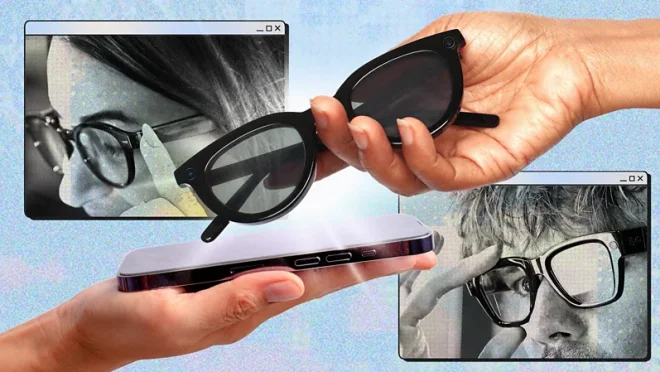
For decades, the glowing rectangle in your pocket has been the gateway to the digital world. Every message, map, memory and meeting has demanded your eyes. Now, some of the world’s biggest technology companies appear to be working towards a future where screens fade quietly into the background, or disappear altogether.
If recent reports are to be believed, Apple is preparing to push this vision further than ever. The company is rumoured to be developing AirPods equipped with tiny cameras, not for photography, but to help its virtual assistant interpret the world around you. The aim is not more images, but fewer glances at a screen.
The report has not been confirmed, but it fits a growing industry-wide pattern. After more than half a century of screen-dominated computing, voice commands, wearables and ambient artificial intelligence are being positioned as the next great shift in how humans interact with machines.
Supporters argue this could usher in a gentler relationship with technology — one that allows people to remain present in the physical world. Critics fear it may simply embed technology more deeply into everyday life, making it harder than ever to disconnect.
A future beyond the glass rectangle
The shift is already visible. Last week, Snap unveiled its most ambitious wearable to date: AI-powered smart glasses designed to function independently, without needing to be tethered to a smartphone. The device comes at a steep cost and an even steeper learning curve, but its message was clear — screens are no longer the centre of the experience.
Rather than replacing vision entirely, these new glasses overlay digital information onto the real world only when needed. Directions, messages or contextual prompts appear briefly, then vanish. The promise is subtlety rather than immersion.
The market for wearable computing is growing rapidly. Millions of smart glasses have already been sold worldwide, led by Meta, which continues to expand its range with cheaper and more accessible models. Yet popularity has brought controversy. Built-in cameras raise persistent privacy concerns, particularly when people cannot easily tell whether they are being recorded.
For many observers, this is where the screenless future begins to look less liberating. Wearables may reduce screen time, but they also risk increasing surveillance — both by companies and by other users.
Intelligence without attention
Proponents argue that the real breakthrough lies not in hardware, but in artificial intelligence. The goal is to make computers responsive in the way people are — able to understand spoken requests, recognise surroundings and act without constant supervision.
In theory, this could transform everyday tasks. Navigation could adjust automatically as you walk. Shopping lists might update when you open the fridge. Questions about your surroundings could be answered instantly, without typing or tapping. Interaction becomes conversational, almost invisible.
This vision depends heavily on trust. Companies insist that privacy safeguards will improve alongside the technology, with more processing done locally on devices rather than in the cloud. Whether the public accepts that reassurance remains uncertain.
Less screen time — or more technology?
There is also a more cynical interpretation. Despite the rhetoric of digital wellbeing, the technology industry remains deeply invested in constant engagement. Screenless devices may not replace phones so much as supplement them, filling the moments when screens are impractical rather than reducing overall use.
The smartphone, after all, shows no sign of disappearing. It is embedded in work, social life and infrastructure. What may change is posture — fewer downward glances, more upright heads — while the underlying relationship with technology stays largely intact.
Still, even incremental change matters. In a world increasingly anxious about attention, distraction and digital fatigue, the promise of looking up — rather than down — is a powerful one.
Whether this marks a genuine retreat from screens or simply the next phase of their evolution may depend less on the technology itself, and more on how willing people are to let it follow them everywhere.