The dangerous comfort of saying “others have it worse”
“You haven’t seen all colours of life yet.”
“Is that all you’re crying for? Haven’t you seen others suffering from worse things?”
“This is nothing compared to others. You’ve got to be ready to fight bigger demons.”
The dangerous comfort of saying “others have it worse”
“You haven’t seen all colours of life yet.”
“Is that all you’re crying for? Haven’t you seen others suffering from worse things?”
“This is nothing compared to others. You’ve got to be ready to fight bigger demons.”
Around 17 years back, I remember my mother hiring a girl as a house help from a family friend. That girl’s sister used to work for that same family. One fine morning, that family friend of ours came to our place.
I saw my mother complaining about our house help for being a menace at home. During her frustrated complaint, she was brutally interrupted by our family friend, and she chose an even harsher tone to release her frustration of dealing with the other sister. Observing that whole incident as an eight-year-old motivated me to write about this struggle-flexing culture of modern times.
In today’s world, it is very common to make fun of someone’s struggle for not being big enough.
In ancient times, an individual would be glorified for hunting bigger animals. The one who brought a bison home would be considered braver than the one who just brought a rabbit. The antique mindset has been carried into modern times. At present, people are not content with just flexing their assets, such as cars, property, family, or offspring. My observation tells me that the competition now is to prove that one’s pain is greater than that of others.
A child who saw the vicious face of life, eating dust on the streets, has an epic to write about. That child would be celebrated by the whole universe for having such a tough life if they had achieved the pinnacle of success.
However, another child who was born in a very affluent family, leading a very elegant life, would face harsh criticism and mockery if they shared their story of pain. The culture has been causing an entire generation of frustrated individuals who have to face the same competition to prove whose suffering is greater in life. It is like the same shame of hunting a rabbit when others are hunting bison.
Initially, the baton of shaming the sufferers was owned by the elders from the previous generation. Every time young individuals would complain about the mistreatment they faced, that one knockout punch of “When I was your age” from the elders would shatter the little chance of the young being vocal about the problem.
Nowadays, the baton is handed over to people from the same generation. If someone expresses their disappointment with their air conditioner not working during the summer, a punch from someone who does not have an air conditioner at home would come from the other side. When a girl cries over her partner not being responsible enough in the relationship, she often gets criticised for crying over this, since her best friend’s boyfriend has cheated on her. Which means it is a shame to have “smaller” problems in life.
Let’s take two film characters of Alia Bhatt to get a clearer illustration. The characters played by Alia Bhatt in Udta Punjab and Dear Zindagi belong to two completely different worlds. What if Bauriya (Udta Punjab), a migrant worker from Bihar working as a labourer in Punjab, meets Kaira (Dear Zindagi), an aspiring cinematographer working in Mumbai? Both characters had different upbringings. Bauriya was born into a very poor family in Bihar with the dream of becoming a national-level hockey player representing the country. Her father’s death made her bury her dream and migrate to Punjab as a labourer. While working there, she found a packet of an illegal substance owned by her drug-peddling landlord.
For attempting to sell that, she was abducted, sexually assaulted, tortured, and given drugs. On the contrary, Kaira had a difficult childhood, living far from her parents due to their work commitments. That created a distance between her and her family for many years. She started finding her friends, colleagues, and childhood toys more comforting than her parents. That trauma led her to be in multiple unsuccessful relationships, which caused her severe depression and insomnia.
From a general perspective, it seems like Bauriya has seen harsher realities of life than Kaira. If both characters were brought onto a platform where they would share their journeys of struggle, suffering, and pain, undoubtedly Kaira would be mocked for crying over the “small” problems of life. Even the possibility of an unwanted, insensitive suggestion to be stronger coming from a random person is very high, as if the struggles of Bauriya can only be considered painful experiences.
It is often said that poor kids never have depression. People often dismiss it as an excuse for rich people to get sympathy while being privileged. A person facing unbearable mental health issues from childhood trauma finds no place to share their burdens. Eventually, it stays inside their ribcages and turns them into an emotionally unavailable person who chooses to escape from relationship problems rather than fixing them.
It turns into their defence mechanism, where they mostly end their relationships rather than work on them. Such individuals fail to create a healthy atmosphere around them for their well-being since the discomfort of their pain becomes a familiar place to them.
People often forget that the capability to bear pain is not the same in everyone. They are not bestowed with the same fate either. Their struggles will be different from each other due to their different capabilities. However, that does not take away the fact that they have struggled in life as well. Every human being is writing their own story.
If it is compared with the epic Ramayana, then it must be said that everyone has their own depiction of Ravana. For one person, insomnia may be their Ravana in the story. One might term the trauma of being sexually harassed as such. One might be fighting with the struggles of finding a proper job to earn a living. Or even the story of a break-up that caused someone crippling pain would be acknowledged without judgment.
The world would be a much better place if we appreciated individuals for their stories. Imagine a world where nobody would decide someone’s worth by measuring their pain. Perhaps everyone would have a safe place to share their struggles of dealing with their very own demons. The demon can be the size of a rabbit or a bison, but nobody would tell them that their stories are not worthy enough. If that sense of safety existed, a child would not be hesitant to tell their story of dealing with the scary curtains at midnight. Because nobody would compare their struggle with the story of Hercules fighting a lion.
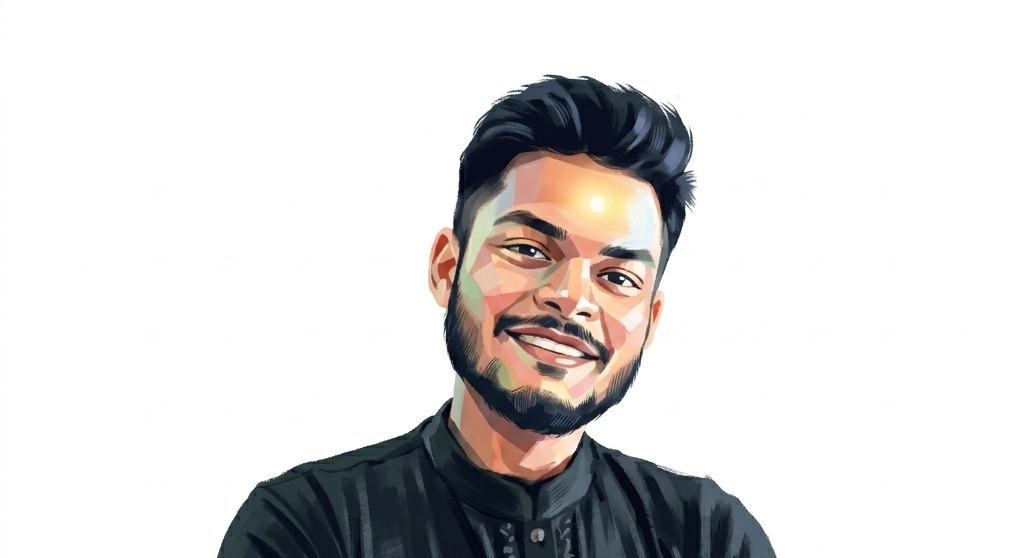
Mustafa Rafid Nibir is an English instructor and TESOL postgraduate student currently pursuing an MA in TESOL at BRAC University. He has a background in English Literature and Linguistics and is engaged in English language teaching at Mentors’