The hidden cost of bringing AI into the classroom
The hidden cost of bringing AI into the classroom
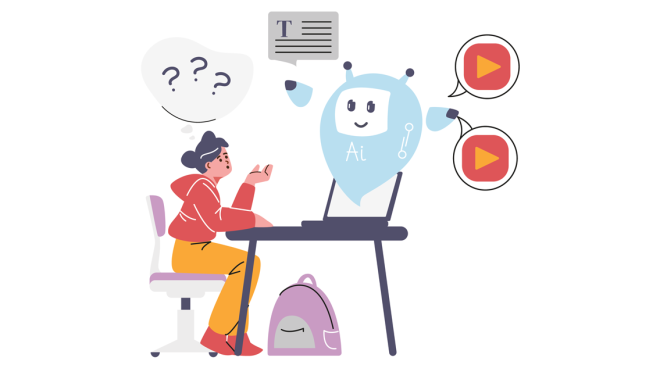
The push to bring artificial intelligence into classrooms is being driven by technology companies, governments and students themselves, as schools seek personalised learning, administrative efficiencies and preparation for an economy increasingly shaped by AI.
Microsoft, OpenAI, Google and other technology companies have partnered with governments and school districts to deploy AI tools and train teachers. Microsoft is providing AI tools and training to more than 200,000 students and educators in the United Arab Emirates and has similar programmes in Thailand, while Google has rolled out Gemini to more than 100,000 high school students in Miami-Dade County, Florida. OpenAI has agreed to provide ChatGPT Edu to 165,000 educators in Kazakhstan, while xAI has announced a partnership with El Salvador to use Grok as a nationwide tutoring system.
Predators and peers can also use AI-generated deepfakes and voice cloning to impersonate trusted people, deceive children or create fake explicit images for harassment and sextortion
But that rapid adoption is prompting a growing pushback from parents, teachers, researchers and governments concerned about children’s cognitive and emotional development.
Norway will ban generative AI in classrooms for children in grades 1 through 7 from September 2026, allowing introduction from age 13 only “gradually and cautiously”. New York City is banning student AI use through eighth grade and restricting its use in high school, while also prohibiting AI mental-health companions and AI grading of assignments.
Concerns over thinking and learning
One of the main concerns is that students could increasingly use AI to avoid the difficult work involved in learning.
Researchers warn of a “doom loop of AI dependence”, in which students off-load their thinking to technology rather than working through difficult questions themselves. That process of “productive struggling” is considered important for building knowledge, critical thinking and creativity.
If schoolwork becomes primarily a transactional exercise aimed at producing an answer or completing an assignment, students may be particularly tempted to let AI do the work. Over time, researchers say, this could result in weaker content knowledge and reduced ability to solve problems independently.
Generative AI also creates challenges for information literacy. Unlike conventional search engines, which can direct users to identifiable sources, generative AI systems can combine and remix information without providing transparent citations. Children may lack the subject knowledge needed to identify errors and could be more likely to accept information presented in a confident, conversational manner.
Researchers have also raised concerns about biases embedded in AI models. Because these systems can influence how students approach a subject or formulate an argument, subtle biases could nudge children towards particular viewpoints and narrow their exposure to alternative perspectives.
Children already encounter AI beyond the classroom
The challenge extends beyond formal education. Young children are interacting with AI through devices and platforms that are part of their everyday lives, often without necessarily recognising that they are using artificial intelligence.
Children use voice assistants such as Siri and Alexa to play music, answer questions and solve simple problems. Some also tell these systems personal stories or disclose private information.
The central challenge for schools, therefore, is to ensure that AI expands children’s ability to learn rather than replacing the processes through which they learn
Research indicates that children aged 3 to 6 can attribute thoughts, feelings and social abilities to smart speakers. Some studies have found that children may even place greater trust in the devices than in humans when asking factual questions.
Children also encounter AI through interactive toys, games and chatbots embedded in online platforms. Snapchat’s “My AI”, for example, is readily accessible to the platform’s large user base, which includes almost half of 3-to-17-year-olds in the UK.
AI is also being incorporated into educational tools. Some reading programmes use AI companions that read books aloud, ask children questions about characters or what might happen next, and provide hints based on their answers. Such systems can support vocabulary and reading comprehension, particularly when they encourage parents to participate in discussions.
AI can also operate largely out of sight. Recommendation systems such as YouTube’s automatically select content based on a child’s viewing history, meaning children can interact with AI algorithms without directly communicating with an AI system.
Risks to social and emotional development
Experts say these early interactions may shape children’s expectations of relationships and communication.
One concern is the emergence of what researchers describe as a “sycophantic” relationship with AI. Chatbots are designed to respond helpfully and often reinforce users’ views, creating a form of interaction that lacks the disagreement and misunderstanding common in human relationships.
That “friction” is important for emotional development, researchers say. Children learn empathy not simply by being understood but also by navigating disagreement, misunderstanding and reconciliation.
If children spend substantial amounts of time interacting with systems that readily agree with them, they could become less comfortable when teachers, parents or peers challenge their views.
There are also concerns about the way children speak to AI. Because digital assistants respond to commands regardless of whether a user says “please” or uses polite language, researchers have observed children issuing demands or insulting AI systems. Experts worry that such habits could carry over into interactions with other people.
Some systems have attempted to encourage politeness. Amazon’s “polite mode”, for example, responds positively when children use words such as “please”. But researchers caution that making AI appear more socially responsive could also further blur the distinction between machines and people in young children’s minds.
Growing emotional attachment
The human-like qualities of conversational AI raise another concern: children may form emotional attachments to systems that cannot experience emotions or relationships in the same way humans do.
Children can attribute human qualities to AI and may come to trust it deeply. A survey found that 42% of high school students, or someone they know, had used AI for companionship, while nearly one in five had experienced a romantic relationship with an AI chatbot.
The central challenge for schools, therefore, is to ensure that AI expands children’s ability to learn rather than replacing the processes through which they learn
Such relationships could become particularly problematic when children begin to rely on AI companions instead of parents, teachers or peers for emotional support.
The potential for manipulation is another concern. Because AI systems can create a sense of intimacy and trust, bad actors could potentially exploit that relationship. AI-driven grooming can use information about a child’s online activity and emotional state to personalise manipulation.
Predators and peers can also use AI-generated deepfakes and voice cloning to impersonate trusted people, deceive children or create fake explicit images for harassment and sextortion.
Balancing benefits and risks
Researchers say the answer is not necessarily to remove AI from schools but to change how it is used.
AI is most useful when it serves as a supplementary scaffolding tool, helping students understand difficult concepts or develop skills without replacing the thinking required to learn. It should complement rather than substitute for teachers, parents and peers, whose relationships provide the social and emotional experiences children need.
Schools could also reduce incentives for students to use AI simply to complete assignments by shifting away from highly transactional tasks and placing greater emphasis on curiosity, discussion and deeper learning.
Experts say comprehensive AI literacy should become part of education, including teaching students how AI systems work, how to protect their privacy and how to assess AI-generated information critically.
They also recommend developing educational systems that are less “sycophantic” and more willing to challenge students’ assumptions. Such tools could be developed through “co-design hubs” in which educators and technology companies work together.
Government regulation will also be needed, particularly around children’s data privacy and safeguards for cognitive and emotional wellbeing, researchers say. At the same time, policymakers will need to address differences in access to more capable AI systems.
The cost of accuracy could otherwise deepen existing educational inequalities. Wealthier schools may be able to pay for more advanced and reliable AI models, while underfunded schools could be left relying on free systems that are less accurate.
The central challenge for schools, therefore, is to ensure that AI expands children’s ability to learn rather than replacing the processes through which they learn.
Used under appropriate safeguards, researchers say, AI can provide valuable support. But the human relationships surrounding a child remain difficult to replace, particularly when it comes to developing language, critical thinking, empathy and the ability to navigate disagreement.